China’s Ports Roar Back.
Let’s get this straight: the narrative of China’s supply chain crumbling under geopolitical pressure? It’s about as accurate as predicting a TikTok dance craze will last forever. The numbers, as always, tell a far more vibrant, electric story. China’s export engine isn’t just humming; it’s at full throttle, a runaway train of manufacturing and trade that’s leaving many of its supposed global rivals chugging along at a snail’s pace.
And this isn’t just about a few bustling docks. This is a fundamental platform shift, a proof to an agile, forward-thinking manufacturing base that saw the writing on the wall years ago. While Western analysts wrung their hands, Chinese exporters were busy building new highways, not just to Southeast Asia, but to Africa, Latin America, and the Gulf. They didn’t wait for permission; they built options.
The Numbers Don’t Lie
Braemar analyst Jonathan Roach cuts through the noise with a blunt assessment: “Stop ignoring the numbers.” Early 2026 global container throughput is limping along at about 1%. China? A strong 3.5%. The rest of Asia is managing a respectable 2.5%. But Europe? Barely twitching at 0.5%. And the US? A shocking decline of nearly 5%. It’s not a subtle difference; it’s a chasm.
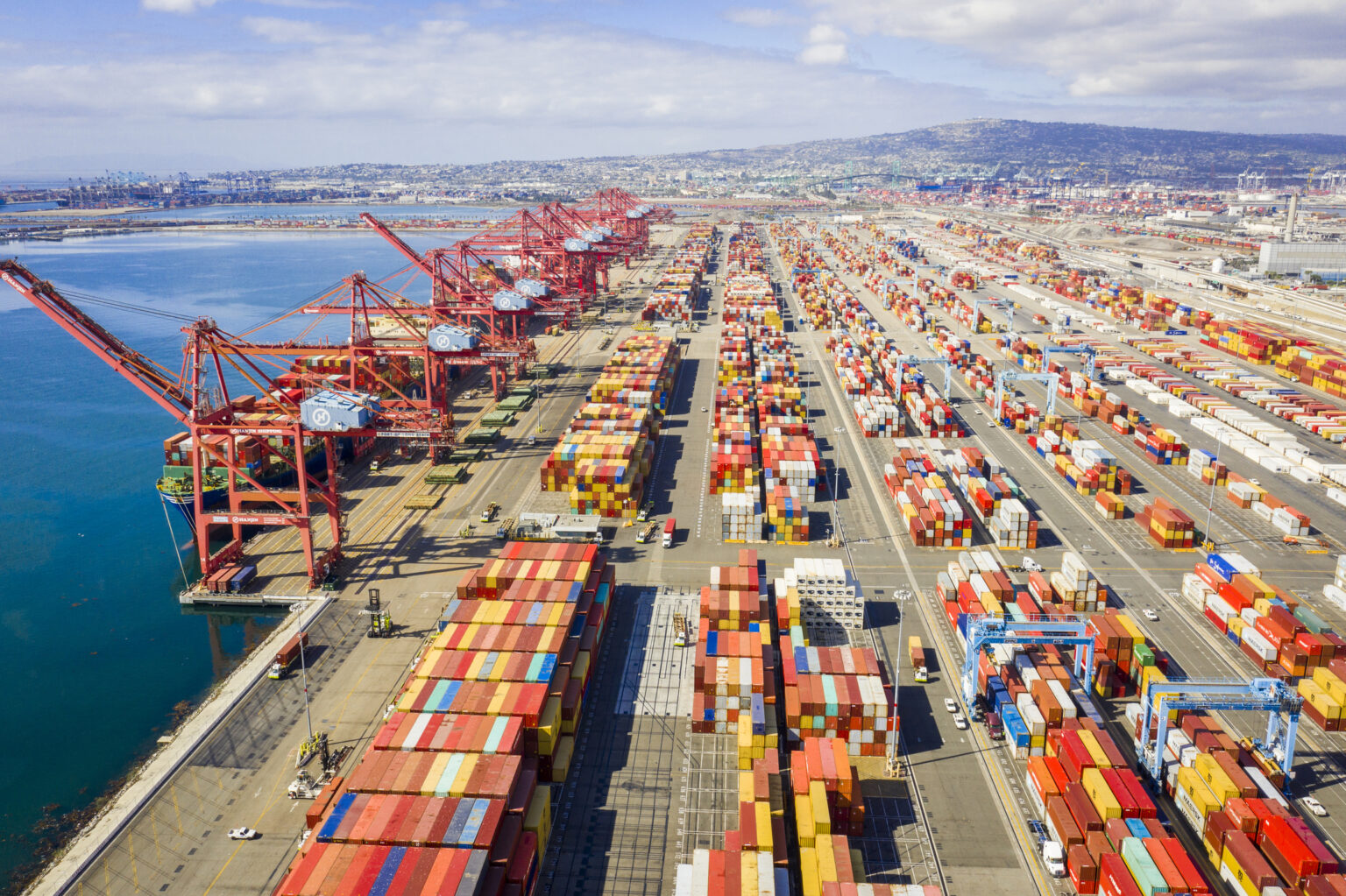
Look at the ports themselves. Ningbo-Zhoushan, a titan in its own right, handled nearly 15% more teu in the first quarter compared to last year, clocking in at an astonishing 11.55 million teu. That’s growth most emerging economies would drool over for their entire GDP, let alone a single port. Shanghai shattered its own records in March, and Tianjin is apparently operating “at full throttle” – a phrase that just makes you feel the sheer velocity of it all. Even the southern ports, while not hitting stratospheric numbers, are holding steady, absorbing ASEAN trade and vehicle exports. Not a collapse, not spectacular, but resilient. Like a well-oiled machine that just keeps on churning.
A New Intra-Asia Power Play
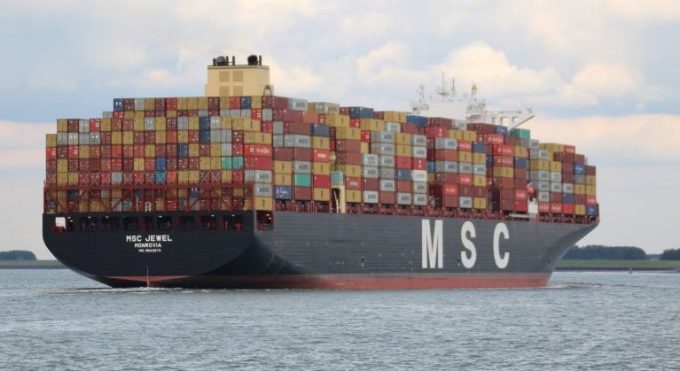
This burgeoning might isn’t going unnoticed by the players themselves. MSC, ever the nimble giant, is launching a new intra-Asia service, the Ochna. This isn’t just another route; it’s a direct, fast connection between vital ports in China and Vietnam, designed to help businesses “thrive” in this now even more dynamic market. Think of it like a superhighway being built precisely where the demand is hottest, bypassing the old, congested toll roads.
The pivot toward developing economy markets… has been under way for years and is now accelerating. China’s manufacturers have spent the past three years systematically building new trade corridors because they read the western political environment clearly and early.
This isn’t a reactive move; it’s an acceleration of a strategy that’s been in motion for years. Chinese manufacturers didn’t just wake up yesterday and decide to diversify. They made calculated, forward-thinking decisions, anticipating shifts in the global political and economic landscape. They have more options than their critics ever imagined, and a proven track record of using them to their advantage. It’s a masterclass in strategic adaptation.
The Unforeseen Ripple Effect
Stephanie Loomis of Noatum Logistics puts it in stark, human terms. The push to move away from China, which gained serious steam during the pandemic and flared up with tariffs, is a far more arduous undertaking than many realize. It’s not like flipping a switch. Finding new suppliers, building new relationships – this is complex, painstaking work. “Anybody that understands a supply chain knows this is never easy to change; it’s difficult to find new suppliers, so there was a very, very fast acceleration to expand,” she noted.
And where has much of this expansion gone? Southeast Asia is absorbing a significant portion, while interest in India, the Middle East, and Turkey is also on the rise, depending on the specific goods. This isn’t just about China’s resurgence; it’s about the cascading effect of its proactive diversification. The world is reshuffling, and China is not just a participant; it’s an architect.
A Word on Corporate Hype
It’s easy to get lost in the breathless pronouncements from logistics companies about their “innovative solutions” and “disruptive technologies.” But when you strip away the marketing fluff, what you see is a fundamental truth: China’s manufacturing and export ecosystem has adapted with a speed and strategic foresight that’s frankly awe-inspiring. They haven’t just weathered storms; they’ve learned to surf them, building new horizons as old ones faded.
This isn’t just an interesting trend; it’s a seismic shift. AI is the underlying engine, of course, quietly optimizing processes and predicting demand with uncanny accuracy, but it’s the human element – the strategic vision, the relentless drive of Chinese exporters – that’s truly powering this incredible momentum. The future of global trade isn’t being rewritten; it’s being forged in the fires of innovation and adaptation, with China leading the charge.
🧬 Related Insights
- Read more: Latino Vote Shifts: 2026 Battlegrounds Emerge
- Read more: Zebra Ditches Robots: Skild AI Gets Fetch [Analysis]
Frequently Asked Questions
What does “at full throttle” mean for Chinese ports? It means they are operating at their maximum capacity and efficiency, handling a high volume of cargo with great speed and regularity, indicating a very strong export demand.
Why are European and US ports lagging behind China? Factors include differing economic growth rates, slower adaptation to new trade routes, potential impacts of geopolitical events, and perhaps a less agile manufacturing base compared to China’s established export ecosystem.
Is this the end of supply chain diversification away from China? Not entirely. While China is proving its resilience and adaptability, companies will likely continue to seek diversification for risk mitigation. However, China’s current performance suggests it will remain a dominant force, and new trade corridors are likely to complement, rather than entirely replace, its role.