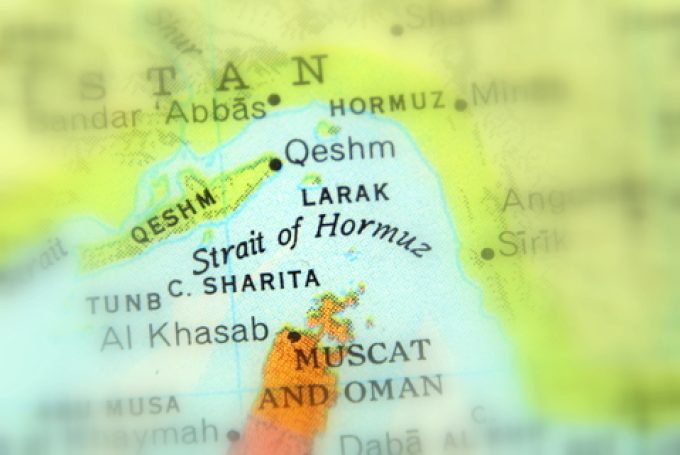
The global trade community, accustomed to the generally unfettered flow of goods through critical chokepoints, has been jolted by Iran’s recent move. For years, the Strait of Hormuz, a narrow waterway connecting the Persian Gulf to the open sea, has been a constant flashpoint. Yet, the expectation was that while tensions might simmer, the fundamental right of passage, governed by international maritime law, would largely hold. That assumption now appears to be on increasingly shaky ground.
Lloyd’s List Intelligence, a reputable shipping data firm, confirmed on May 7 that Iran has established a new governmental entity: the Persian Gulf Strait Authority. Its stated purpose? To grant permission for ships transiting the strait and to collect tolls. This isn’t just a bureaucratic renaming; it’s a formalization of control, a clear signal that Tehran is positioning itself as the gatekeeper of a waterway vital to global commerce, particularly for oil, gas, and other petroleum products.
A Shadowy Vetting Lane Made Official
This new authority effectively rubber-stamps an existing, if less transparent, process. For some time, Iran has exercised influence over which vessels traverse the strait’s northern waters, often imposing taxes on cargo. What was once a murky, de facto control is now a declared policy, complete with application forms for passage. This shift from implicit influence to explicit governance raises immediate red flags regarding the sanctity of international maritime law and the principles of freedom of navigation.
Maritime law experts are quick to point out the conflict. The United Nations Convention on the Law of the Sea (UNCLOS) explicitly calls for the peaceful passage of vessels through territorial waters. Iran’s demands to vet or tax ships directly challenge this cornerstone of global maritime order. The implications for global trade, which relies on predictability and unimpeded access, are profound. Disruptions here don’t just affect regional players; they send shockwaves across the planet, impacting fuel prices and economic stability far beyond the Persian Gulf.
Is This a Blockade by Another Name?
The timing of this announcement is also telling. Iran has accused Gulf states of aiding U.S. and Israeli attacks, while simultaneously professing openness to dialogue. This new authority appears to be a direct response, or at least a use play, against what Iran perceives as external pressures and blockades. By formalizing control over the Strait of Hormuz, Iran gains a potent tool to exert influence, potentially using it to retaliate or to negotiate concessions. It’s a high-stakes maneuver that moves the needle from geopolitical tension to direct economic coercion.
But let’s be clear: this isn’t merely about regional politics. The Strait of Hormuz is one of the world’s most critical maritime arteries, handling roughly 20% of global oil consumption. Any significant impediment to its flow has immediate and dramatic consequences for energy markets and, by extension, for supply chains worldwide. The potential for skyrocketing fuel prices and cascading economic disruptions is not hyperbole; it’s a clear and present danger that global markets are already grappling with.
The agency… is “positioning itself as the only valid authority to grant permission to ships transiting the strait.”
This move by Iran isn’t just about asserting sovereignty; it’s about seizing control of a vital global asset. The implications for international trade are enormous. If passage can be dictated and taxed by a single nation, it fundamentally alters the calculus for shipping, insurance, and global supply chain resilience. This is more than just a new agency; it’s a potential restructuring of maritime trade rules, enforced by geopolitical necessity rather than international consensus.
Looking back, historical parallels emerge. Throughout history, control of strategic waterways has been a source of immense power and conflict. From the Suez Canal to the Strait of Malacca, the ability to regulate passage has dictated economic fortunes and geopolitical alignments. Iran’s action in the Strait of Hormuz fits this pattern, albeit in a modern context where globalized supply chains amplify the impact of any disruption. The question now is whether the international community will stand by this established legal framework or be forced to adapt to a new reality of transit control.
While Iran claims openness to talks, the establishment of this authority suggests a preference for unilateral action. This creates a precarious situation for global trade. Shipping companies and nations dependent on the strait will be forced to navigate a landscape where passage is not a right, but a privilege granted—and potentially revoked—by Tehran. This uncertainty is the enemy of efficient, predictable global commerce.
What Happens Next?
The establishment of the Persian Gulf Strait Authority is a significant development. It formalizes Iran’s control over a critical global chokepoint, raising serious questions about adherence to international maritime law and the future of free navigation. The economic ramifications could be severe, impacting everything from fuel prices to the cost of goods delivered to consumers worldwide. This is a story that will continue to unfold, with potentially far-reaching consequences for the global supply chain.
🧬 Related Insights
- Read more: Dems Cool on Trump Impeachment Amid Iran Threats: A Breather for Strapped Supply Chains
- Read more: Gemini Cuts Space: India-Med Market Heats Up [Carrier Rates Soar]
Frequently Asked Questions
What is the Strait of Hormuz Authority? It’s a newly established Iranian agency tasked with approving transit and collecting tolls from shipping vessels passing through the Strait of Hormuz.
Why is the Strait of Hormuz important? It’s a vital waterway connecting the Persian Gulf to the open sea, crucial for the shipment of oil, gas, and other petroleum products, with about 20% of global oil consumption passing through it annually.
Does Iran have the right to control shipping in the Strait of Hormuz? International maritime law, specifically the UN Convention on the Law of the Sea, generally calls for peaceful passage through territorial waters. Experts argue Iran’s demands to vet or tax vessels violate these international principles.