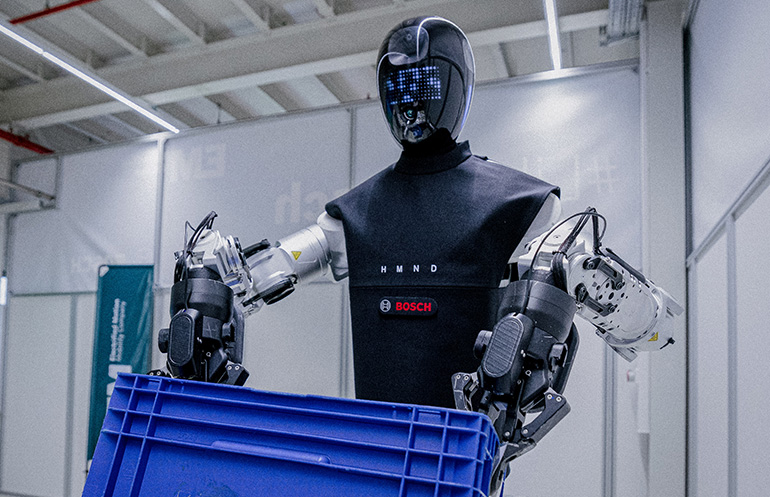
The robot on the trade show floor looks effortless. It glides toward a bin, identifies the object, reaches in, and places the item exactly where it needs to go. The crowd nods. Investors take notes. Engineers celebrate. Then the robot ships to its destination, and the world stops behaving like the demo.
This demo-to-deployment gap remains one of the most persistent challenges in robotics. Machines that perform beautifully under controlled conditions often struggle with shifting light, reflective surfaces, transparent materials, moving people, and forklift traffic. It’s almost as if the entire purpose of a trade show is to showcase the illusion of competence.
Robots don’t need to see like humans. Robotic perception should be reliable, task-specific, and measurable under real operating conditions. Think less ‘eyes,’ more ‘accurate measurement tool.’
The Controlled Environment Problem
Lab conditions often favor the perception stack. Lighting, object position, and backgrounds are controlled, and the robot is given every advantage. Real-world environments grant none of these favors. Warehouse floors, hospital corridors, and manufacturing lines introduce shifting light, reflective surfaces, moving people, vibration, and material variation. It’s the difference between a perfectly manicured golf course and a muddy, pothole-ridden country lane.
Each of these variables can expose a weakness that never appeared in the demo. What looks like a planning or manipulation failure may begin with sensing, calibration, or poor confidence estimation. A robot cannot reliably plan around a depth map that is confident but wrong. This is where the illusion shatters.
Traditional 2D cameras remain useful for recognition, inspection, and tracking. But a 2D image does not measure depth. Depth can be inferred from motion, learned priors, or multi-view geometry, but those estimates often break when lighting, texture, occlusion, or materials change. It’s like trying to gauge distance by looking at a photograph – you can make educated guesses, but you’re missing the crucial third dimension.
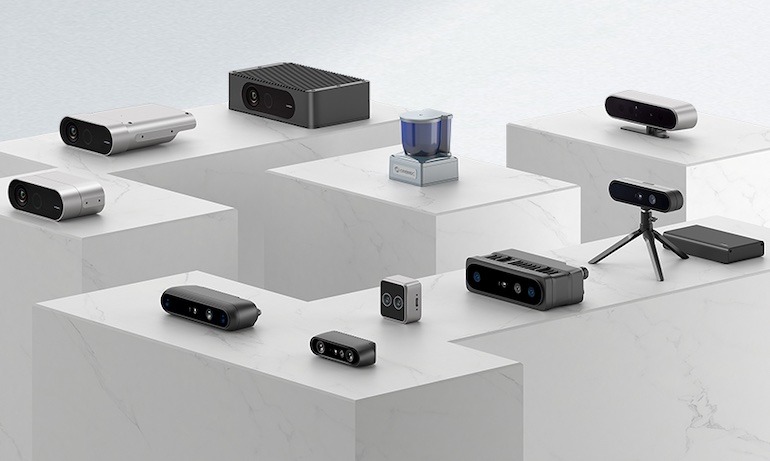
This is why 3D vision systems, depth cameras, and sensor fusion have become central to robotics deployment. Robots need spatial measurements from the physical world, not smarter guesses from flat images. We’re moving beyond mere pattern recognition to a genuine understanding of spatial relationships.
Depth Sensing Isn’t a Silver Bullet
Robotic vision has moved through several generations of sensing technology, each solving some problems while introducing others. It’s a story of iterative improvement, not a singular breakthrough.
Early robotic vision systems relied heavily on 2D cameras paired with highly structured environments. Assembly-line robots worked with fixed part positions, orientations, and lighting. In many cases, the intelligence was in the fixture, not the sensor. The robot was essentially a highly precise puppet on a string.
Structured light systems project a known pattern onto a scene and estimate depth by reading how that pattern deforms. This approach can work well for indoor inspection and measurement. However, it can be sensitive to ambient light, motion, reflective or transparent surfaces, and interference from other active emitters. Think of it as using a flashlight in a blindingly sunny room – the pattern gets washed out.
Stereo vision uses two offset cameras to estimate depth. By matching corresponding points between the two images, the system estimates disparity and converts it into depth. Passive stereo depends on texture and light; active stereo adds infrared projection for low-texture scenes. Stereo systems can scale well for robotics, but low texture, repetitive patterns, motion blur, occlusion, reflective materials, and range trade-offs all matter. It’s like trying to find corresponding dots in two slightly different, blurry photos.
Time-of-flight (ToF) technology estimates distance from returning infrared light. ToF cameras can be compact, fast, and useful for dense depth, but ambient infrared, multipath reflections, reflective surfaces, and range ambiguity can all distort results. And here’s the kicker: multipath reflections mean the light bounces around, creating ghost images and confusing the distance measurement. It’s like shouting in a canyon and hearing your echo arrive before the original sound.
The practical conclusion is simple: No sensor category is universally best. Structured light, stereo, ToF, lidar, RGB cameras, and inertial measurement units (IMUs) all have useful roles. The right choice depends on task, range, lighting, materials, motion, compute, safety needs, and failure tolerance. This isn’t about finding the perfect sensor, but the right combination for a given problem. It’s a complex engineering puzzle.
AI: A Crutch, Not a Cure
It’s tempting to assume that AI can compensate for sensor limits. AI can substantially improve robotic perception. It can denoise depth maps, fill gaps, fuse RGB and depth, estimate pose, and track motion. It’s the sophisticated post-processing we’ve come to expect.
AI still depends on reliable physical data. A robot needs depth estimates that are correct enough to act on. The difference matters near people, expensive goods, or machinery. When a perception system has to “guess,