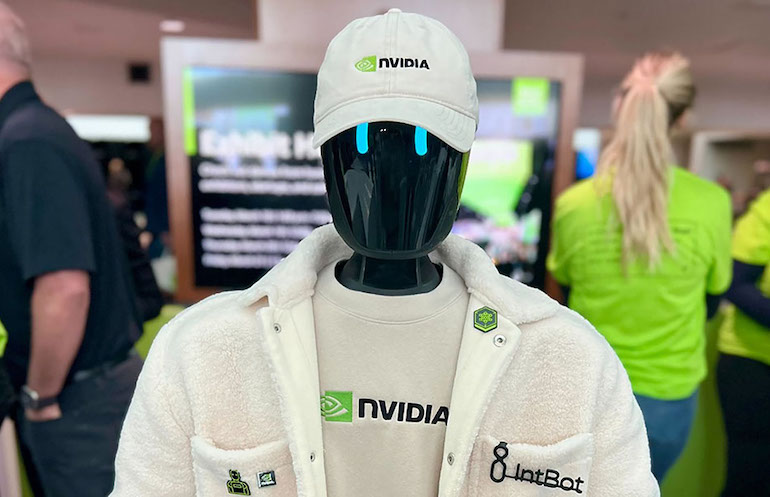
Look, for years, the big promise has been that robots would be everywhere, smoothly handling customer service, guiding lost souls through convention centers, and generally making our lives easier. We’ve seen countless demos, seen the shiny humanoid forms prancing around trade shows, heard all the breathless PR about “embodied AI” and “social intelligence.” And what did we have to show for it? Mostly robots that could fetch a drink or, if you were lucky, point you vaguely towards the restrooms. This latest partnership between IntBot and Certis, though, signals a shift. They’re not just talking about demos anymore; they’re talking about “operationally viable deployments.” That’s a significant step, a much-needed dose of reality in a field often drowning in vaporware.
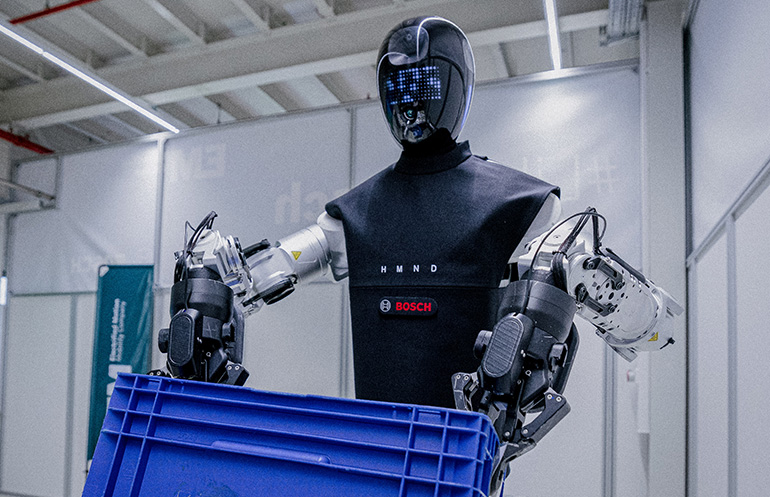
What’s the big idea here? IntBot, bless their San Jose hearts, reckon their General Social Intelligence tech is ready for prime time. Certis, a Singapore outfit with a hefty track record in running complex operations (think security and facilities management), is supposed to provide the real-world grit. The goal? Humanoid concierge and assistance bots that can actually, you know, interact with people without tripping over their own feet or delivering the wrong information in a synthesized monotone. They want these things to handle safety, reliability, and service delivery in busy public spaces. Frankly, it’s about time someone tried to make these robots more than just glorified Roomba prototypes.
Is This the Real Deal for ‘Physical AI’?
IntBot’s CEO, Lei Yang, is out there proclaiming that the days of robots needing to be locked behind cages are over. “With multimodal models maturing, the decisive bottleneck for embodied AI shifts from task manipulation to human interaction,” he declared. That’s a fancy way of saying robots can probably pick things up now, but they still can’t hold a decent conversation. And where better to test this out than Singapore, a place practically built on high-tech efficiency and a public that’s generally more forgiving of a slightly awkward robot than, say, a New Yorker. The logic, at least on paper, is sound. Pairing IntBot’s brains with Certis’ brawn—or rather, their operational know-how—is supposed to create a robot that’s not just smart, but street-smart.
“A robot’s success in public spaces is increasingly measured by its ability to engage people, and Singapore’s smart-infrastructure leadership makes it the ideal launchpad for physical AI. Partnering with Certis ensures our intelligence layer is backed by world-class operational reliability.”
But let’s pump the brakes for a second. We’ve heard this song before. Companies consistently underestimate the sheer messiness of the real world. Getting a robot to navigate a crowded hotel lobby, understand a mumbled question, and provide a helpful, accurate answer is, to put it mildly, a Herculean task. It’s one thing to program a robot to greet guests; it’s another entirely to have it handle a complex query about local transport or a dietary restriction with grace and accuracy. And who’s actually footing the bill for all this scaling? That’s the question that always hangs in the air.
Why Singapore? And Who Profits?
Certis isn’t just jumping in for the warm fuzzies. Their CEO, Raahul Kumar, talks about integrating robotics into a “wider ops-tech model.” This sounds suspiciously like they see robots as another tool to optimize their existing service offerings—security, facilities, workforce management. They’re not just deploying robots; they’re embedding them into their business model. This isn’t about altruism; it’s about efficiency and potentially, cost reduction. If a robot can handle basic wayfinding or information requests, that frees up human staff for more complex, higher-value tasks—or, let’s be honest, it might mean fewer human staff are needed at all. This is where the real money is made, in streamlining operations and driving down labor costs.
So, while IntBot is talking about “social intelligence” and natural interaction, Certis is focused on operational design and frontline deployment. They want robots to “ease pressure on frontline teams” and offer the public a “more intuitive way to navigate.” It’s a neat package, but underneath it all, it’s a play to enhance their service delivery and, presumably, their profit margins. Singapore, with its tech-forward government and demanding public sector, is the perfect testbed. If it works there, it can theoretically work anywhere.
The Nitty-Gritty: What Can These Bots Actually Do?
The intended use cases are a familiar litany: wayfinding, visitor assistance, multilingual engagement, customer service support, and frontline operational support. Think hotels, transit hubs, healthcare facilities, and retail spaces. The promise is that these robots will move beyond rigid scripts, becoming more adaptive and intuitive. This is the holy grail, of course—a robot that can think on its feet. The reality, historically, has been far more rigid. Will these IntBot/Certis hybrids truly break free from the limitations of pre-programmed responses and basic sensor input? Early pilot deployments in Singapore will be the real test. If they can manage to impress the notoriously discerning Singaporean public and meet Certis’ operational demands, then maybe, just maybe, we’re on the cusp of something. But forgive me if I don’t hold my breath. The history of robotics is littered with grand ambitions that fizzled out when faced with the stubborn reality of human unpredictability and the bottom line.
🧬 Related Insights
- Read more: AI Reimagines Supply Chain: From Record-Keeping to Real-Time Decisions
- Read more: Mexico Exports Surge 33% Amid Tariff Warnings
Frequently Asked Questions
Will these robots replace human jobs?
Potentially, yes. The stated goal is often to ease pressure on frontline teams and handle repetitive tasks, which could lead to a reduction in the need for human workers in certain roles, especially in customer service and basic assistance.
What is ‘socially intelligent’ AI in this context?
It refers to AI that can understand and respond to human social cues, emotions, and context, allowing for more natural and intuitive human-robot interaction in public spaces, rather than just performing pre-programmed tasks.
Is this the first time robots are being used in Singapore?
No, Singapore has been a hub for robotic innovation and deployment across various sectors, including logistics and healthcare. This partnership focuses specifically on ‘socially intelligent’ humanoid robots for customer-facing roles in enterprises and public environments.