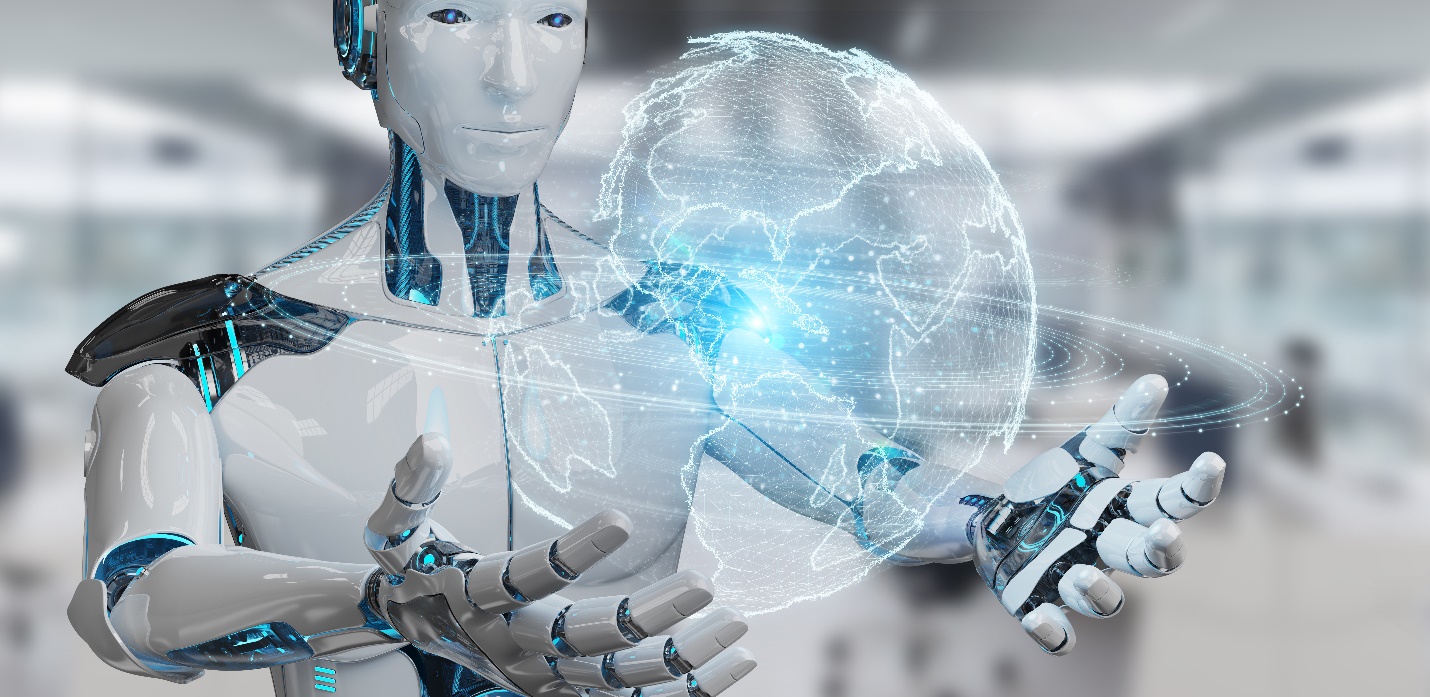
Look, this isn’t just about building fancier robots that can pick boxes off a shelf a little faster. This is about the fundamental shift when artificial intelligence graduates from the server farm and steps onto the factory floor, into our homes, and yes, right next to us. We’re talking about the dawn of truly collaborative machines, not just tools, but entities that can genuinely perceive, understand, and react to the chaotic, beautiful unpredictability of human existence. It’s the moment your next coworker might have a chassis and a processing unit, but also— crucially—the ability to subtly ‘read the room.’
And that’s precisely what this exploration into how humanoid robots learn to interpret their surroundings, especially when people are involved, is all about. It’s about moving beyond programmed responses to nuanced, real-time comprehension. Think about it: we humans are masters of this. We instinctively adjust our gait when a child darts into our path, we hear a distant crash and our heads snap around, all without conscious thought. Our brains are like hyper-advanced, self-optimizing AI engines, processing a tsunami of sensory data in milliseconds. A humanoid robot? It’s been trying to reverse-engineer that innate human superpower.
Seeing and Believing: Beyond Just ‘Eyes’
Situational awareness, the fancy term for ‘knowing what’s going on,’ kicks off with vision. And not just any vision, but vision that understands context. We’re talking about robots not just seeing an object, but understanding its relationship to a person, to other objects, to the overall environment. RGB sensors give them color, but depth perception—that’s where the real nuance comes in. Time-of-flight, structured light, stereo vision—these are the robotic equivalents of our brain’s sophisticated depth-sensing magic, allowing them to build a 3D map of their world.
But here’s the rub, the classic engineering puzzle: getting all that visual data from a robot’s ‘eyes’ (often perched high on its head or embedded in its torso) all the way to its central ‘brain’ without lag. Long cables are the enemy of responsiveness, introducing latency that can turn a split-second decision into a costly mistake. The solution? A distributed intelligence. Small, local processors, like miniature AI whispers, sit right next to the cameras. They do the heavy lifting on initial processing, sorting, and filtering, only sending the most critical, context-rich information back to the main brain. This is where technologies like Analog Devices’ GMSL come into play, acting like super-highways for visual data, enabling that real-time understanding without crippling delays. It’s like giving the robot’s brain tiny, super-fast assistants embedded throughout its body.
The Sound of Safety: Listening to the Environment
Vision alone, though, is only half the story. Imagine a robot that can see everything but is deaf to the world around it. That’s like trying to navigate a busy intersection blindfolded. For a robot to truly be a good coworker, it needs to hear its environment, not just in a conversational sense (though that’s cool too), but in an alert-system kind of way. If something falls behind it—a tool, a piece of equipment, a panicked shout—it needs to not only register the sound but understand its significance and its origin.
Again, latency is the villain. Getting audio from multiple microphones, scattered across a robot’s form, back to the central processor without delay is paramount. This isn’t just about clear speech; it’s about precise localization and event detection. Geir Ostrem from Analog Devices puts it perfectly:
“When it comes to sound events, localization and detection, having deterministic latency from the microphone to the computer is very critical. Now you’re talking about beamforming and the acoustic field, and it requires that you know the relative delays between the different microphones.”
And that’s where tech like ADI’s A2B audio bus shines. It’s not just a cable; it’s a meticulously engineered system guaranteeing that every audio signal arrives at the same, predictable time. This enables sophisticated techniques like beamforming—essentially, the robot ‘focusing’ its hearing in a specific direction to pinpoint sound sources. It’s like giving the robot an auditory spotlight, capable of isolating a whisper in a crowded room.
The Wires and the Watts: The Unseen Battle
So we’ve got vision, we’ve got audio, all processed with lightning speed thanks to clever architecture and dedicated tech. But all this sensing, all this processing, all this ‘thinking’ requires juice. And here’s where the corporate PR often conveniently glosses over the gritty reality: powering these sophisticated machines in environments where they can’t just be plugged into the wall is a Herculean task. Humanoid robots, by their very nature, are mobile and often untethered. This means every sensor, every processor, every actuator is drawing power from a battery. Optimizing power consumption isn’t just about efficiency; it’s about enabling the robot to actually do its job for a meaningful amount of time before needing a recharge. The sheer amount of wiring required for all these individual sensors, each needing its own power and data lines, is, as Ostrem mentions, one of the biggest hurdles. Technologies like A2B, which carry power, audio, and control signals over just two wires, are therefore not just about streamlining audio but about drastically reducing the wiring harness’s weight and complexity, indirectly contributing to power efficiency by lessening the load.
My Unique Take: The ‘Social Contract’ of Robots
What struck me most deeply here, beyond the impressive technical specifications, is the implicit development of a ‘social contract’ between humans and robots. It’s not enough for robots to be safe; they need to be predictably safe, and that predictability comes from understanding us. The emphasis on processing visual and auditory cues in real-time, on understanding “natural unpredictability”—that’s the AI learning to read the subtle cues we humans give off constantly. It’s the difference between a guard dog that barks at anything unusual and a well-trained service animal that can sense anxiety and offer comfort. This is the AI building empathy, not through emotion, but through incredibly sophisticated pattern recognition and predictive modeling of human behavior. This isn’t just about a robot not bumping into you; it’s about a robot understanding if you’re stressed, if you’re focused, or if you need space. That’s a level of interaction that moves us from mere automation to genuine partnership.
The Road Ahead: More Than Just a ‘Better Battery’
The news here isn’t just about better sensors or faster data transfer. It’s about the foundational AI platform shift that’s happening right under our noses. We’re building machines that don’t just execute commands, but that can perceive and interpret the world with a growing degree of human-like nuance. This technological leap, fueled by advancements in processing, sensing, and connectivity, is what will unlock the true potential of humanoid robots. It means they won’t just be confined to highly structured, predictable environments; they’ll be able to step out into the messier, more dynamic world we actually live in.
The integration of AI that allows robots to ‘read the room’ isn’t some far-off sci-fi fantasy. It’s happening now, driven by the very real need to fill labor gaps and improve efficiency. And it’s going to redefine our workplaces and, eventually, our lives in ways we’re only just beginning to comprehend. Get ready, because your future colleagues are learning to understand you.