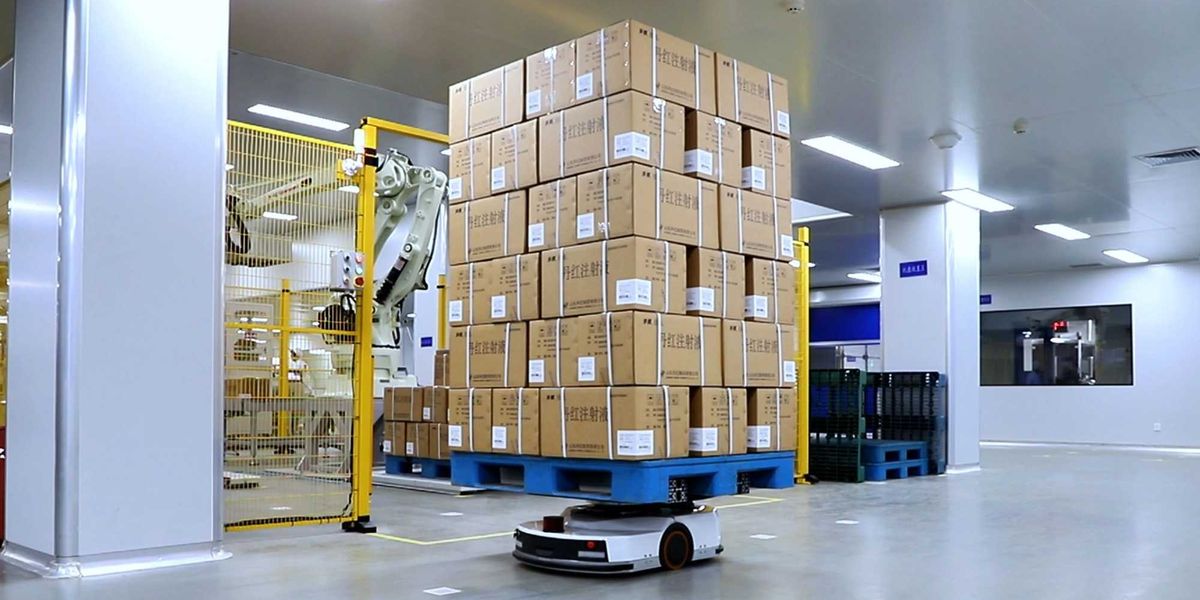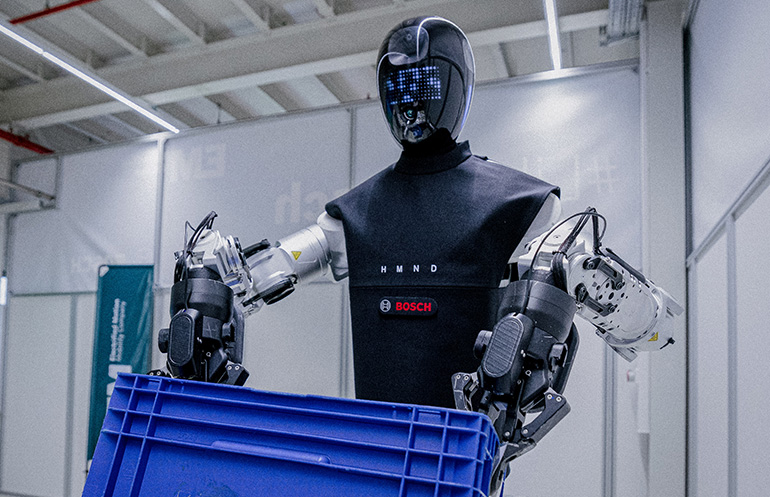
A robot arm smoothly picks a box off a conveyor, its movements fluid and precise, then places it gently onto a waiting trolley. This isn’t sci-fi; it’s the new reality unfolding on factory floors across Europe.
Look, the roar of the AI revolution isn’t just about chatbots and image generators anymore. It’s about physical machines, powered by that same lightning-fast intelligence, stepping out of labs and into the gritty, real-world trenches of manufacturing and logistics. And Humanoid, a company that’s barely a year old, is practically shouting from the rooftops about it, thanks to some seriously massive partnerships with industrial heavyweights Bosch and Schaeffler.
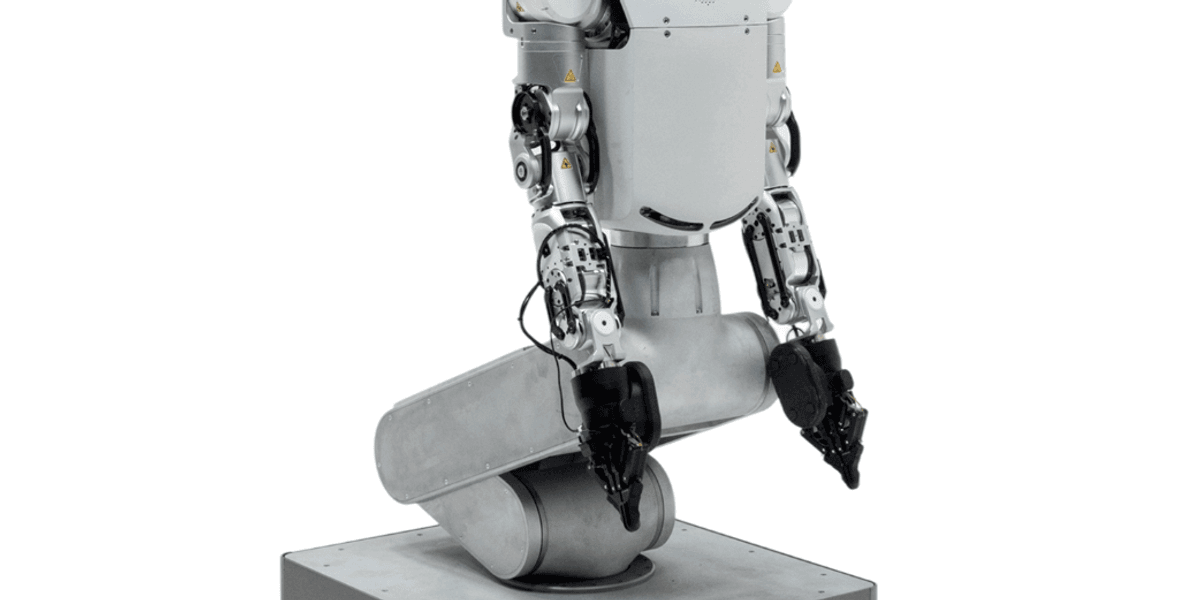
This isn’t just another tech announcement; it’s a declaration of intent. Humanoid, formerly SKL Robotics Ltd., has snagged deals that feel like the opening gambit in a much larger game. They’re not just building robots; they’re building the future infrastructure of industrial work. Their HMND platform – a wheeled marvel with a distinctly human-like torso, head, and arms – is designed to slide right into our existing, human-centric spaces. Think of it as giving your warehouse a brain transplant, one that can lift, move, and adapt without breaking a sweat. And honestly, the pace at which they’re moving is breathtaking.
The Bosch Proof-of-Concept: More Than Just Box-Stacking
The ink is barely dry on the ink-jet printers, but the Humanoid-Bosch collaboration already has a success story to tell. Back in March 2026, their joint proof of concept (POC) at a Bosch intralogistics facility in Germany wasn’t just about proving a robot could do something; it was about proving it could do it flawlessly within a complex industrial workflow. We’re talking about autonomously shuttling boxes of five different sizes, across multiple footprints, weights, and heights – a ballet of precision and adaptability. The key here? KinetIQ, Humanoid’s proprietary AI framework. It was the conductor of this sophisticated orchestra, and the results apparently confirmed not just technical readiness, but, and this is the big one, scalability.
“For Humanoid, this agreement is a critical step in our roadmap, bridging the gap between POC validation and large-scale deployment.”
That’s Artem Sokolov, founder and CEO of Humanoid, laying it all out. He’s talking about shortening the path from a cool idea to something that’s actually working and making money in the real world. This isn’t just a handshake; it’s a strategic manufacturing partnership aimed squarely at getting these robots out there, accelerating their adoption. And when you’ve got Bosch, a name synonymous with industrial prowess, backing you, that’s not just noise; that’s a seismic shift.
Schaeffler: A Seven-Digit Future of Actuators
But wait, there’s more! Just last week, Humanoid announced a similarly massive, phased agreement with Schaeffler Technologies AG. This isn’t a small test run; it’s a commitment to integrating Humanoid’s robots into live manufacturing operations, starting in Germany before the end of 2026. Humanoid is boldly claiming this is one of the largest humanoid robot rollouts ever disclosed – quite a statement for a company founded in 2024. And the scale extends beyond just the robots themselves. Humanoid is also naming Schaeffler a preferred supplier for a staggering number of joint actuators – we’re talking about a seven-digit figure by 2031. This isn’t just about buying parts; it’s about co-engineering the very sinews of these robotic workers.
The plan is for initial deployments to begin in December 2026, running through June 2027, at two Schaeffler sites. One will focus on refining that box-handling capability, while the other will undergo rigorous testing – a three-month demonstration, followed by a three-month validation period for stable, continuous operation at near-production scale. And it’s all happening under Humanoid’s robot-as-a-service (RaaS) model, meaning they’re not just selling hardware; they’re selling a complete solution: fleet management, 24/7 support, updates, and ongoing performance tuning. It’s a full-service approach to automation.
Why Does This Matter for the Supply Chain?
So, what’s the big deal for us, the watchers of the supply chain beat? It’s this: the barrier to entry for sophisticated automation just plummeted. For years, humanoid robots felt like a distant dream, a high-cost, high-risk endeavor for only the biggest, most R&D-rich corporations. But these partnerships change the calculus entirely. Bosch’s global production infrastructure and deep industrialization expertise, coupled with Schaeffler’s component prowess, are the critical enablers that transform a promising prototype into a mass-produced reality. This isn’t just about Humanoid; it’s about the entire ecosystem coming online. It signifies a fundamental platform shift where AI is no longer just software; it’s the intelligence animating the physical world around us, making our supply chains faster, more flexible, and, dare I say, more wonderous.
And it’s worth remembering that Bosch’s involvement isn’t just about manufacturing. They plan to explore integrating their own components – actuators, drives, and sensors – into future HMND iterations. This kind of deep integration is how truly strong and cost-effective solutions are born. It’s a virtuous cycle, where the development of the robots drives innovation in the components, and vice-versa. The potential for efficiency gains, for tasks that are dull, dirty, or dangerous being handled by tireless metal hands, is immense.
The Rise of the Robot Colleague
This isn’t about robots replacing humans wholesale—at least, not yet. It’s about augmenting human capabilities, freeing up people from repetitive strain and dangerous tasks, and allowing them to focus on more complex, problem-solving roles. Imagine a future where a human supervisor can orchestrate a fleet of these robots with a few taps on a tablet, where the robots handle the heavy lifting and the monotonous sorting, while humans manage the exceptions and the strategic planning. This is the promise, and with deals like these, it feels like that future is no longer just on the horizon; it’s arriving at our loading docks.
The speed at which Humanoid has moved from founding to these monumental partnerships is a proof to the maturity of AI and robotics technology. Companies that can bridge the gap between sophisticated AI frameworks like KinetIQ and the practical demands of industrial production are poised to redefine entire sectors. The convergence of advanced AI, capable hardware, and scalable manufacturing is the engine driving this next wave of automation. And honestly, it’s incredibly exciting to witness.
🧬 Related Insights
- Read more: DSV’s CMD Hangover: Analysts Slam Logistics Giant
- Read more: Air Cargo’s New Reality: Beyond the Fuel Scare
Frequently Asked Questions
What does Humanoid’s HMND robot do?
The HMND robot is a wheeled mobile manipulator designed for industrial environments. It features a humanoid torso, head, and two arms, allowing it to adapt to various tasks in human-centric spaces, such as handling boxes in logistics and manufacturing settings.
How will Bosch and Schaeffler contribute to Humanoid’s robot production?
Bosch will act as Humanoid’s contract manufacturing partner, providing strategic oversight and technical expertise for hardware design, production, supply chain, and cost optimization. Schaeffler will be a preferred supplier for critical components like joint actuators, and their facilities will be used for initial robot deployments and testing.
What is the robot-as-a-service (RaaS) model?
Humanoid’s RaaS model means they provide the robots along with a comprehensive service package. This includes fleet management software, maintenance, 24/7 technical support, software updates, and ongoing performance management, offering a full-service solution rather than just selling hardware.