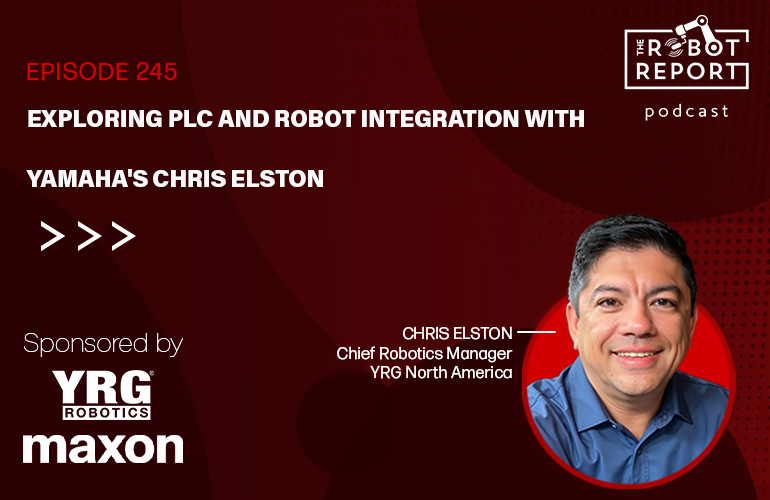
Are we still in 2005, marveling at the idea of a Programmable Logic Controller actually talking to a robot arm? Because that’s the vibe I’m getting from this latest chat with Chris Elston, Chief Robotics Manager at Yamaha Robotics Group (YRG) North America, on The Robot Report Podcast. He’s out there, helping “machine builders and end users integrate robotics and PLC-driven automation into user-friendly manufacturing environments.” Sounds… familiar. Like, deeply, existentially familiar.
Look, Elston’s got the bona fides. He’s plugged into industrial robots, controls, system integration — the whole nine yards. He even founded MrPLC.com, which, let’s be honest, probably sounded pretty cutting-edge when it launched. His whole spiel is about making “advanced automation practical, scalable, and easy to deploy.” Standard stuff, really. It’s the kind of language that’s been dusted off and recirculated so many times it’s practically threadbare.
So, What’s the Big News? The Same Old Song?
Apparently, the big takeaway is that the PLC “isn’t going anywhere — it’s evolving.” Groundbreaking. You don’t say. Every piece of industrial hardware that’s been around since disco probably claims it’s ‘evolving.’ The real question isn’t if it’s evolving, but who is actually benefiting from this evolution, and more importantly, who’s writing the checks. YRG, through its sponsorship of this very podcast (nice), is clearly pushing its own narrative. Their Linear Conveyor Modules and Advanced Operator Interfaces are supposedly pushing efficiency and flexibility. Sure, they are. For YRG. And for the engineers who are forced to cobble together systems that, frankly, should have been more integrated twenty years ago.
Who’s Actually Making Money Here?
This is where my inner cynic really perks up. Elston’s job, and by extension YRG’s business, is to make these integrations “user-friendly.” That’s code for “we’ll charge you extra for the wizards and the simplified interfaces because you, the end-user, don’t have the time or expertise to wrestle with the raw plumbing yourself.” And that’s fine. Businesses exist to make money. But let’s not pretend this is some revolutionary leap forward in human-robot collaboration.
It’s more like a very expensive polish on a well-worn piece of machinery. We’re not talking about sentient AI taking over your factory floor here. We’re talking about making sure the robot arm doesn’t accidentally smash into the conveyor belt it’s supposed to be picking parts off of, thanks to a carefully orchestrated dance between a PLC and the robot’s brain. YRG is selling the choreography.
And then there’s maxon, another sponsor, showing off their “High Efficiency Joint (HEJ) portfolio.” Fully integrated robotic joints. Sounds good. Built for “real-world robotics.” Because, you know, the other robotics aren’t real? It’s the constant barrage of corporate speak designed to make you feel like you’re missing out on something groundbreaking when, in reality, it’s just incremental improvement dressed up in a fancy suit.
A Ghost of Automation Past?
This whole discussion feels like a historical reenactment. The PLC has been the workhorse of factory automation for decades. Robots have been around, albeit in more confined spaces, for just as long. The idea of getting them to play nice is less of a revelation and more of a persistent, ongoing engineering challenge that companies like YRG are happy to solve… for a fee. It reminds me of the early days of the internet, where companies were selling “web presence” services. Yes, having a website was important, but the basic concept wasn’t that complex; they were selling the ease of not having to learn HTML.
Elston’s community, MrPLC.com, is a proof to the fact that there’s a dedicated, if somewhat niche, group of people who care deeply about this stuff. They’re the ones who actually understand the nuts and bolts. For the rest of us, it’s just more noise. More claims of efficiency, more talk of integration, and more sponsors subtly weaving their product pitches into a narrative that, at its core, is about making old technology talk to new technology a little bit better.
“And let’s face it: The PLC isn’t going anywhere — it’s evolving.”
Indeed. It’s evolving right alongside the robots it’s been commanding for years. The real question is when we’ll see a genuine paradigm shift, not just another iteration of the same old automation dance. Until then, I’ll be here, waiting for the actual innovation, while companies like YRG keep busy selling the evolution of what already exists.
And if you’re looking to get even more bogged down in the details, there’s the Robotics Summit & Expo in Boston. More sessions, more speakers, more networking. All for the low, low price of… well, you gotta register to find out. Probably another opportunity for sponsors to whisper sweet nothings about their “integrated solutions” to a captive audience.
Does This Mean PLCs Are Obsolete?
Not at all. The podcast guest, Chris Elston, explicitly states that PLCs are evolving and aren’t going anywhere. They remain a fundamental component of industrial automation. The discussion is about integrating them better with newer robotic systems, not replacing them entirely.
What’s the Benefit of PLC and Robot Integration?
The core benefit highlighted is creating more user-friendly and scalable manufacturing environments. This allows for greater efficiency and flexibility, essentially making advanced automation more practical for businesses without deep in-house control system expertise. It’s about simplifying complex operations.
Is This Just More Corporate Hype?
While the podcast and sponsors are naturally promoting their solutions, the underlying concept of PLC and robot integration is a genuine and ongoing engineering challenge. The “hype” comes in how it’s presented as entirely new rather than an evolution of existing technologies. The true benefit lies in the practical implementation and the specific gains in efficiency and ease of use, not necessarily in a revolutionary technological leap.