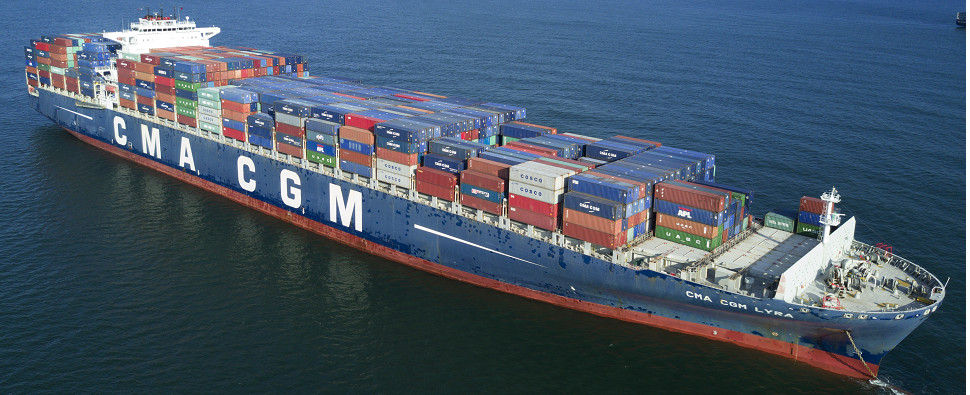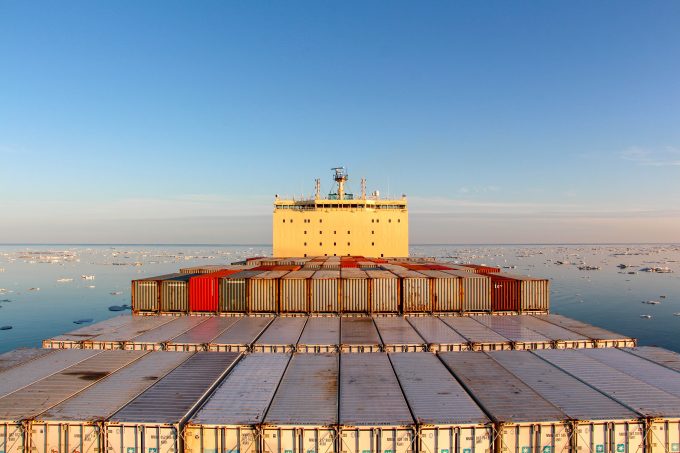
Everyone expected South Korea, a titan of global trade, to be eyeing the Northern Sea Route (NSR) as the next frontier for efficient shipping. With shrinking ice caps and a geopolitical push for new trade arteries, the promise of a shorter, faster passage to Europe seemed almost inevitable for a nation reliant on maritime commerce. But the reality, as laid bare by a recent Ministry of Oceans and Fisheries commissioned study from the Korea Maritime Institute (KMI), is far less rosy. The expectations? A revolution. The current assessment? A decades-long wait, if it ever truly takes off for large-scale commercial viability.
A Pilot Program That Nobody Wants
Here’s the thing: the government is practically begging for participation, and the market is yawing. Panstar Line, a local ro-pax ferry operator with precisely zero containerships, is the sole applicant for a pilot voyage through the NSR this September. They’ll be chartering a 3,000 TEU vessel, a minnow in the grand scheme of global shipping. Even South Korea’s flagship carrier, HMM, has publicly signaled its disinterest, echoing the KMI’s sober analysis. This isn’t just a lack of enthusiasm; it’s a clear market signal that the immediate economics don’t add up. When your own national champions aren’t lining up, it raises a giant red flag.
The Ice Melts, But the Draught Doesn’t
The core problem, as identified by the KMI, isn’t just the ice. While global warming is indeed expected to make the Arctic more accessible by 2040, facilitating larger vessels and better economies of scale, there’s a stubborn physical limitation: draught. Large container ships, the workhorses of modern global trade that can carry 20,000+ TEUs, simply can’t navigate the shallower waters of the NSR with the necessary cargo loads. This fundamentally caps the potential for significant economic advantage over established routes like the Suez Canal. It’s like having a superhighway that only small cars can use; profitable, perhaps, but hardly a game-changer for the trucking industry.
“The economic feasibility, compared to the actual costs incurred by shipping companies, will be revealed during the trial operation this September.”
This quote from the Ministry of Oceans and Fisheries, while attempting to sound forward-looking, rings a bit hollow given the lack of applicants. It sounds more like a hopeful justification for an expensive experiment than a confident projection of future success. The ministry plans to continue “regular” trial operations and gather data, which sounds sensible on paper. But accumulating data is only useful if the underlying business model has a fighting chance. And right now, that chance appears slim.
China’s Head Start and South Korea’s Catch-Up
It’s important to note that South Korea isn’t entirely alone in exploring Arctic routes. China has already established a significant presence, with companies like Yangpu Newnew Shipping and Safetrans being frequent users of the NSR. This isn’t just a theoretical pursuit for Beijing; it’s a tangible part of their Belt and Road Initiative, aimed at diversifying trade routes and expanding geopolitical influence. South Korea’s initiative, championed by President Lee Jae-myung, seems to be a reactive measure, an attempt to not be left behind rather than a proactively conceived strategic advantage. The historical precedent is also weak; a 2013 voyage by Hyundai Glovis using a chartered icebreaking tanker to move naphtha is hardly comparable to regular containerized cargo.
The Long Game: Profitability in 2040 and Beyond?
The KMI’s own assessment places potential profitability for commercial operations only after 2040. This isn’t a near-term opportunity; it’s a bet on a future that’s still highly speculative. For shipping companies operating on tight margins, that’s an unfathomably long horizon. The upfront investment in infrastructure, specialized vessels, and navigating the complex international and environmental regulations of the Arctic would be immense. For now, the market’s lukewarm — no, frigid — response speaks volumes. The promise of Arctic shipping for South Korea feels more like a hopeful aspiration, or perhaps a nationalistic endeavor, than a data-backed economic imperative for carriers today. The real question isn’t if the Arctic will become more navigable, but when it will become economically sensible for the behemoths of container shipping, and whether South Korea will be positioned to benefit without significant, potentially wasted, investment.
🧬 Related Insights
- Read more: GPS Under Siege: The Silent Threat to Supply Chains
- Read more: Blue Yonder’s AI ‘Factory’ Aims for Autonomous Supply Chains
Frequently Asked Questions
What is the Northern Sea Route? The Northern Sea Route is a shipping lane that runs along the coast of Russia in the Arctic Ocean. It connects Europe and Asia, and is often promoted as a shorter alternative to existing routes like the Suez Canal, particularly as climate change causes Arctic ice to melt.
Why is South Korea interested in the NSR? South Korea is a major trading nation heavily reliant on maritime transport. The NSR offers the potential for shorter transit times and reduced shipping costs to Europe, boosting the competitiveness of its domestic shipping companies and shipbuilders. It’s also seen as a way to diversify trade routes and reduce reliance on existing chokepoints like the Suez Canal.
Will this pilot program actually lead to regular Arctic shipping? The current pilot program faces significant hurdles, including low industry interest and concerns about long-term economic viability due to draught limitations. While the South Korean government plans to continue trials, profitability is not expected before 2040, making its future as a regular commercial route highly uncertain.