This isn’t about predicting the future; it’s about automating it. For the folks actually moving goods — warehouse floor supervisors, logistics planners, the people wrestling with stockouts and delivery delays — Blue Yonder’s announcement of its “Model Training Factory” signals a potential seismic shift. It’s not just another AI tool; it’s a promise of intelligence that doesn’t just advise, but acts. The ambition? Supply chain processes so finely tuned, so responsive, that human intervention becomes a bug, not a feature. Think less dashboard and more dispatch.
The Engine Room of Autonomy
What exactly is this “Model Training Factory”? It’s a collaboration with NVIDIA, a repeatable system designed to do one thing: fine-tune and test highly specialized AI models for the supply chain. These aren’t general-purpose AI assistants you’ve seen elsewhere. No, these are purpose-built agents, trained on the granular, messy reality of warehouse operations, demand planning, transportation routing, even merchandising. The aim is to create AI that can execute complex, multi-step workflows, operate alongside humans — initially, at least — and then be rigorously graded on its performance.
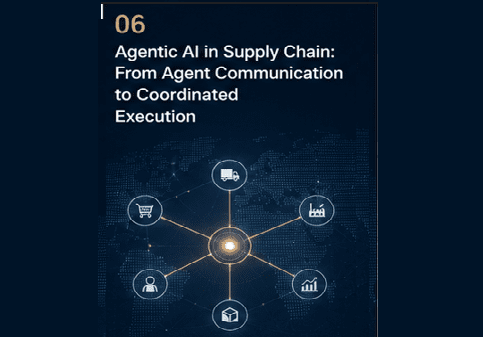
The underlying architecture here is crucial. It’s about moving beyond static, predictive models to dynamic, agentic AI. This means AI that can not only analyze but also decide and act. The system is designed to handle the sheer complexity and low-latency demands of global supply chains, where a millisecond can mean the difference between a fulfilled order and a customer churned. Blue Yonder is framing this as a move from “rented intelligence” to “owned intelligence”—proprietary models deeply embedded with the actual operational logic of supply chains.
“Working with NVIDIA, we’re building owned intelligence, not rented intelligence—supply chain models trained on the workflows, telemetry, and decision logic that actually run a warehouse or a planning system.”
That quote from CEO Duncan Angove gets to the heart of it. It’s not about training an AI on generic data; it’s about feeding it the lifeblood of a specific business’s operations. This focus on deeply contextualized training is what Blue Yonder believes will differentiate its agents, allowing them to operate with the precision and speed required for a truly autonomous supply chain.
Is This Just Another Hype Cycle?
Let’s be real. The term “AI” gets thrown around like confetti at a tech conference. But Blue Yonder’s approach — a dedicated “factory” for building specialized, action-oriented agents — feels different. It acknowledges the inherent messiness and data gravity of supply chain operations. Building these agents isn’t a one-off fine-tuning job; it’s presented as an ongoing, industrial-scale process.
The challenge, of course, is immense. Supply chains are inherently chaotic. They’re buffeted by geopolitical events, natural disasters, and the whims of consumer demand. An AI system that aims for full autonomy needs to be more than just strong; it needs to be resilient, adaptable, and, crucially, trustworthy. This “factory” concept suggests a commitment to continuous improvement and rigorous validation, which is a good sign.
One has to wonder, though, about the integration pathway. How do these purpose-built agents slot into existing ERP systems, warehouse management software, and transportation management platforms? The press release is light on those details, which is often where the rubber meets the road (or the pallet meets the forklift, as it were). The promise of autonomy is compelling, but the practical implementation is where companies often stumble.
Why This Matters for the People on the Ground
For the workers whose livelihoods depend on the smooth functioning of these complex systems, this news could mean a few things. On the optimistic side, it could mean a significant reduction in the drudgery of repetitive tasks, freeing them up for more strategic, problem-solving roles. Imagine AI handling routine inventory checks, optimizing truck routes in real-time, or flagging potential disruptions before they become crises. This could lead to less stress, more engaging work, and a better overall job satisfaction.
However, there’s also the elephant in the room: job displacement. As AI agents become more capable of performing high-value tasks, the question of human roles will inevitably arise. Will these agents augment human capabilities, or will they eventually replace them? Blue Yonder’s emphasis on “working alongside human operators” is a crucial qualifier, suggesting a phased approach. But the long-term trajectory towards autonomy hints at a future where the need for certain human roles might diminish. It’s a conversation that needs to happen now, not when the agents are already in full control.
The true test of this “Model Training Factory” won’t be in the speed at which it can produce agents, but in the quality and reliability of those agents in the real, unpredictable world of supply chains. If Blue Yonder can deliver on its promise of owned intelligence that truly drives autonomous operations, it could fundamentally reshape how goods move across the planet.
🧬 Related Insights
- Read more: Charleston Port Eyes Ro/Ro Expansion with AI Potential
- Read more: Trucking’s Green Pivot: Federal Funding Fades, Fleet Interest Surges
Frequently Asked Questions
What exactly is an agentic AI? Agentic AI refers to artificial intelligence systems designed to act autonomously. Unlike traditional AI that analyzes data and provides recommendations, agentic AI can perceive its environment, make decisions, and take actions to achieve specific goals.
Will Blue Yonder’s AI agents replace supply chain jobs? Blue Yonder states the goal is for agents to work alongside human operators. However, the long-term trend towards full autonomy may reduce the need for certain human roles as AI takes over more complex tasks.
How is this different from other AI in supply chain? The key differentiator is the concept of a “factory” for creating specialized, purpose-built AI agents trained on proprietary operational data, aiming for autonomous execution of multi-step workflows rather than just predictive analytics.