Forget your calm, predictable shipping lanes. March 2026 has delivered a gut punch to the container shipping world, and it’s not pretty. We’re talking about fleets of vessels suddenly going dark, right in the most critical chokepoint on the planet.
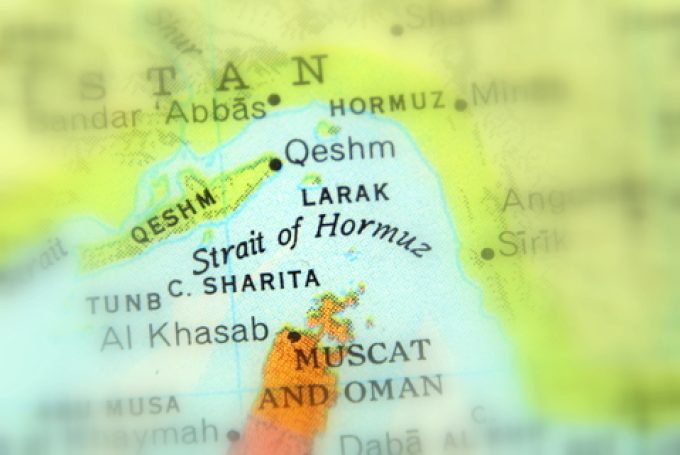
AIS signals, the supposed digital breadcrumbs that tell us where ships are, have gone haywire near the Strait of Hormuz. We’re looking at a record 65 container ships with manipulated or outright missing signals at one point. That’s double the chaos seen during a conflict just last year. And as of March 10th, a significant chunk of ships west of the Strait were still playing hide-and-seek, rendering any real-time monitoring about as useful as a screen door on a submarine.
The immediate consequence? Nothing is moving. No container ships have successfully exited the Persian Gulf since March 5th. A staggering 131 vessels are just… stuck. Stranded. Unable to safely navigate the chokepoint. This isn’t just a few lost freighters; we’re talking over a thousand merchant vessels in total bunched up in the region. The ONE MAJESTY, a 6,700 TEU behemoth, even got tagged while sitting at anchor. Yet, bizarrely, a few smaller ships are still slipping through. Go figure.
## So, Who’s Making Money Off This Mess?
You’d think this kind of disruption would send charter rates through the roof, right? Well, the market is strong, with demand for ships—big or small—holding firm. Carriers are snapping up multi-year leases, locking in rates for two to five years. But here’s the kicker: the expected surge in charter demand from the Middle East situation hasn’t quite materialized as one might expect. Why? Because carriers are also cutting services and suspending routes, which paradoxically reduces their need for extra ships. It’s a weird dance of supply and demand, all while half the world’s shipping traffic is in limbo.
Idle ships? Almost non-existent. Just 0.7 percent of the global fleet is sitting around waiting for work. Nearly 400,000 TEU worth of capacity is currently diverted or docked safely away from the conflict zones. This artificially tightens the supply, and you can bet ports like Sohar, Jeddah, and Mersin are already feeling the pinch from the overflow. Congestion is building, and that usually means more delays and higher costs down the line.
## The Ever-Growing Fleet: A Supply Chain Bubble?
While all this geopolitical drama unfolds, the world’s container ship fleet continues its relentless expansion. We’ve now blown past 6,700 vessels, pushing total capacity towards a dizzying 34 million TEU. MSC is on the cusp of hitting the 1,000-vessel mark, controlling a colossal 21.5 percent of global capacity. And the orderbooks? They’re frankly insane. Evergreen, CMA CGM, and COSCO are all looking to grow their fleets by over 39 percent. Wan Hai is even crazier, sitting at a 73 percent orderbook-to-fleet ratio. It’s a race to build, build, build, even as the seas become less predictable.
Historically, when you see this kind of massive fleet expansion coupled with supply chain disruptions, it’s a recipe for a perfect storm. We saw something similar in the lead-up to the dot-com bust, where everyone was building capacity for a future that never quite arrived. The question isn’t if these new ships will flood the market, but when, and what kind of price war will follow. My money is on a significant shakeout.
This constant build-out contrasts with the visible on-the-water chaos. It paints a picture of a market either incredibly optimistic or utterly detached from the volatile realities of global trade. When you have vessels disappearing off radar in crucial waterways, and simultaneously, shipyards churning out more capacity than ever, it suggests a disconnect. It’s like throwing gasoline on a fire, hoping it won’t spread.
And that record deployed capacity on the Far East-Europe lane? Over 530,000 TEU. That sounds like growth, but when you layer on the potential for rerouting, delays, and the sheer volume of new ships coming online, it’s setting the stage for a massive supply glut, especially if geopolitical tensions ease abruptly.
The data from March 2026 doesn’t just show us numbers; it screams of a sector grappling with unprecedented challenges and perhaps, a dangerous level of optimism about its own future. The question for anyone involved in moving goods isn’t just about current rates or vessel availability; it’s about how long this precarious balancing act can continue before the whole thing tips over.
##
🧬 Related Insights
- Read more: El Niño Looms Over Panama Canal, Threatening US Holiday Electronics Haul
- Read more: FMC Seeks Shippers for Advisory Board
Frequently Asked Questions
What does AIS mean for shipping? AIS (Automatic Identification System) is a tracking system used by ships to broadcast their identity, position, and course. It’s supposed to make maritime traffic safer and more transparent, but as March 2026 shows, it can be deliberately obscured.
Will new container ships cause a price crash? The massive orderbook for new container vessels, combined with ongoing geopolitical disruptions and potential demand shifts, creates a significant risk of future oversupply. This could lead to a sharp decline in shipping rates if the market can’t absorb the increased capacity.
How are carriers adapting to the Strait of Hormuz disruptions? Carriers are rerouting vessels, suspending services, and dealing with increased congestion at alternative ports. Some are also securing long-term charter contracts to ensure capacity availability, while simultaneously reducing deployed capacity on certain trade lanes.