So, are we just simulating logistics, or are we actually building it? That’s the nagging question when you hear about companies like Dassault Systèmes and iHawk Global, a deep-tech outfit out of Singapore, deploying what they call a ‘virtual twin’ for autonomous cargo operations. It’s not just a concept anymore; it’s reportedly being piloted right now in a sprawling 50,000-square-meter container yard, a place where traditional GPS signals go to die and human intervention is a costly bottleneck.
What’s Actually Happening on the Ground (and in the Air)?
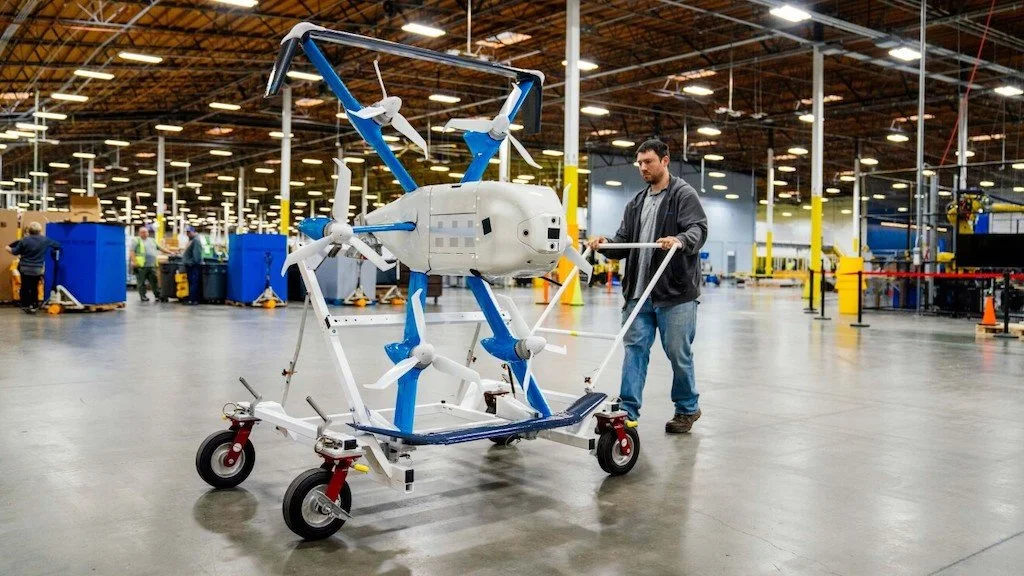
Here’s the nuts and bolts of it: iHawk has cobbled together a system that essentially pairs an aerial drone with a ground rover. Think of the rover as a hyper-accurate anchor, beaming down precise location data that the drone can then use to navigate the notoriously challenging, GPS-denied labyrinth of a container yard. This isn’t just about buzzing around; it’s about capturing live inventory data, providing operators with near-real-time visibility of assets. The goal? Shave off reliance on those time-consuming, error-prone manual inspections.
But the real kicker isn’t just the hardware; it’s the before. Before any of this hardware saw daylight, the entire shebang was designed, simulated, and stress-tested using Dassault Systèmes’ 3DEXPERIENCE platform. They’re talking about simulating airflow, mapping those dreaded signal dead zones, and running through every conceivable operational nightmare – all digitally. It’s a digital proving ground, saving untold hours and dollars before a single screw was turned on the physical units.
“This deployment shows how virtual twin technology can fundamentally change how complex industrial systems are built and operated. As Singapore advances as a leading digital logistics hub, our AI-powered platform is helping scale engineering knowledge and operational know-how for deep tech startups and industry partners, enabling faster innovation.”
Sharon Toh, vice president of Dassault Systèmes Asia-Pacific South, clearly sees this as more than just a pilot project. She’s framing it as a fundamental shift in how complex industrial systems are conceived and deployed. And she’s not wrong. The ability to de-risk development by essentially building and breaking the entire system in a virtual environment, then iterating until it’s perfect, is a profound shift. It’s akin to a surgeon practicing an complex operation countless times on a hyper-realistic simulator before touching a patient.
Is This Just Another Tech Buzzword Bingo Card?
Let’s be honest, the term ‘virtual twin’ can sound a bit like corporate jargon designed to impress investors. But when you drill down, it’s about bridging the gap between the abstract digital model and the gritty reality of operations. It’s about creating a living, breathing digital replica that mirrors its physical counterpart, allowing for predictive maintenance, scenario planning, and operational optimization on a scale previously unimaginable.
The Singapore context is also critical here. The city-state is aggressively positioning itself as a global logistics and digital hub. For a startup like iHawk, partnering with a giant like Dassault Systèmes, and getting their tech validated in such a demanding environment, is a massive endorsement. It signals that the era of ‘build it and they will come’ for complex operational tech is fading. Now, it’s ‘simulate it, perfect it, then build it.’
My own take? This is where the real efficiency gains in logistics will eventually be found. It’s not just about faster trucks or bigger ships; it’s about the intelligence that orchestrates them. The ability to foresee and mitigate disruptions, optimize resource allocation dynamically, and continuously refine operational parameters based on simulated and real-world data is the next frontier. It means fewer misplaced containers, less wasted fuel, and a more resilient supply chain overall. It’s a far cry from the days of relying on paper manifests and shouted instructions.
However, a word of caution. These systems are complex. Implementation requires significant upfront investment and a highly skilled workforce to manage the digital twins and interpret the data. The success of this Singapore pilot will hinge not just on the technology’s efficacy, but on iHawk’s ability to scale this integrated approach – both the physical hardware and the sophisticated digital twin management – to other ports and logistics hubs.
Looking Ahead: What’s Next for Autonomous Cargo?
The implications of this partnership extend beyond just container yards. Imagine extending this virtual twin approach to the entire shipping lifecycle, from port operations to vessel navigation and onward transportation. The potential for optimizing the flow of goods, reducing transit times, and enhancing safety across the entire multimodal supply chain is immense. This pilot in Singapore isn’t just about moving boxes; it’s about redefining the intelligence layer of global trade.
🧬 Related Insights
- Read more: NYC’s Driver Law: Amazon Threatens Exit, Shakes Last-Mile Model
- Read more: DNC Autopsy Fallout: Martin Under Fire as Calls for Resignation Mount
Frequently Asked Questions
What exactly is a virtual twin in this context?
A virtual twin is a dynamic digital representation of a physical system – in this case, an autonomous cargo operation. It’s built using real-time data and simulations to mirror the physical environment, allowing for testing, analysis, and optimization before and during operation.
Will this technology replace human jobs in container yards?
While automation often leads to shifts in job roles, the primary goal here is to augment human capabilities by providing better visibility and reducing reliance on manual, often dangerous, tasks. It’s likely to shift focus towards more analytical and oversight roles rather than outright replacement in the short to medium term.
How accurate is the positioning system described?
The system aims for ‘sub-decimeter positioning accuracy,’ meaning it can pinpoint locations with an error margin of less than 10 centimeters, which is critical for precise navigation within complex environments like container yards.