The hum of rotors, once a sound confined to testing grounds and speculative investor pitches, is now signaling a genuine shift. For years, commercial drones were the shiny new toys of pilot projects, their capabilities meticulously vetted but rarely deployed at scale. Now, that’s changing. The industry is finally pivoting hard, not just towards flying, but towards flying with a purpose – one that demonstrably adds value through safe operation, strong data collection, and, crucially, meeting repeatable, measurable operational goals.
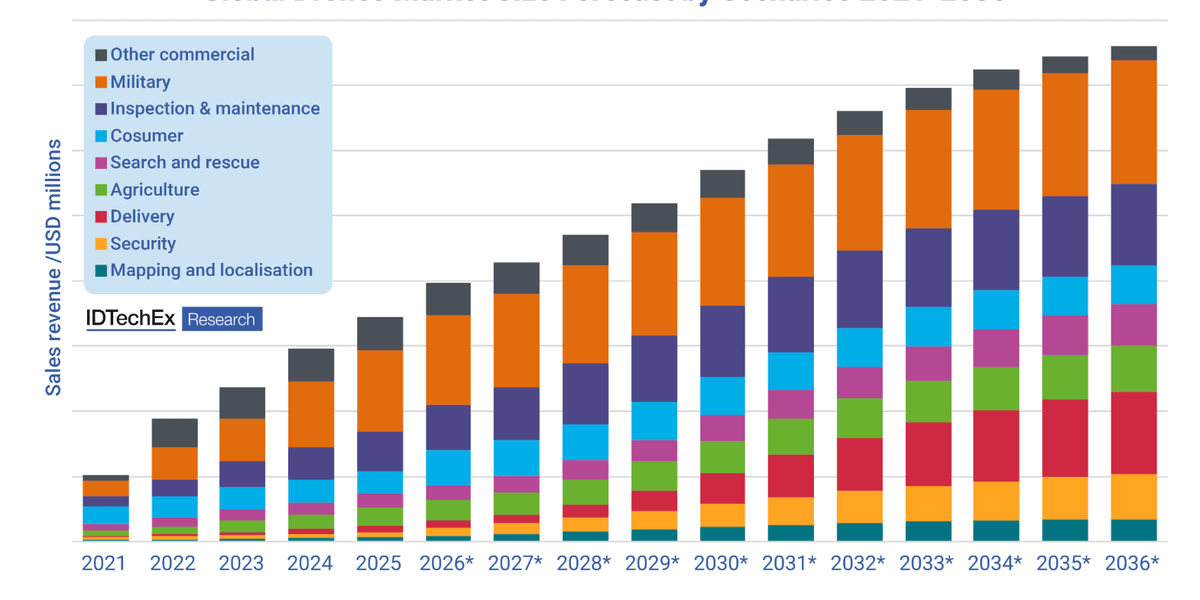
This isn’t just a semantic shift; it’s a seismic one for the supply chain. British analyst firm IDTechEx projects a staggering ascent, with commercial drone shipments slated to blast past 9 million units annually by 2036. That’s not just growth; it’s an explosion, driven by specific sectors that can’t ignore the inherent advantages these flying machines offer.
Where the Drones Are Flying: Delivery, Ag, and Inspection
The real juice, the quantifiable value, is being squeezed from opportunities in delivery, agriculture, and inspection. Why? Because drones in these fields directly address persistent pain points: glaring labor shortages, the gnawing risks inherent in dangerous manual tasks, the underutilization of costly assets, and the sheer impossibility of achieving certain services with conventional means.
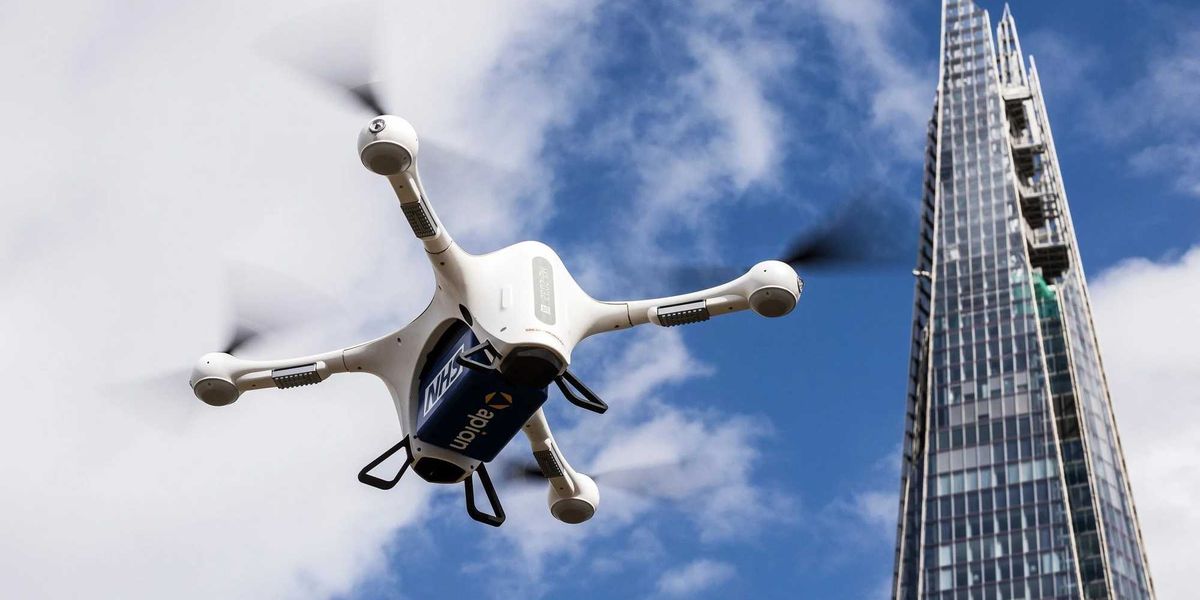
Drone delivery, in particular, has captured the imagination and investment of everyone from your local grocer to global logistics titans and even healthcare providers. IDTechEx’s crystal ball predicts this segment alone will balloon from a modest $2.2 billion in 2026 to a mind-bending $25.3 billion by 2036. It’s a market poised for hyper-growth.
Look closely at delivery, and you’ll see the early wins are less about delivering your Amazon order of socks and more about high-value, time-sensitive cargo. Think medical supplies zipping between hospitals, vital pharmacy prescriptions reaching remote areas, emergency response equipment deployed at lightning speed, or essential goods for communities cut off by geography or disaster. Here, drones aren’t just faster; they bypass congested roads and unreliable infrastructure, offering a lifeline of service.
However, drone delivery remains highly dependent on airspace regulation, beyond visual line of sight (BVLOS) approval, local infrastructure, public acceptance, and route-level economics.
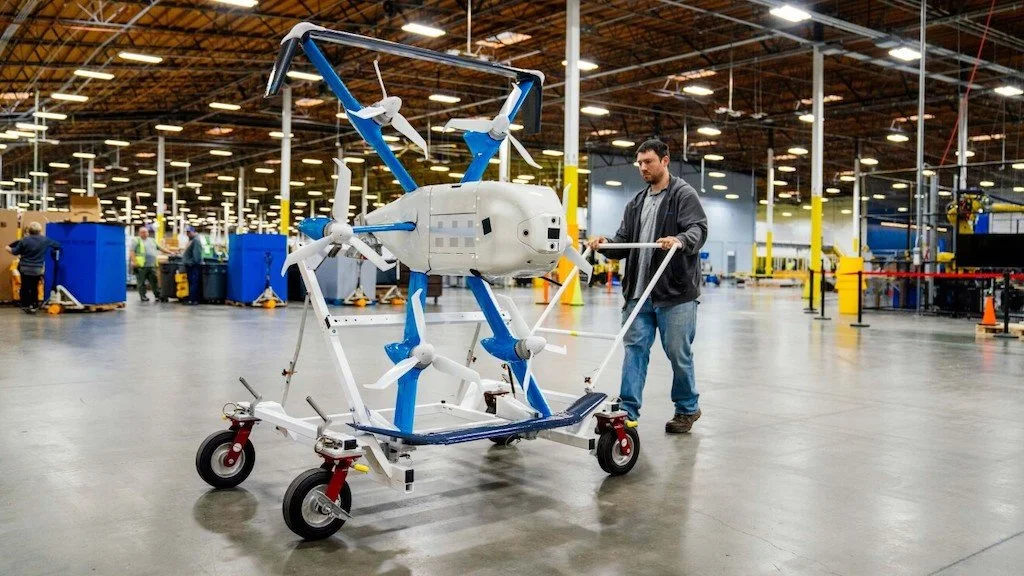
That quote, stark and to the point from the IDTechEx report, is the elephant in the hangar. Advanced aircraft are only part of the equation. Getting drones to operate at scale demands a whole ecosystem: automated loading bays, reliable landing or drop-off mechanisms, sophisticated fleet management software, the critical detect-and-avoid technology to prevent aerial collisions, and, of course, smoothly integration into existing logistics frameworks. It’s a complex symphony, and the regulatory conductor is still setting the tempo.
Because of these complexities, don’t expect swarms of delivery drones over your city skyline anytime soon. The rollout will be more measured, initially focusing on defined air corridors, suburban fringes, critical medical supply chains, isolated regions, and specifically regulated service zones. Full urban saturation? That’s a longer-term play, once the kinks are ironed out and public trust is solidified.
The Unsung Heroes: Agriculture and Inspection
Meanwhile, the agricultural sector offers a less regulated, perhaps more straightforward, path to drone value. Drones here are already proving their worth by dramatically reducing the back-breaking labor of traditional farming. They offer hyper-precise spraying, minimizing chemical waste and environmental impact, while simultaneously enabling farmers to gather richer, more frequent data about their fields. It’s precision agriculture reaching new heights—literally.
But if ROI is the ultimate arbiter, then inspection and maintenance might just be the true champions. Imagine drones meticulously examining wind turbines, power lines, sprawling solar farms, oil pipelines, industrial complexes, critical bridges, and vast mining operations. They’re doing this while slashing the need for dangerous manual climbs, reducing costly operational downtime, and, most importantly, keeping human workers out of harm’s way. This isn’t just efficiency; it’s a moral imperative.
This evolution from pilot project to operational bedrock signals a maturing market. It’s no longer about if drones can do it, but how they can do it better, safer, and more profitably than before. The sky’s not the limit; it’s the new operational frontier.
🧬 Related Insights
- Read more: Port of LA: 752K TEUs in March Despite Tariff Chaos [Analysis]
- Read more: Oil Prices Drop Amid Talk of U.S.-Iran Deal
Frequently Asked Questions
What kind of drone deliveries are most likely to happen first?
Early drone delivery will likely focus on time-sensitive and high-value items like medical supplies, emergency medications, and critical components for remote areas, rather than mass-market consumer goods.
Will drones replace human inspectors and farmers?
It’s more likely drones will augment human roles. They’ll take over the dangerous or repetitive tasks, freeing up skilled workers for more complex analysis, decision-making, and oversight.
What’s the biggest barrier to widespread drone adoption?
While technology is advancing rapidly, the most significant hurdle remains regulatory approval, particularly for Beyond Visual Line of Sight (BVLOS) operations, alongside public acceptance and the economic viability of specific routes.