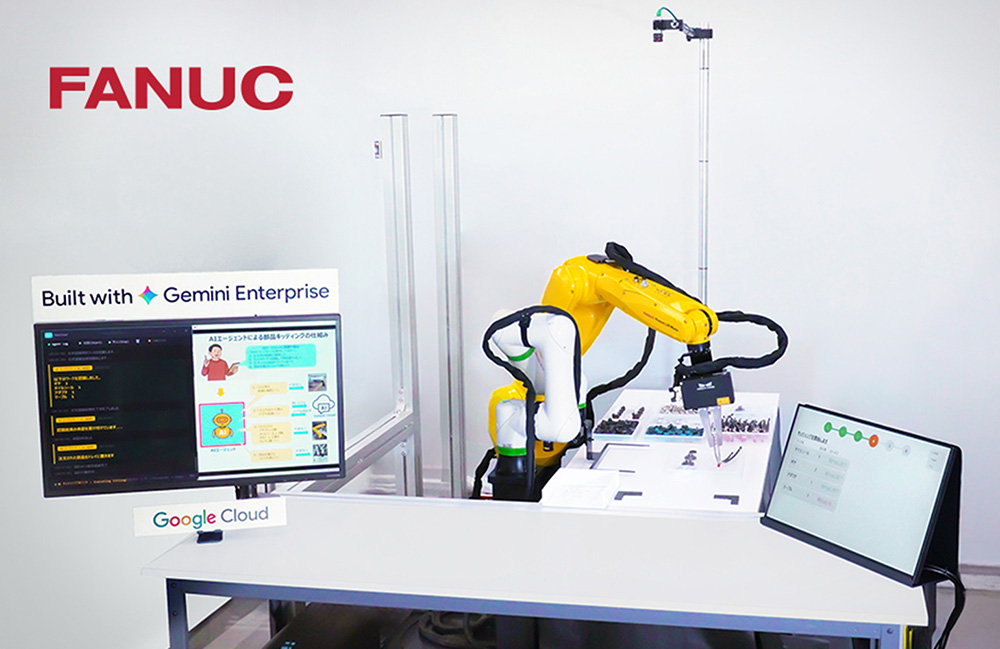
This isn’t just another tech partnership; it’s the spark igniting a fundamental platform shift. FANUC, the titan of industrial robotics, has joined forces with Google, a veritable colossus in the AI arena, to supercharge its robots with what they’re calling “physical AI.” Imagine robots that don’t just repeat programmed motions but can actually understand their environment, make smart calls on the fly, and execute tasks with a newfound agility. That’s the horizon FANUC and Google are painting, and it’s frankly electrifying for the manufacturing world.
Because here’s the thing: the question has officially shifted from ‘if’ to ‘how’ when it comes to AI on the factory floor. Mike Cicco, president and CEO of FANUC America, nailed it when he said manufacturers are moving beyond whether to use AI and focusing on how to apply it where it matters most. And where does it matter most? Right there, amidst the clang and whir of production. By marrying FANUC’s battle-tested industrial robotics with Google’s cutting-edge AI, they’re unlocking the door to more adaptable, more variable production without sacrificing that rock-solid reliability we’ve come to expect from the factory floor.
Physical AI, they’re calling it – this wild fusion of cognitive horsepower with physical action. And it’s suddenly everywhere, thanks to the dizzying advancements in AI, especially those massive language models (LLMs) that seem to be learning at warp speed. We’re talking about robots that don’t just see with their sensors but perceive, that don’t just follow commands but decide, and then act with a purpose that feels… well, intelligent. It’s like giving your factory machines a brain, and a really good one at that.
The ROS Advantage: A Bridge to Smarter Robots
FANUC’s commitment to open platforms is a massive accelerant here. Their robots already play nice with the Robot Operating System (ROS) – that industry-standard framework that makes robot control feel less like wrestling a bear and more like conducting an orchestra. Coupled with broad compatibility for Python (the go-to language for AI wizards) and high-speed interfaces, it means manufacturers aren’t starting from scratch. They can actually deploy this advanced physical AI into real, gritty production environments, not just play with it in a lab. From tiny robots handling a mere 6.6 pounds to behemoths that weigh in at 2.3 tons, and even their collaborative CRX series – the entire lineup is poised to get this upgrade.
And get this: customer interest isn’t just ticking up; it’s exploding. Since FANUC first unveiled its physical AI system late last year, they’ve already shipped over 1,000 robots for these AI-powered applications. That’s not just a number; it’s a seismic wave of demand, a clear signal that the industry is ready to leap forward. This collaboration with Google isn’t just a step; it’s a giant stride towards automation that’s genuinely flexible and can adapt to the unpredictable rhythms of modern manufacturing.
A Glimpse into the Future of Physical AI
This partnership is more than just about making robots smarter; it’s about democratizing advanced automation. By leveraging Google’s AI prowess, FANUC is essentially putting incredibly sophisticated capabilities within reach of a broader range of manufacturers. Think about it: traditionally, integrating cutting-edge AI into physical systems has been a monumental, resource-intensive undertaking. But with this integration, powered by strong platforms like ROS and sophisticated simulation tools like NVIDIA’s Isaac Sim (which FANUC is also weaving into its ecosystem), the barrier to entry is coming down. This isn’t just about replacing manual labor; it’s about augmenting human capabilities, enabling workers to focus on more complex problem-solving and creative tasks while the robots handle the precision, the repetition, and the hazardous work with newfound intelligence.
The implications ripple far beyond the assembly line. We’re talking about supply chains that can react with unprecedented speed to disruptions, factories that can pivot production on a dime to meet shifting consumer demands, and a manufacturing sector that becomes more resilient and responsive than ever before. This fusion of physical robotics and advanced AI isn’t just an incremental improvement; it’s the dawn of a new industrial paradigm. It’s a future where machines don’t just follow instructions but collaborate intelligently, predict needs, and optimize processes in ways we’re only just beginning to comprehend.
My prediction? This is just the beginning. We’ll see similar collaborations spring up, each pushing the boundaries of what physical AI can achieve. The factories of tomorrow won’t just be automated; they’ll be intelligent, adaptive ecosystems where humans and AI-powered machines work in concert, a symphony of silicon and steel.
Will This AI Make Robots More Versatile?
Absolutely. The core promise of this collaboration is to imbue robots with the ability to perceive their surroundings, make autonomous decisions, and adapt their actions accordingly. This moves them beyond repetitive, pre-programmed tasks into realms of more variable and complex production, making them significantly more versatile for a wider range of manufacturing scenarios.
What is ‘Physical AI’ Exactly?
Physical AI is the integration of advanced cognitive intelligence with physical actions performed by a machine, such as a robot. It means a robot can not only sense and process information from its environment but also use that understanding to make independent decisions and execute physical tasks in a flexible and intelligent manner, much like a human would.
How Does ROS Help with AI Deployment?
The Robot Operating System (ROS) is an industry-standard platform that simplifies robot control and communication. By supporting ROS, FANUC makes it easier for developers and manufacturers to integrate new AI capabilities into their robotic systems. It acts as a common language and framework, reducing the complexity of developing and deploying AI for physical tasks on robots.