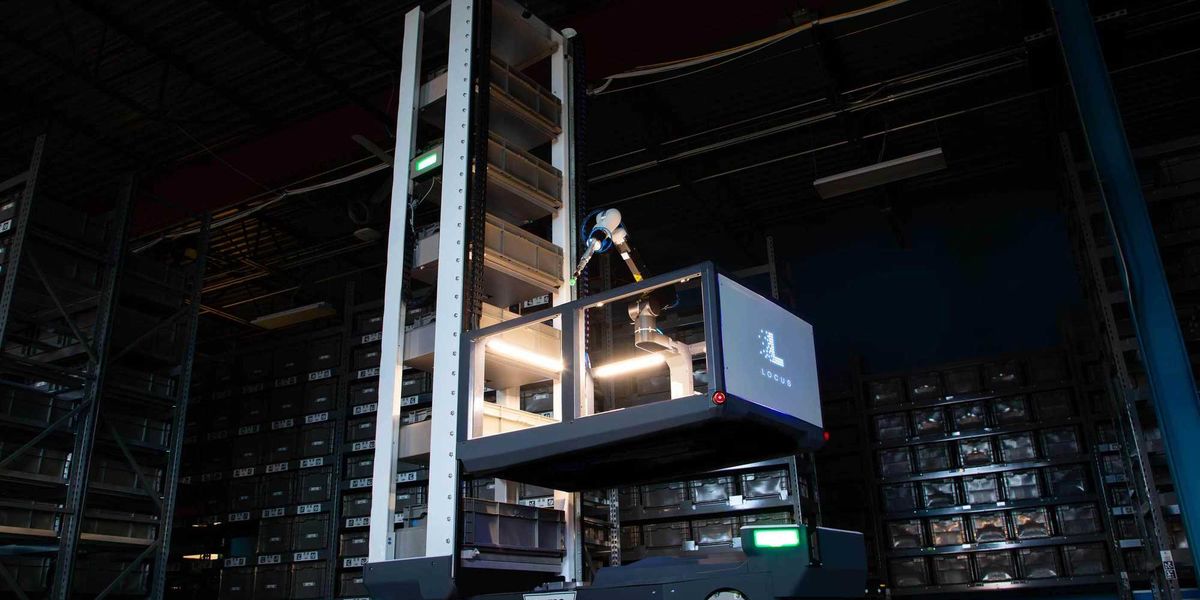
We’ve all seen the videos, right? Those sleek, autonomous mobile robots (AMRs) whizzing around warehouse floors like futuristic bumper cars. For years, the narrative around warehouse automation has been laser-focused on the hardware: bigger, faster, stronger robots. The assumption was that more physical automation meant a more efficient operation. And sure, robots are cool. They can lift heavy things and navigate complex spaces. But here’s the thing, and this is where we shift gears entirely: the robots themselves are only half the story. Maybe even less.
The real transformation, the fundamental platform shift we’re witnessing in warehouse robotics, isn’t just about adding more metal. It’s about injecting the brain. And that brain, my friends, is increasingly powered by sophisticated AI and intelligent software.
Think of it like this: before the internet, you had incredible transportation networks – roads, trains, planes. Goods moved, but information was siloed. Then came the internet, a platform shift that connected everything, allowing for real-time visibility, dynamic routing, and optimized logistics. We’re at that same inflection point now, but for the physical operations of warehousing. The robots are the trucks and trains; the AI software is the internet connecting them, optimizing their routes, and predicting their needs.
Software: The Unsung Hero of the Automated Warehouse
For too long, the conversation around warehouse robotics has been about the ‘what’ – what robots can do. We’re now moving squarely into the ‘how’ and the ‘why’. How can intelligent software orchestrate these robots to work in concert, not just independently? Why should we invest in this software if the robots are already doing the heavy lifting? The answer is simple: efficiency on an exponential scale.
When you layer AI-driven software over a fleet of robots, you’re not just automating tasks; you’re creating a self-optimizing ecosystem. This isn’t just about getting from point A to point B faster. It’s about predictive maintenance so robots don’t break down mid-shift, dynamic task allocation so the right robot is always doing the right job, and intelligent pathfinding that avoids congestion before it even happens. It’s like upgrading from a paper map to a real-time, AI-powered navigation system that constantly learns and adapts.
“Investing in intelligent software systems is crucial for warehouse operators that employ robotics within their operations.”
This isn’t just a corporate talking point; it’s the bedrock of future warehouse operations. Operators who are pouring all their energy and capital into the physical robots without a strong intelligent software layer are essentially buying a fleet of smart cars and then trying to drive them using 1980s GPS.
Why Does This Matter for Warehouse Efficiency?
The impact of this AI-powered software layer is profound. We’re talking about a reduction in bottlenecks that were once considered immutable. Imagine a system that doesn’t just react to an order but anticipates it, pre-positioning inventory or assigning tasks before a human even notices a surge in demand. This is the kind of predictive power AI brings. It’s moving from reactive problem-solving to proactive optimization.
And it’s not just about speed. It’s about reducing errors, minimizing wasted movement, and extending the lifespan of expensive hardware. When robots are constantly being rerouted due to unforeseen congestion or are forced into inefficient maneuvers because the system lacks real-time intelligence, wear and tear increases. AI-powered software acts as a gentle, intelligent guide, ensuring every movement is purposeful and efficient.
I’m personally fascinated by the idea that the true competitive edge in warehousing is no longer just about physical space or the number of automated units. It’s about the intelligence that orchestrates those units. Companies that recognize this are building a foundational advantage. They’re not just buying robots; they’re investing in an intelligent platform that will continue to evolve and deliver value long after the initial hardware investment.
The Future is an Orchestrated Symphony
So, what was expected? More robots doing more things. What’s actually happening? A seismic shift where intelligent software is the conductor, leading an increasingly complex orchestra of automated machinery. The robots are the instruments, yes, but without the conductor, you just have noise. With the right AI software, you have a perfectly harmonized, hyper-efficient operation.
This isn’t just an incremental improvement; it’s a complete reimagining of how a warehouse functions. It’s about creating a responsive, adaptive, and intelligent supply chain hub that can handle the ever-increasing demands of modern commerce. The future isn’t just automated; it’s sentient.
🧬 Related Insights
- Read more: Hapag-Lloyd CEO Launches Podcast: ‘Straight Talk’ with Rolf Habben Jansen
- Read more: Trump’s Cuba Threats Escalate: Is an Invasion Imminent?
Frequently Asked Questions
What does intelligent software do for warehouse robots? Intelligent software, powered by AI, orchestrates robot movements, optimizes task allocation, predicts maintenance needs, and dynamically manages workflows to maximize efficiency and minimize errors.
Are robots still important in warehouses? Yes, robots are crucial for performing physical tasks like lifting, moving, and sorting. However, their effectiveness is dramatically amplified when controlled and optimized by intelligent software.
Will this software replace human jobs in warehouses? While automation can shift job roles, intelligent software often creates new opportunities in system monitoring, AI training, and complex problem-solving. The goal is often to augment human capabilities, not replace them entirely.