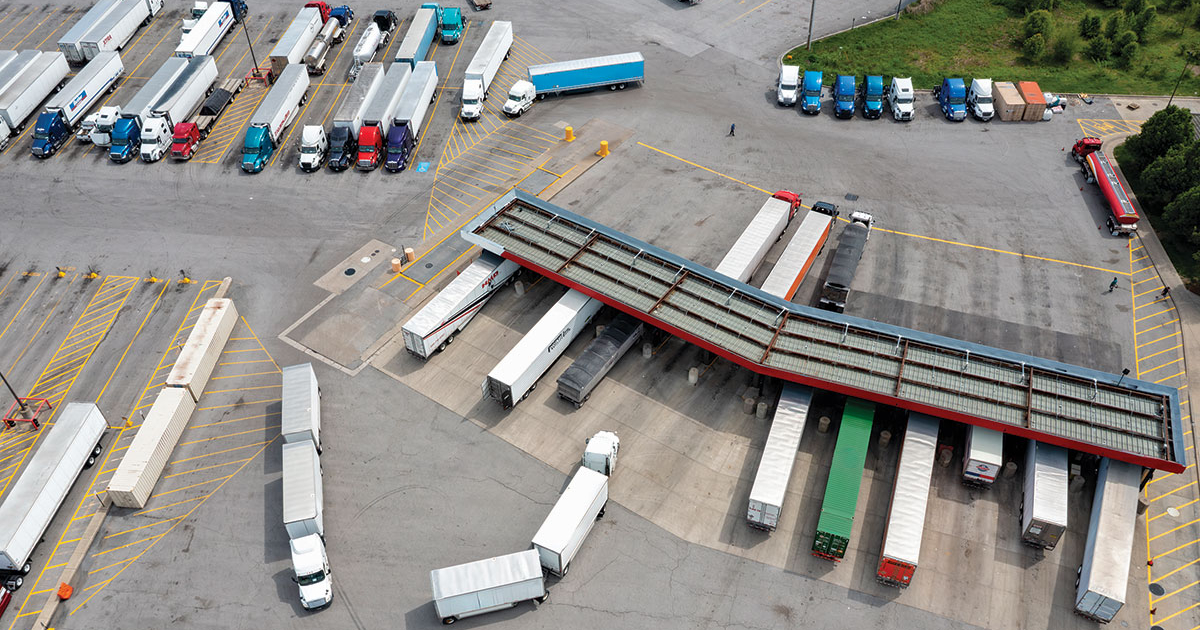
The annual budget dance is upon us, and this year’s tune features a significant nod to our perpetually beleaguered truck drivers. A House panel is set to debate the FY27 Transportation bill, earmarking a cool $200 million for much-needed truck parking.
Look, it’s hardly groundbreaking to point out that truckers spend more time circling for a safe spot than actually delivering goods. For years, this has been a festering wound in the supply chain, a constant source of frustration and, frankly, danger. The American Trucking Associations has been screaming about this, and bless their bureaucratic hearts, someone in Congress finally decided to throw a little money at the problem. Whether it’s enough to make a dent? We’ll see.
A Pie Chart of Priorities?
The bill, ostensibly for fiscal year 2027, packages a hefty $92.2 billion in discretionary spending for transportation and housing. Subcommittee Chairman Steve Womack (R-Ark.) chirped about prioritizing safety across highways, railroads, and aviation, while also minding the housing needs of the vulnerable. It sounds nice. It reads like standard committee-speak, meant to soothe all constituencies without actually doing much for anyone in particular.
And bless appropriations chair Tom Cole (R-Okla.) for his eloquent pronouncements about strengthening national connectivity and reinforcing safety. It’s all very grand. Meanwhile, the Federal Motor Carrier Safety Administration gets $926.6 million, the Federal Highway Administration $64.5 billion, and so on. Numbers. Lots of them. Are they the right numbers? That’s the million-dollar question, isn’t it?
“Republicans’ 2027 Transportation, Housing, and Urban Development bill misses the reality that Americans just want relief from skyrocketing prices. It strips away critical investments in housing and community development while cutting Amtrak and other critical transportation resources, putting more commuters on the road and adding more delays getting to work or school.”
Here’s where the usual political theater kicks in. Democrats, predictably, are having none of it. Ranking member Rosa DeLauro (D-Conn.) is practically spitting fire, arguing the bill guts housing and transit investments and fails to address the crushing cost of living. James Clyburn (D-S.C.) echoes the sentiment, lamenting that the bill doesn’t align with “national priorities.” Translation: It’s not their bill.
It’s easy to get lost in the dollar figures. Billions here, millions there. But let’s cut through the noise. This isn’t about revolutionizing transportation. It’s about the annual legislative scramble, a carefully choreographed exchange of promises and criticisms. The $200 million for truck parking? It’s a tactical win for the trucking lobby, a tangible achievement they can point to. The Democrats’ complaints about housing cuts? A predictable counter-punch, designed to galvanize their base and highlight perceived Republican indifference.
Meanwhile, the Senate is doing its usual waiting game. Secretary Sean Duffy, bless his optimistic soul, is talking about legacy investments and honoring America’s past. It’s all very patriotic. He’s likely trying to sell the White House’s budget request as the key to modernizing systems and boosting competitiveness. Frankly, it sounds like someone read a PR handbook.
But let’s not bury the lead entirely. The trucking industry, bless its heart, is thrilled about the parking funds. The American Trucking Associations, a perennial voice in the wilderness, is finally getting some traction. The Arkansas Trucking Association’s president is thanking Womack. It’s a small victory, perhaps, but a victory nonetheless. This follows a similar $200 million allocation from earlier this year, suggesting a slow, steady recognition of a problem that’s been staring everyone in the face for decades.
So, what are we left with? A bill that’s moving through one chamber, drawing predictable partisan fire, and offering a small crumb of comfort to a crucial sector of the economy. The real impact of this $200 million will be measured not in appropriations committees, but on the shoulders of the drivers who desperately need a place to rest their weary heads. Don’t expect miracles. But for once, perhaps, a few more trucks will have somewhere to park.
Is This Enough for Truck Parking?
While $200 million is a welcome injection of cash, it’s important to remember the scale of the problem. Decades of underinvestment mean that infrastructure needs are vast. This funding will likely be distributed across numerous projects, and while it’s a significant step, it won’t solve the truck parking shortage overnight. Think of it as a down payment, not the final settlement.
What’s Missing from the Debate?
The real missing piece here is a long-term, sustainable strategy. We’re seeing stop-gap measures and incremental funding. What’s needed is a comprehensive plan that addresses not just parking, but also driver retention, route planning optimization, and the integration of new technologies to improve efficiency and safety. The current debate feels very much like treating a symptom rather than the disease.
FAQ
What is the total discretionary funding proposed for transportation and housing in the FY27 bill?
The House panel’s proposed legislation includes $92.2 billion in discretionary funding for transportation and housing programs for fiscal year 2027.
How much money is specifically allocated for truck parking programs?
The bill designates $200 million for truck parking programs nationwide.
What is the status of the Senate’s version of the FY27 transportation bill?
The Senate has not yet scheduled consideration of its version of the fiscal 2027 transportation funding bill.