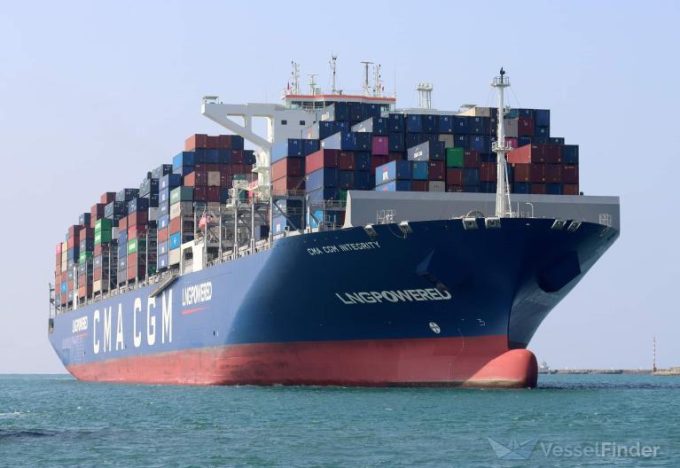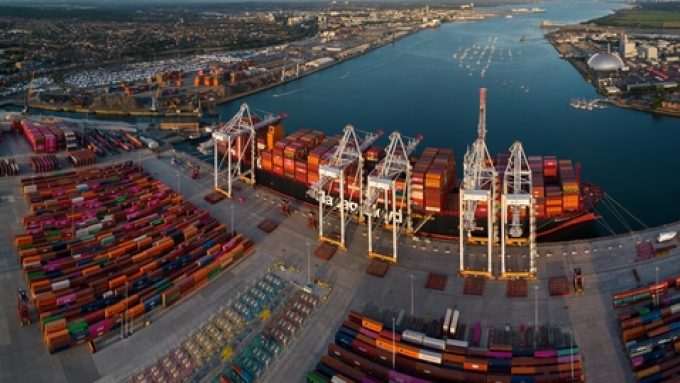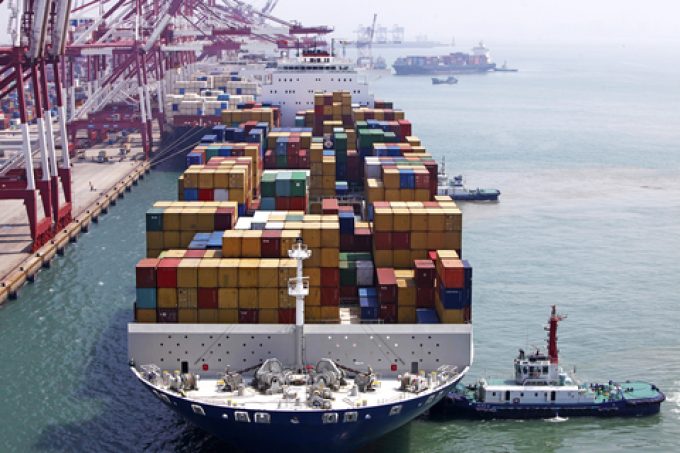
China’s ports are firing on all cylinders. This isn’t some minor ripple; it’s a full-blown tide lifting container spot rates. We’re talking double-digit percentage increases on key Asia-Europe routes, with the Shanghai-Rotterdam lane jumping a hefty 15% week-on-week. It’s clear the market’s narrative is shifting. The usual story of carriers squeezing capacity by slashing sailings is taking a backseat. The actual story? Demand. Pure, unadulterated demand.
This isn’t the quiet hum of recovery; it’s the roar of an early peak season. Drewry’s Container Capacity Insight shows a mere three blanked sailings announced for Asia to Europe next week. That’s hardly a capacity crunch; it signals carriers are deploying more vessels to meet the burgeoning cargo. Yet, Freight All Kinds (FAK) rates are climbing, with carriers like CMA CGM and MSC announcing FAK levels for June that are significantly higher than current rates. CMA CGM is even slapping on a $500 per teu peak season surcharge for Asia-North Europe.
The Demand Avalanche
“Overall shipping demand increased this week – liner companies subsequently announced freight rate hikes for early June, further boosting market shipping sentiment,” a port source in Ningbo told The Loadstar. This isn’t just hearsay; Markus Panhauser, DHL Global Forwarding’s senior VP of global ocean freight LCL, echoed the sentiment at TOC Europe. He explicitly stated: “The strong demand is driving that.” He’s not mincing words: spot rates are poised for further jumps because the Christmas season demand is shifting forward. The transatlantic and transpacific markets are also showing signs of strong recovery.
“The recovery of freight rates is predominantly about demand rather than blank sailings.”
This perspective is crucial because it challenges the prevailing notion that carriers are the sole architects of rate hikes through capacity manipulation. While blank sailings are occurring—seven on the transpacific next week, for instance—they appear to be a tactic to manage tightened capacity, rather than the primary driver of the increase in rates themselves. It’s a fine distinction, but an important one for understanding market dynamics.
Transpacific Trends: Similar Story, Different Tempo
The transpacific routes, while not seeing the same explosive growth as Asia-Europe, are also experiencing rate increases, albeit more moderately. Shanghai-Los Angeles is up 1% week-on-week, with Shanghai-New York seeing a 2% bump. Drewry expects an early peak season here too, citing ONE’s $2,000 per 40ft Peak Season Surcharge (PSS) for June 1st. Even e-commerce giants are playing a role; Amazon’s decision to move its Prime Day sale up a month has created a compressed shipping window, fueling demand for cross-border shipments and prompting carriers like Maersk to add extra loaders.
But here’s the kicker: while demand is surging, carriers are still restricting proforma capacity on the transpacific. Seven blanked sailings are slated for next week. This creates a tighter market, giving carriers use to implement higher FAK rates. MSC’s recent announcement of two more blanked sailings on its Asia-US East Coast network further underscores this strategy of managing capacity in parallel with rising demand. It’s a dual-pronged approach: capitalize on demand while ensuring capacity doesn’t outstrip it.
The Real Driver: Consumer Spending Power
The market’s current trajectory offers a fascinating insight into the resilience of consumer demand, even in an era of economic uncertainty. For years, the narrative around freight rates has been dominated by supply-side disruptions – port congestion, geopolitical tensions, and carrier capacity adjustments. What this current surge highlights is the enduring power of consumer spending, particularly in response to retail strategies. The early peak season isn’t a surprise; it’s a response. Retailers like Amazon are optimizing their promotional calendars, and shippers are responding by front-loading their inventory needs. This isn’t just about moving goods; it’s about meeting the demand signals, and carriers are rightly pricing that service.
This situation has a historical parallel in the early 2000s, when rapid globalization and burgeoning consumer markets in the West created sustained upward pressure on shipping costs. While the specific drivers differ, the fundamental principle holds: when consumer appetite outpaces available shipping capacity—even if that capacity is strategically managed—rates will climb. The market is demonstrating its efficiency, pricing the product (shipping) based on its perceived value and scarcity, directly tied to end-consumer activity.
So, while blanked sailings offer carriers a lever to pull, the primary engine revving freight rates higher is the unmistakable strength and forward-looking nature of consumer demand. The question now isn’t if rates will rise further, but by how much, and whether this early peak will translate into sustained gains for carriers or a sharp correction once the demand surge subsides. The data points suggest the former, for now. The consumer is back, and they’re buying.