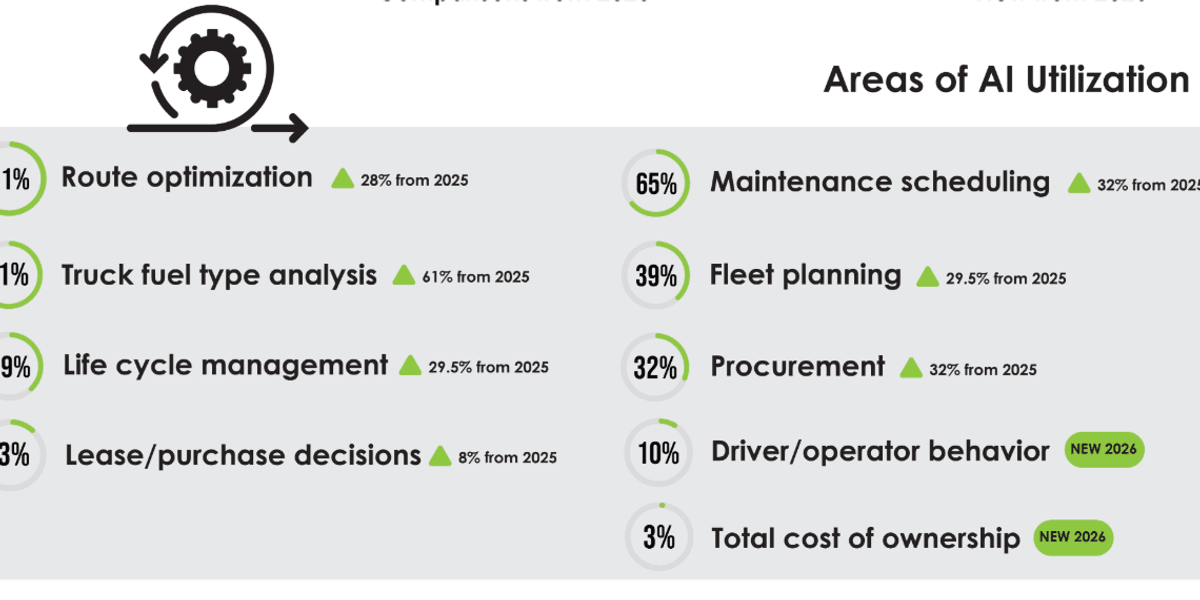
The future isn’t just knocking; it’s booting down the door, and it’s powered by AI. We’re witnessing a seismic shift, a fundamental platform change comparable to the dawn of the internet or the mobile revolution. And in the gritty, often overlooked world of trucking fleets, this revolution is already in full swing. A staggering 87.1% of respondents in Fleet Advantage’s latest survey are actively employing Generative AI, a number that dwarfs other advanced analytics like predictive analytics (38.7%) or even machine learning (35.5%). This isn’t just a trend; it’s an industrywide embrace of a technology that promises to untangle complexity and unlock hidden efficiencies. Think of AI not as a mere tool, but as a new operating system for business.
But here’s the thing: even the most brilliant operating system crashes if the hardware is faulty. And in this case, the hardware is data. The same survey that paints a glowing picture of AI adoption also reveals a stark reality: foundational data infrastructure problems are no longer minor annoyances; they’re outright roadblocks. Every single implementation barrier measured intensified year-over-year. Data integration issues? They skyrocketed from 38.1% to a whopping 71.0%. Inaccurate data concerns? Nearly doubled from 23.8% to 64.5%. And the simple, human problem of a lack of expertise? It climbed from 19.0% to a substantial 45.2%. It’s like trying to build a spaceship with a box of rusted tools and a blurry blueprint.
The Data Abyss
Fleet Advantage points to two particularly glaring blind spots. First, over half of respondents (51.6%) are collecting all that juicy telematics and ELD data – the lifeblood of modern logistics – but are utterly failing to integrate it with their AI tools. Only a meager 9.7% are actually feeding this goldmine into AI models for real-time insights. Imagine having the world’s best navigation system but never plugging it into your car. The potential for dynamic route optimization, proactive maintenance alerts, and genuine operational foresight is just… sitting there, dormant.
Then there’s the lease-end process. A staggering 64.5% report zero use or evaluation of AI for assessing damage, remarketing vehicles, or calculating excess mileage. This is a massive area of untapped potential, ripe for AI’s ability to analyze vast datasets and make objective, data-driven decisions. It’s a prime example of enthusiasm for the new outstripping the discipline required for foundational improvement.
Mac Hudson, Senior Off-Lease Manager at Fleet Advantage, nails it. He puts it plainly:
“The data tells a story we see playing out across the industry every day. Private fleets are embracing AI faster than anyone anticipated, particularly GenAI, but enthusiasm alone does not create results. The organizations that will lead this next phase are the ones investing now in data quality, telematics integration, and structured measurement frameworks.”
He’s absolutely right. Enthusiasm without infrastructure is just noise. True operational advantage, not just back-office convenience, hinges on getting the data house in order. It’s about moving beyond the shiny AI demo to building a strong engine.
Autonomous Inventories: A Glimpse of What’s Possible
To see what a data-driven AI future looks like, peek at Lapp USA, a distributor of industrial cable. They faced a nightmare of manual, error-prone inventory counts, a process that devoured labor and crippled customer service. By deploying autonomous inventory drones from Corvus Robotics, they’ve transformed this nightly chore into a reliable, automated workflow. These drones aren’t just flying around; they’re scanning, capturing images, and by morning, delivering accurate reports that flag discrepancies. This isn’t science fiction; it’s a tangible improvement in operational efficiency and cost reduction.
Corvus’s tech is a masterclass in practical AI application: embodied AI for navigating GPS-denied warehouse environments, computer vision for reading barcodes and labels at scale, and machine learning to continuously improve accuracy. The beauty? Zero piloting, zero infrastructure changes, zero disruption. It’s a perfect illustration of how AI, when applied to a well-defined problem with good data inputs, can deliver immediate, measurable wins. It’s the difference between just having AI and using AI to actually run a better business.
The message from the trucking industry is clear: the AI wave is here, and adoption is accelerating at lightning speed. But as with any tidal shift, the real victors won’t just be those who ride the wave, but those who’ve reinforced their breakwaters and built strong piers. Those piers are made of clean, integrated data. Without them, the future of AI in fleets risks being an exciting, but ultimately frustrating, journey stalled at the data interchange.
Why Does Data Quality Matter So Much for AI Adoption?
Think of AI models as incredibly sophisticated chefs. They need the finest ingredients to create culinary masterpieces. If you feed them spoiled produce or mislabeled spices (inaccurate or unintegrated data), even the most brilliant chef will produce a terrible meal. For AI, this translates to flawed insights, poor decision-making, and a general failure to deliver on its promise. In trucking, this means missed opportunities for cost savings, inefficient operations, and potentially even safety lapses if the AI-driven insights aren’t trustworthy. Data integration ensures all the ingredients are present and accounted for, while data accuracy guarantees they’re of the highest quality.
Is AI Replacing Human Expertise in Trucking?
Not yet, and perhaps not ever in the way some fear. What AI is doing is augmenting human expertise, freeing up skilled professionals from tedious, repetitive tasks so they can focus on higher-level strategy and problem-solving. For example, AI can process thousands of driver feedback entries in minutes, allowing a safety manager to focus on coaching the most critical cases. In inventory management, drones do the counting, allowing staff to focus on exception resolution and strategic stock management. It’s a partnership, where AI handles the heavy lifting of data analysis, and humans provide the critical judgment, contextual understanding, and strategic direction.
🧬 Related Insights
- Read more: Amazon Logistics: Is This the 3PL Apocalypse?
- Read more: 15% of Tariff Refund Entries Denied [CBP Update]
Frequently Asked Questions
What is Generative AI (GenAI) in the context of trucking?
Generative AI in trucking refers to the use of AI models that can create new content or insights, such as summarizing driver feedback, drafting responses to maintenance queries, extracting information from complex manuals, or even generating training materials. It’s about creating something new from existing data.
What are the biggest barriers to AI adoption in trucking fleets?
The primary barriers are foundational data issues: poor data integration, concerns about inaccurate data, and a lack of in-house expertise to implement and manage AI systems effectively.
How can trucking fleets overcome data integration challenges for AI?
Overcoming data integration requires strategic investment in data infrastructure, standardizing data formats across different systems (like telematics, ELDs, and ERPs), and potentially employing data integration platforms or specialized teams to build strong data pipelines that feed clean, consistent data into AI models.