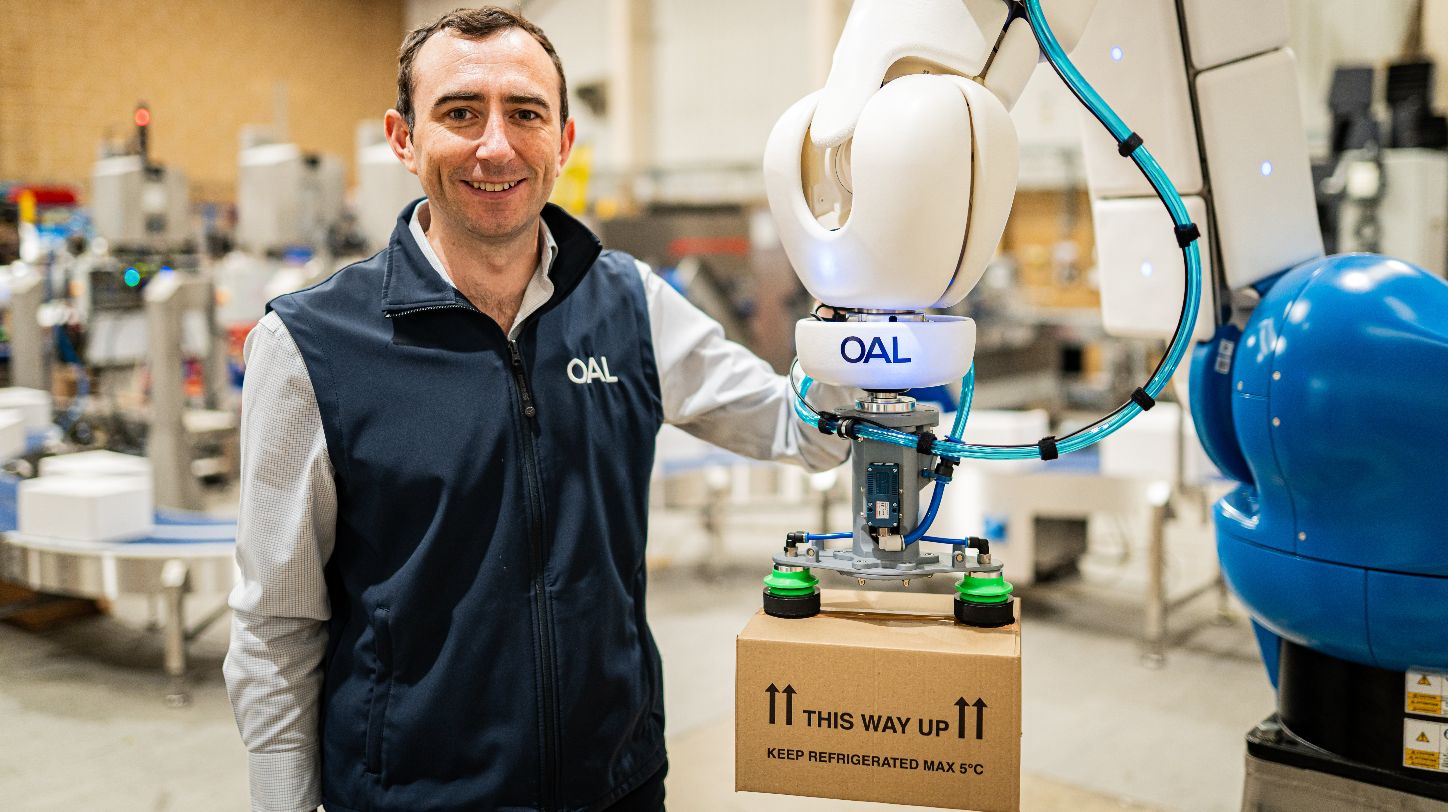
Everyone expected robotics to eventually seep into every corner of the supply chain, but the timeline and the form factor were always the big questions. We pictured massive, caged behemoths lumbering through cavernous warehouses, a far cry from the delicate, complex dance of human hands on a fast-paced production line. But OAL, a robotics and automation specialist, is betting on a different vision: compact, fenceless robots that can slot directly into existing food and beverage manufacturing environments. And they just secured £5 million from Innovate UK to prove it.
This isn’t just about adding more machines; it’s about a fundamental architectural shift. The deal is to deploy over 1,000 of these robotic systems by 2030, specifically targeting the food and beverage industry’s persistent struggle to fill over 100,000 roles. Think about that for a second. That’s not a minor hiccup; it’s a gaping wound in the sector’s operational capacity, leading to inefficiencies, longer lead times, and, yes, delivery delays that ripple all the way to our dinner tables.
Fenceless: The New Paradigm
The real story here is the ‘fenceless’ aspect. Traditionally, industrial robots required substantial safety caging, creating rigid zones and demanding significant factory floor real estate. OAL’s approach is about agility. They claim their compact systems can be retrofitted onto existing production lines with minimal disruption to factory layouts. This is the key differentiator. It means manufacturers don’t need a complete overhaul to embrace automation; they can integrate it incrementally.
“Labour remains one of the biggest structural challenges in food manufacturing, yet traditional automation is often too large or inflexible to adapt to changing demands – be they consumer- or retailer-led.”
This quote from OAL Managing Director, Jake Norman, hits the nail on the head. The old way of doing things – clunky, inflexible automation – just isn’t cutting it anymore. Consumer demand shifts rapidly, retailer requirements tighten, and a rigid manufacturing setup buckles under the strain. Fenceless robotics, by its very nature, promises a more adaptable, responsive manufacturing environment. It’s about small, smart robots working alongside people, handling the repetitive, physically taxing tasks like pick-and-place and palletizing, freeing up human operators for more complex, value-added work.
Why Does This Matter for Food Manufacturing?
The implications for the food and beverage industry are substantial. For years, the sector has grappled with high staff turnover and an aging workforce, compounded by a general aversion to the often grueling nature of the work. Automation has been on the table, of course, but often perceived as a prohibitively expensive, complex, and disruptive solution requiring significant capital investment in new infrastructure. OAL’s fenceless model sidesteps much of that.
This isn’t just about efficiency gains, though those will undoubtedly come. It’s about resilience. In an era where supply chain disruptions are becoming the norm rather than the exception, a more agile and less labor-dependent manufacturing base is a significant competitive advantage. Manufacturers can pivot more quickly, scale production up or down with less friction, and ultimately absorb shocks that might otherwise cripple their operations. This £5 million injection isn’t just funding a product; it’s backing a strategy to de-risk and future-proof a critical sector.
A Skeptic’s View: Hype or Hope?
While the promise of OAL’s technology is compelling, it’s important to approach it with a healthy dose of journalistic skepticism. The devil, as always, will be in the details of deployment and long-term reliability. Can these compact robots truly match the speed and precision of their larger, caged counterparts in demanding, high-volume environments? What are the maintenance requirements? And how will human operators — the very people OAL aims to complement, not replace — adapt to working in close proximity with automated systems?
Furthermore, the £5 million loan is a significant sum, but rolling out 1,000 systems by 2030 is an ambitious undertaking. It requires not just technological prowess but also sophisticated project management, extensive training, and buy-in from a traditionally conservative industry. The PR spin emphasizes the solution to labor shortages, and while that’s a critical pain point, the underlying architectural shift towards flexible, human-collaborative automation is the deeper story. If OAL can deliver on this promise, it could very well represent a significant leap forward for manufacturing automation, not just in the UK, but globally.
🧬 Related Insights
- Read more: Higher-Ethanol Gasoline Approved by House [Biofuels Boost]
- Read more: Iran’s Strait of Hormuz Agency: New Controls Spark Trade Fears
Frequently Asked Questions
What are fenceless robots? Fenceless robots are automated systems designed to operate safely in close proximity to human workers without requiring traditional safety caging.
How many robots will OAL deploy? OAL plans to deploy over 1,000 robotic systems in the food and beverage industry by 2030.
What is the main benefit of OAL’s technology? The main benefit is its ability to address labor shortages and increase efficiency by retrofitting automation into existing production lines with minimal disruption.