And there it was — a chrome and plastic arm, moving with a fluidity that frankly unnerved me. It wasn’t the jerky, predictable motion of the industrial arms we’ve known for decades. This was something… different. It was at BMW’s Spartanburg plant, and the whispers about ‘Physical AI’ were getting louder, moving from the usual Silicon Valley vaporware convention circuit right onto the actual factory floor.
For years, humanoid robots have been the stuff of sci-fi dreams and meticulously staged press conferences. Think impressive demos in climate-controlled rooms, robots juggling balls or serving coffee. Great theater, sure. But the operational relevance to the gritty, unpredictable world of large-scale manufacturing? Usually about as relevant as a unicorn sighting to your quarterly earnings report.
That’s where BMW is trying to shake things up. They’re not just tinkering; they’re actively weaving these clunky-but-promising machines into actual production workflows. Collaborations with outfits like Figure AI and Hexagon are no longer just feel-good partnerships; they’re the testbed for putting these things to work.
And crucially, BMW is no longer treating these robots like a one-off curiosity. After a pilot run in South Carolina, they’re pushing forward, setting up shop in Germany with a new ‘Center of Competence for Physical AI in Production.’ This isn’t a hobby project anymore; it’s a strategic bet.
Why should anyone care? Because this might be the early tremor signaling a seismic shift. We’ve lived with automation for decades, the fixed, unthinking kind. Now, the industry is inching towards something more adaptive, something that can actually operate in the messy, semi-structured environments where humans still, by and large, reign supreme.
What Exactly Did BMW’s Humanoid Robots Do?
The Spartanburg experiment, for instance, put Figure AI’s Figure 02 robot to work on chassis assembly. The task? Handling sheet-metal parts for welding. Sounds mundane, right? But consider the grunt work that’s traditionally been a pain point for automation: repetitive lifting, physically demanding tasks, precise positioning, and all the intralogistics that go with it.
Traditional industrial robots? They’re masters of their domain when conditions are predictable. Think fixed paths, known locations, and endlessly repeatable sequences. They thrive in that sterile, controlled environment.
But manufacturing isn’t always that neat and tidy. There’s dynamic movement, handling parts that aren’t perfectly aligned, supporting human workers, and dealing with those inevitable exceptions that throw a wrench in the most well-laid plans. These are the areas where humans have historically trounced machines in terms of sheer adaptability.
So, what’s this new wave of ‘Physical AI’ promising? A blend of computer vision, advanced AI, spatial reasoning, and reinforcement learning. The goal: to let robots — and I use that term loosely for these bipedal behemoths — adapt to changing conditions instead of just blindly repeating programmed motions.
The real kicker, though? These humanoid platforms are designed to operate in spaces built for humans. That’s a massive architectural advantage. Most factories today are built around human mobility, human dexterity, and human adaptability. Introducing robots that can move and interact within those existing human-centric spaces means less costly redesign and potentially faster deployment. Everyone’s watching this, and they should be.
The Leipzig Leap: Beyond Spartanburg’s Sheet Metal
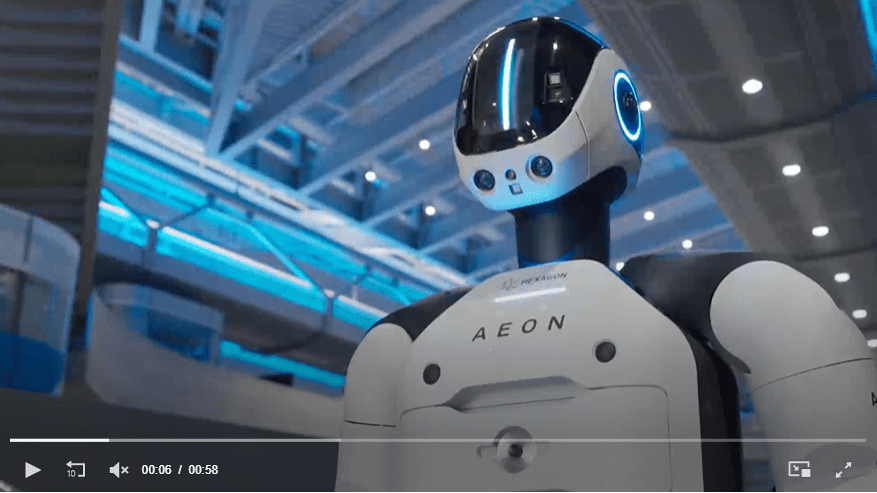
But the real strategic signal, the one that makes my skeptical journalist brain perk up, is the move beyond Spartanburg. BMW’s February 2026 announcement about bringing Physical AI to Plant Leipzig in Germany, this time with Hexagon Robotics and their AEON model, broadens the scope considerably. This isn’t just about car parts anymore; it’s about multifunctional applications in high-voltage battery assembly. Talk about upping the ante.
BMW’s framing of ‘Physical AI’—the marriage of digital intelligence with real-world machines—is also telling. It positions these robots not as isolated tech toys but as integral components of a larger digital production strategy. And they’re hammering home a point that’s becoming non-negotiable in industrial AI: unified operational data.
Effective use of AI in production depends on maintaining and leveraging the right data. It’s about the context, the understanding of the physical world, and the ability to continuously learn.
That’s the corporate speak for “garbage in, garbage out,