AI goes physical.
That’s the stark, undeniable directive embedded within China’s 15th Five-Year Plan. It’s not just a subtle tweak; it’s a declared pivot, a conscious redirection of immense AI research capabilities from the ether of the digital realm into the concrete, clanking reality of physical applications – specifically, robotics. This isn’t just about more efficient factory floors; it’s about architecting a future where intelligence isn’t confined to servers but walks, manipulates, and interacts with the material world.
Look at the numbers: China already dwarfs the globe in industrial robot deployment. We’re talking about an operational stock of around 2 million units, a number so staggering it’s 4.5 times Japan’s tally. They’re installing over half the world’s annual industrial robots, a dominant force, particularly in the electronics sector where they account for 64% of installations and a commanding 59% of the supply chain. Even in the metals and machinery industries, their domestic robot suppliers snag a frankly astonishing 85% market share.
So, if they’re already the undisputed king of industrial automation, why the big push now? The International Federation of Robotics (IFR) is quick to temper expectations about immediate household robot armies or ubiquitous humanoid factory workers. Those, they say, are still a ways off, likely towards the latter half of this Five-Year Plan’s timeline. The real acceleration, the kind that will ripple through traditional industrial robotics, is slated for the next five to ten years. That’s where the AI integration really kicks into high gear.
The Grand Orchestration of AI Ambition
Takayuki Ito, President of the IFR, cuts right to the chase. He frames the 15th Five-Year Plan as the foundational document, the ur-text for all subsequent governmental directives. “Thousands of subordinate sectoral and regional plans are now mandated to align with the objectives,” he states, emphasizing the top-down, all-encompassing nature of this initiative. This isn’t a pilot program; it’s national strategy.
His further observation is key: “Under the new framework, China is shifting its focus from traditional industrial automation to high-end, intelligent robotics integrated with artificial intelligence.” This is the architectural shift. It’s about moving beyond programmable arms simply repeating tasks and towards systems that can learn, adapt, and make decisions in dynamic, complex environments. It’s the difference between a highly precise hammer and a skilled artisan who can improvise.
Why Does This Matter for Global Supply Chains?
This push for intelligent, AI-infused robotics isn’t just a domestic play. China’s dominance in manufacturing means any significant leap in its industrial capabilities will inevitably have global reverberations. We’re not just talking about cheaper widgets; we’re talking about potential disruptions to the very fabric of how goods are produced, moved, and delivered worldwide.
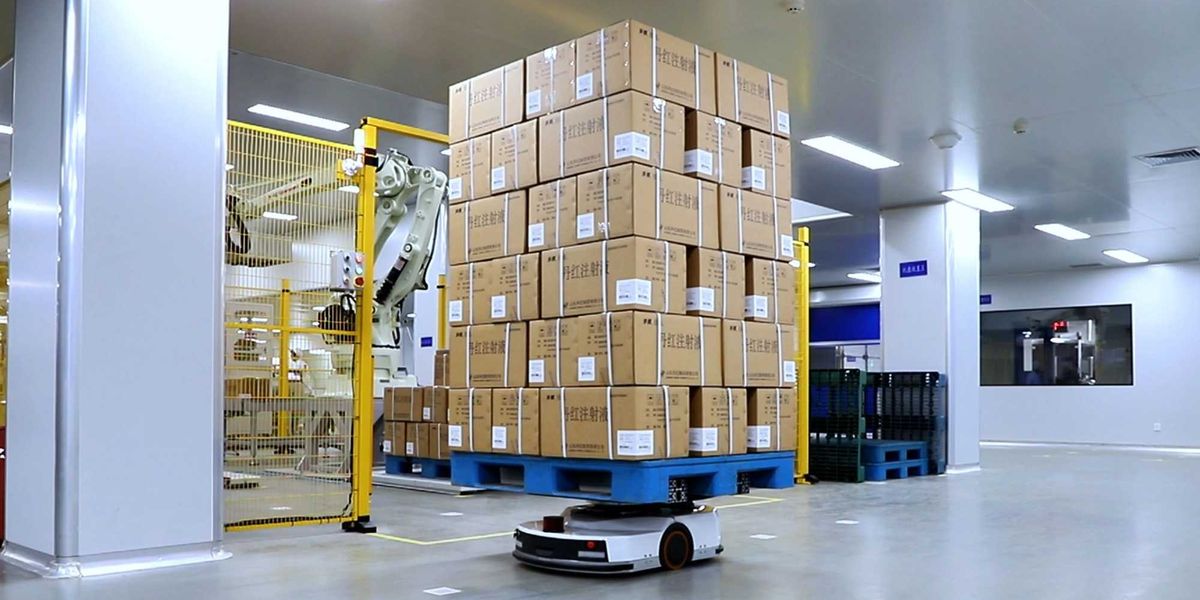
Consider the implications for warehousing and fulfillment. As China’s AI-driven robots become more sophisticated, they could automate tasks that have, until now, been the last bastion of human labor in logistics: picking, packing, sorting, and even last-mile delivery. The efficiency gains could be astronomical, but the potential for labor displacement and the restructuring of logistics networks is equally significant. Companies that don’t adapt to this new wave of intelligent automation risk being left behind.
Furthermore, this focus on physical AI opens up entirely new possibilities for supply chain resilience. Imagine robots that can not only perform tasks but also diagnose issues, perform predictive maintenance, and adapt to unforeseen disruptions in real-time. This could lead to supply chains that are not just more efficient but also dramatically more strong and agile.
This is a fascinating historical parallel, really. Think about the post-WWII industrial boom, when the US poured resources into developing new manufacturing techniques and technologies that reshaped global economics. China’s current strategy feels like a modern, digitized echo of that, but with the added layer of advanced AI driving the physical innovations. The question isn’t if this will change things, but how profoundly and how quickly.
The corporate spin, of course, will focus on innovation and progress. But look beneath the surface, and you see a deliberate, state-backed effort to leapfrog existing technologies and establish a new global standard in intelligent automation. It’s a strategic play for economic and technological supremacy, and the supply chain world is squarely in its sights.
Will China’s Robotics Push Make Human Workers Obsolete?
Not entirely, at least not in the near to medium term. While the 15th Five-Year Plan aims for significant automation, the IFR acknowledges that widespread adoption of humanoid robots in households or as universal factory helpers is still years away. The immediate focus is on integrating AI with existing industrial robotics, enhancing their capabilities. This will likely lead to a shift in the types of jobs available, with increased demand for roles related to robot maintenance, programming, oversight, and complex problem-solving, rather than a complete elimination of human involvement.
What is the Primary Goal of China’s 15th Five-Year Plan Regarding Robotics?
The primary goal is to pivot AI research towards physical applications, specifically high-end, intelligent robotics. This means moving beyond traditional industrial automation to develop robots that are more capable, adaptable, and integrated with artificial intelligence, aiming for commercialization and wider adoption towards the end of the plan’s period (roughly the next five to ten years).
How Does China’s Robotics Stock Compare Globally?
China possesses an operational stock of approximately 2 million industrial robots, which is about 4.5 times more than the second-largest country, Japan. This indicates a significant existing foundation in industrial automation that the new plan aims to augment with advanced AI integration.