The hum of servers is a far cry from the frantic shouts of warehouse workers, yet for Lapp USA, the switch to autonomous inventory drones has made exactly that kind of seismic shift possible.
Drones Take Flight, Manual Labor Takes a Seat
Industrial cable distributor Lapp USA, knee-deep in a labor-intensive, error-prone inventory process, has engineered a nightly automated workflow. This isn’t some futuristic pipe dream; it’s a concrete reality delivering reliable visibility, slashing costs, and, crucially, upgrading customer service. The enabler? Autonomous inventory drones from Corvus Robotics.
This move also neatly dovetails with the company’s broader consolidation efforts, bringing light manufacturing and distribution under a single roof in Brownsburg, Indiana. A smart play, indeed.
The Warehouse Woes That Needed Solving
When Lapp USA landed in its sprawling 134,000-square-foot Brownsburg facility in 2023, keeping tabs on inventory became a daily, grinding struggle. The old manual cycle count, a relic of simpler times, was simply not cutting it. Leaders at Lapp USA were direct about the pain points:
- Coverage Gaps: Manual counts were a twice-a-year affair, leaving large swathes of the warehouse unscrutinized for months on end.
- Labor Drain: A hefty 12.5% of the workforce was sidelined for inventory duties, pulled away from critical picking and manufacturing tasks. Imagine pulling your best mechanics off the assembly line to count spare parts.
- Slow Fixes: Misplaced or mislabeled cable reels meant painstaking searches and frustrating reconciliation efforts.
- Fulfillment Snags: These inefficiencies inevitably cascaped, slowing down order processing and putting on-time deliveries at risk.
Corvus Robotics’ Automated Prescription
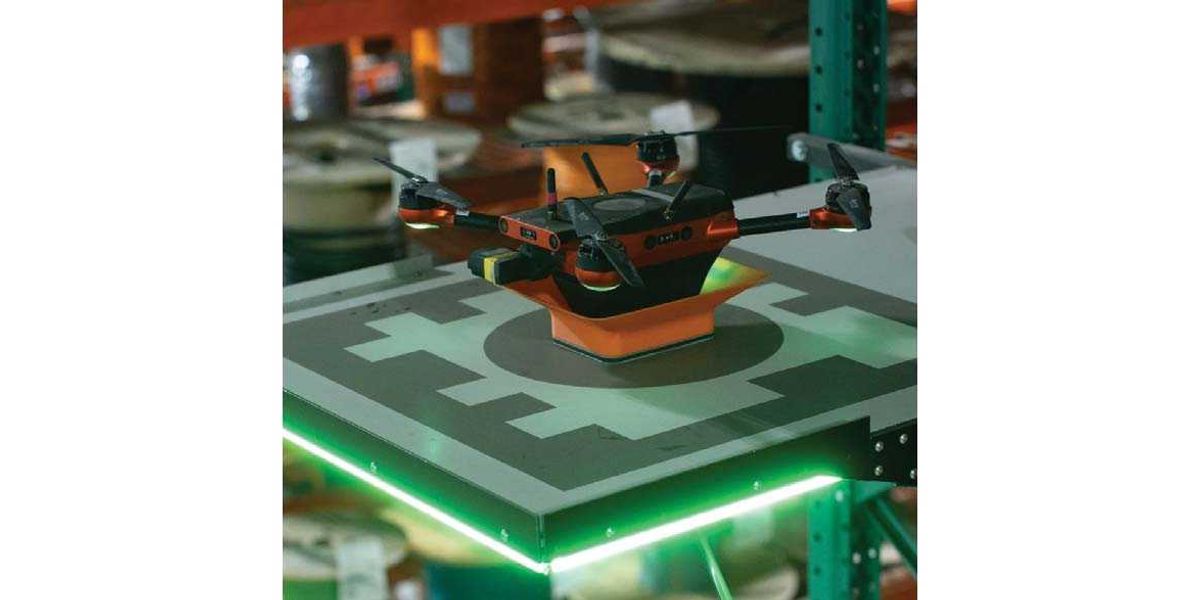
Enter Corvus Robotics and its Corvus One drones. These aren’t just flying cameras; they’re autonomous agents. They embark on nightly missions, gliding through the facility, scanning racks, and cataloging pallet locations with relentless precision. By the time the morning shift clocks in, the Lapp inventory team receives a comprehensive, accurate report. Discrepancies—misplaced reels, phantom labels—are flagged instantly. This automated workflow replaces the agonizingly manual, time-consuming cycle count with something far more sophisticated: a streamlined inventory monitoring system. The upshot? Reduced labor costs, boosted accuracy, and a serious uptick in operational efficiency.
Corvus touts technology built for the grit of real-world warehouses. Its features include:
- Embodied AI: Enables autonomous operation even when GPS signals are nonexistent.
- Computer Vision: Identifies barcodes, labels, and rack positions at scale.
- Machine Learning: Continuously improves scan accuracy and identifies trends in discrepancies.
- Full Autonomy: Zero piloting, zero infrastructure overhaul, and zero disruption to daily operations. This is the key differentiator—a truly plug-and-play solution, or as close to it as you can get in this industry.
“This design means Lapp doesn’t just save labor—it gains reliable visibility that keeps orders flowing, reduces the chance of errors …, and strengthens supply chain performance end to end,” Corvus Robotics’ leaders stated, underlining the broad impact of their system.
The Tangible Returns of the Algorithm
Lapp rolled out the Corvus drones in 2025, and the results were, to put it mildly, swift. Both companies report error reductions and cost savings within 30 days. Consider the math: Full inventory counts jumped from twice annually to a remarkable 26 times. This rapid detection capability is vital for catching errors before they hit a customer’s doorstep. The facility also reaped a 60% labor saving. Inventory staff dwindled to a lean two associates, with others strategically redeployed to bolster picking and manufacturing—a move that has demonstrably accelerated order fulfillment. No more costly overtime, and accuracy has soared as drone scans pinpointed labeling inconsistencies, prompting Lapp to standardize practices and elevate accuracy across the board. It’s a virtuous cycle, driven by data.
Jason Beltran, facility manager at Lapp USA, put it plainly:
“The Corvus One system has been able to help us by providing better service to our customers. Getting the inventory in …, seeing where it is, and being able to allocate it right away to the customer is a tremendous benefit for us.”
Corvus Robotics CEO Jackie Wu, not one to mince words, highlights the speed to value:
“Lapp’s results showcase how quickly autonomous technology can create measurable value. Corvus One was designed to be operational in weeks, not months, so companies like Lapp can see immediate impact.”
And that’s the bottom line, isn’t it? In an industry perpetually chasing efficiency, the swift, measurable impact of intelligent automation is the real prize. The question for many other distributors now isn’t if this technology will become standard, but when they’ll be able to justify the investment. The warehouse, once a realm of brute force, is clearly evolving into a domain of precision and data. This isn’t just about drones; it’s about a smarter, more responsive supply chain.
Is This a Drone Revolution for Warehousing?
This deployment at Lapp USA isn’t an isolated incident. It’s part of a growing trend. Companies across logistics and retail are increasingly turning to autonomous solutions, particularly robotics and AI-powered systems, to combat persistent labor shortages and rising operational costs. The appeal of autonomous drones lies in their ability to operate continuously, without human fatigue or the need for extensive breaks, while gathering granular data. Unlike automated guided vehicles (AGVs) or autonomous mobile robots (AMRs) that might require more significant infrastructure changes or defined pathways, drones can navigate complex, three-dimensional warehouse environments relatively easily. This makes them a compelling option for existing facilities where a full retrofit might be prohibitively expensive or disruptive.
However, it’s crucial to remember that such solutions often require a significant upfront investment. The return on investment (ROI) calculation needs to factor in not just labor savings but also the potential for reduced errors, improved inventory accuracy leading to better stock management, and enhanced customer satisfaction. For companies like Lapp, the ROI appears to have been swift and substantial, but the applicability and scalability for smaller operations or those with vastly different warehouse layouts will vary.
🧬 Related Insights
- Read more: Trump’s Tariff Gambit Hits Court Wall Again – Supply Chains Pay the Price
- Read more: Trump Blasts Iran’s Strait of Hormuz Tolls as Tankers Rot and Prices Spike
Frequently Asked Questions
What does Corvus One actually do?
Corvus One is an autonomous inventory drone that flies through warehouses at night, scanning inventory and capturing data to provide accurate, real-time inventory visibility and flag discrepancies.
Will autonomous drones replace human inventory staff entirely?
While they significantly reduce the need for manual labor in inventory counting, these systems often redeploy staff to more value-added tasks like picking, packing, and manufacturing, rather than eliminating roles outright.
How quickly can a company implement drone-based inventory management?
Corvus Robotics claims their system can be operational in weeks, enabling companies to see measurable value and impact relatively quickly after deployment.