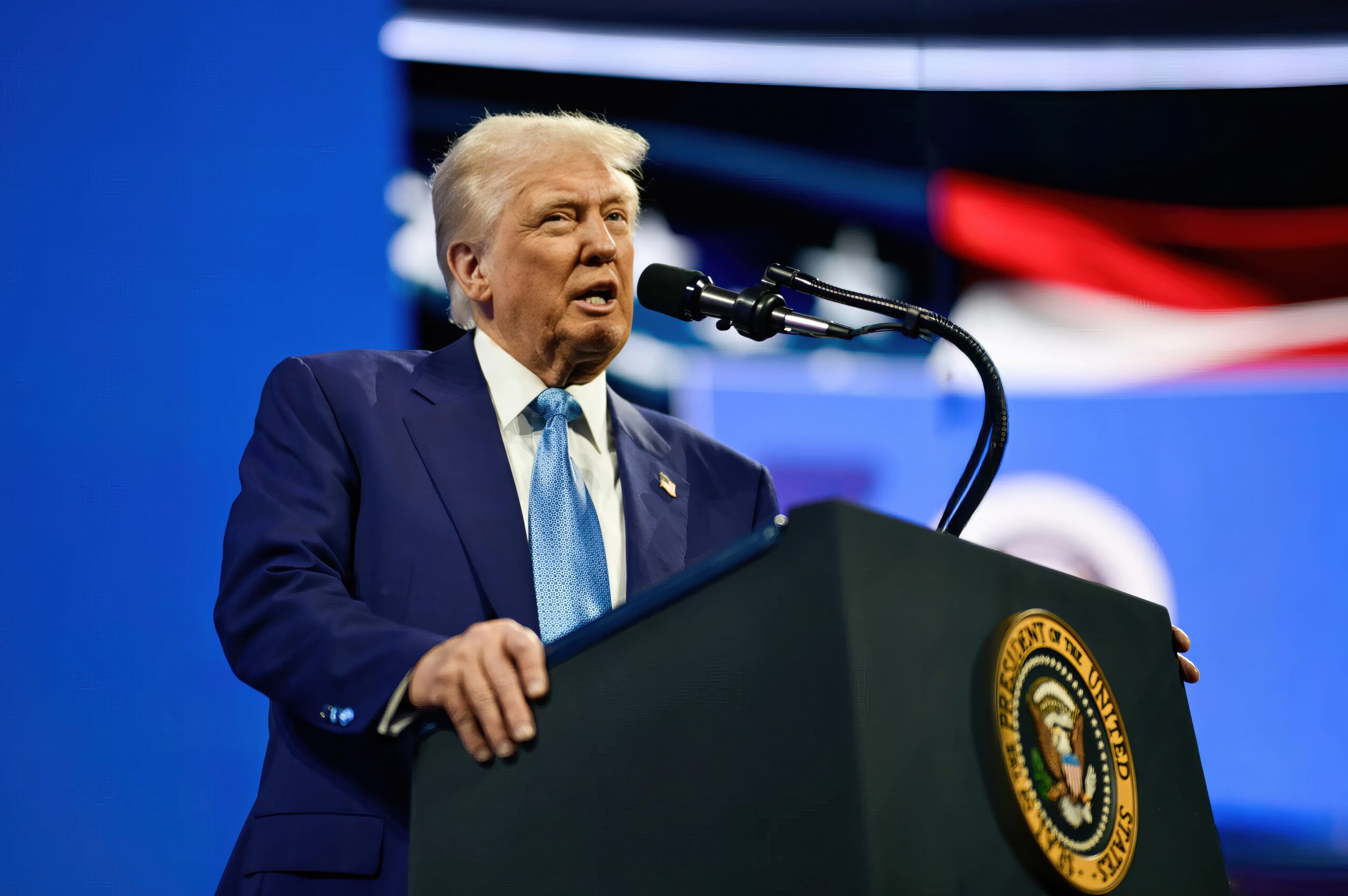
A former Attorney General, Pam Bondi, has been appointed to a key presidential advisory committee on artificial intelligence, a move that frankly, makes very little sense from a strategic standpoint.
The Presidential Council of Advisors on Science and Technology (PCAST) now boasts Bondi among its ranks, a group that also includes tech heavyweights like Nvidia’s Jensen Huang and Meta’s Mark Zuckerberg. The stated purpose? To facilitate coordination between government and tech titans on AI policy. Facilitation is one thing; substantive technical or policy expertise is quite another.
Is This About Science or Politics?
Let’s be clear: Bondi’s resume, while impressive in its own legal and political spheres, doesn’t scream AI expertise. She’s known for her tenure as Florida’s Attorney General, a role that primarily involves legal enforcement and state-level policy. Now, she’s suddenly thrust into advising on one of the most complex and rapidly advancing technological frontiers we face. This isn’t about being a legal eagle; it’s about understanding the nuances of algorithms, data ethics, national security implications of AI, and the sheer pace of innovation. It feels less like a scientific appointment and more like a political one, an attempt to keep loyalists in the fold.
The White House, through Vice President JD Vance, offered a rather tepid endorsement: “Pam has been an enormously valuable asset to the president’s team, and I’m thrilled for her and for all of us that she’s going to remain involved in confronting some of the most important issues the administration faces.” Valuable asset, sure. But valuable for this specific role? The jury’s out, and frankly, it’s leaning towards ‘no’.
Why Does an AI Council Matter So Much?
This isn’t just about optics or keeping friends happy. The PCAST is supposed to be the intellectual backbone for presidential decisions on science and technology. In an era where AI’s impact is already being felt across industries – from supply chain optimization and autonomous vehicles to national defense and healthcare – having the right minds at the table is not just important, it’s imperative. We’re talking about the potential for economic disruption, ethical minefields, and global competitive advantage. Appointing someone with a background solely in state-level law enforcement to a council grappling with these issues is, at best, a distraction, and at worst, a dereliction of duty.
And let’s not forget the “newly established advisory role on national infrastructure.” While infrastructure is undeniably critical, the vagueness of this role, coupled with the PCAST appointment, suggests a pattern of distributing influence rather than seeking specialized knowledge. It smacks of patronage, not pragmatic policy-making. It’s the kind of appointment that makes you wonder if the actual work will be done by staffers in the background, while the principal figures attend meetings and issue pronouncements.
The news also briefly touches on Bondi’s recent health battle – thyroid cancer. While her recovery is heartening and a proof to her resilience, it also raises questions about the timing and her current capacity for the demanding work such a role would entail. (Though, to be fair, recovery shouldn’t preclude participation, but it adds another layer of scrutiny to an already questionable appointment).
Here’s the thing: The original Axios report highlights that Bondi will be charged with facilitating coordination. Facilitation is often a euphemism for being a liaison, a go-between. If the goal is truly to advance US AI policy, you need people who can speak the language of AI, understand its limitations and potential, and can credibly engage with the sharpest minds in the field. Simply bridging a communication gap isn’t enough when the stakes are this high. We need strategic thinkers, not just conduits.
My unique insight here? This appointment echoes a broader trend where political expediency and loyalty are prioritized over genuine expertise in critical, forward-looking fields. We saw it with previous administrations prioritizing political appointees in roles requiring deep scientific understanding, and it seems this administration is determined to follow suit. It’s a recipe for falling behind on the global stage, where countries like China and those in Europe are investing heavily in cutting-edge AI research and development with dedicated, expert-led bodies.
This move, frankly, feels like a step backward. It signals that perhaps the administration doesn’t grasp the profound, complex, and deeply technical nature of AI policy, or it simply doesn’t care enough to staff its advisory bodies with individuals possessing the requisite knowledge. Either way, it’s not a reassuring signal for the future of American innovation.
“Pam has been an enormously valuable asset to the president’s team, and I’m thrilled for her and for all of us that she’s going to remain involved in confronting some of the most important issues the administration faces.” - Vice President JD Vance
What’s the Upside Here?
Honestly? It’s hard to see one. If the goal is to foster genuine dialogue and progress in AI policy, then bringing someone without a clear track record in the field onto such a prestigious council is a misstep. It risks diluting the council’s credibility and potentially diverting attention from the substantive work required to navigate the complexities of artificial intelligence. It’s a move that feels more about political optics than technical prowess. A real missed opportunity to bring in someone who could offer genuine insights into the technical challenges and opportunities of AI.
One can only hope that the other members of PCAST, with their deep industry and scientific backgrounds, will be able to guide the conversation and ensure that sound, evidence-based recommendations emerge. But the inclusion of Bondi raises a significant red flag for anyone following the critical intersection of technology and governance.
🧬 Related Insights
- Read more: IMF Warns: War Darkens Global Economic Outlook [Key Impacts]
- Read more: ILA Veteran Enters Maritime Hall of Fame
Frequently Asked Questions
What is the Presidential Council of Advisors on Science and Technology (PCAST)?
PCAST is a body of external advisors chosen for their deep and varied experience in the scientific and technological communities. It serves as the principal voice of the scientific and technological community in the White House, advising the President on science and technology issues confronting the nation and the world.
Why is Pam Bondi’s appointment to an AI panel controversial?
The controversy stems from her lack of a publicly demonstrated background or expertise in artificial intelligence or advanced technology policy, leading to questions about her suitability for advising on such a complex and technical field.
What are the concerns about AI policy coordination?
Concerns typically revolve around ensuring that AI development and deployment are ethical, secure, and beneficial to society, while also maintaining national competitiveness. This requires deep technical understanding, foresight into societal impacts, and strong regulatory frameworks, which critics argue may be jeopardized by less qualified advisors.