Did you ever stop to think about the administrative earthquake rumbling just beneath the waves of international shipping? It’s not just about the physical cargo anymore; it’s about the invisible trail of carbon it leaves behind. And the UK, bless its regulatory heart, is about to make that trail a lot more visible — and costly — with its new Emissions Trading Scheme (ETS).
This isn’t just another tick-box exercise. We’re talking about a fundamental shift, a platform change in how shipping navigates its environmental responsibilities. Think of it like the dawn of the internet for businesses – at first, it was a novelty, then a necessity, and now, an absolute bedrock. The UK ETS for maritime operations, kicking off on July 1st, is shipping’s analogue to that foundational shift.
The ‘Buy-to-Comply’ Trap
Right now, many are eyeing this new UK ETS with a shrug, thinking they can just buy their way out of trouble. A classic, perhaps even understandable, reaction. But here’s the uncomfortable truth: that ‘buy-to-comply’ mentality is a relic of a simpler time, a strategy that’s about as effective as bringing a quill pen to a cryptocurrency conference. The experts are loud and clear: this approach will lead to higher long-term costs and a tangled mess of administrative headaches.
During a recent webinar, the folks at Zero44 and CFP Energy didn’t pull any punches. They laid out a stark warning: relying on the easiest path now will mean facing a more complex and expensive reality down the line. It’s like buying a single ticket for a journey that requires a season pass – you’ll keep paying more, over and over.
What’s Actually Changing?
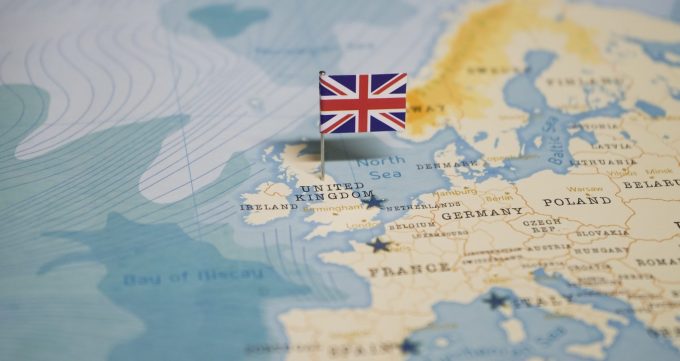
So, what are we talking about here? From July, the UK ETS will cast its net over domestic UK voyages, emissions at berth in UK ports, and movements within those ports for vessels over 5,000 gross tonnage. International voyages to and from the UK are out for now, but don’t get too comfortable – the government’s planning a review in 2028. That’s not that far away in shipping terms.
Sandra Bronsvoort, head of strategy at Zero44, pointed out that the UK scheme is designed to be a close cousin to the EU ETS. On the surface, that sounds like good news – less complexity, right? Perhaps. But then she hit us with the kicker: even a single call at a UK port on an international journey means you’re in the MRV (Monitoring, Reporting, and Verification) game and need a UK registry account. Yes, you heard that right. An occasional visitor still needs the full membership.
“Unfortunately, the answer is ‘yes’,” Ms Bronsvoort said in response to a question about whether operators making only occasional UK calls would still require a registry account.
This is where the human element, the messiness of real-world operations, really comes into play. It’s not about broad strokes; it’s about the granular details of where your ship is, when, and what it’s doing. Preparing charter-party arrangements now isn’t just smart; it’s essential. The question of “who pays what, when, and how” is about to become a hot topic at every negotiation table.
The Illusion of Simplicity
Zero44 highlighted that charterers are already starting to signal their preferences, and it’s not a uniform picture. Some will likely demand separate UK ETS statements alongside their EU ETS settlements. Imagine adding another layer of invoices and reports to an already complex financial picture. It’s like trying to assemble IKEA furniture without the instructions – frustrating and prone to collapse.
And then there’s the looming specter of rising carbon costs. CFP Energy sounded the alarm bells, predicting that as emissions caps tighten in both the UK and EU schemes, allowance prices will inevitably climb. The focus is increasingly shifting to those “harder-to-abate” sectors – like shipping. We’re not just talking about minor price fluctuations; we’re talking about a sustained upward pressure.
Shipping’s AI Moment? (Sort Of)
Tim Atkinson, head of carbon at CFP Energy, made a crucial point: shipping companies need to start viewing carbon exposure not as an afterthought, but as a core risk management element, much like fuel procurement or freight risk. He drew a parallel to the industrial sector, where companies initially treated emissions as a compliance burden. But as costs rose and understanding deepened, they pivoted to smarter, risk-managed strategies.
Too many companies, he lamented, are still playing catch-up, reacting rather than planning. When allowance prices dipped below £70, there was a flurry of activity as compliance buyers rushed to hedge future requirements. That’s a reactive play, a frantic dash for cover. We need a proactive strategy, a forward-looking approach.
This entire scenario is, in a way, shipping’s analogue to the AI revolution sweeping other industries. It’s forcing a re-evaluation of processes, a demand for better data, and a need for predictive intelligence. Just as AI platforms are becoming the new operating system for businesses, strong carbon management strategies are becoming the new operating system for shipping’s environmental compliance. It’s a platform shift, requiring new tools, new thinking, and a new sense of urgency.
The Global Ripple Effect
And let’s not forget the geopolitical dance. CFP Energy noted how UK carbon prices have increasingly mirrored EU prices, especially as London and Brussels discuss linking their systems. If that linkage happens – and 2028 is being floated as a potential timeline, conveniently aligning with the review for international voyages – UK and EU allowances could become interchangeable. This would likely pull UK carbon prices even closer to their EU counterparts. It’s a global game, and regional decisions have international consequences.
The MEPC’s failure to secure a more ambitious global decarbonisation mandate at its last meeting has essentially greenlit a new era of fragmented, conflicting regional regulations. The UK is just the latest, but certainly not the last, to forge its own path. This fragmentation is the enemy of efficiency and adds layers of complexity that shipowners and operators can ill afford.
This isn’t just about the UK. It’s a harbinger of what’s to come globally. The pressure is on. The time for passive observation is over. The time for strategic, proactive preparation is now.
🧬 Related Insights
- Read more: Iran’s Cyber Crews Crack US Factory PLCs: Supply Chains on the Brink
- Read more: BUILD America 250 Act: Federal AV Trucking Rules Arrive
Frequently Asked Questions
Will the UK ETS apply to all my ship’s voyages?
No, the UK ETS will initially apply to domestic UK voyages, emissions at berth in UK ports, and movements within UK ports for vessels over 5,000 gt. International voyages to and from the UK are excluded for now, though this may change after a review in 2028.
What if my company only makes occasional calls in the UK?
Even occasional calls at UK ports will likely require you to have monitoring, reporting, and verification (MRV) arrangements and a UK registry account. This means administrative and compliance obligations.
Is ‘buy-to-comply’ a good strategy for the UK ETS?
Industry experts strongly advise against a simple ‘buy-to-comply’ strategy. They warn it will lead to higher long-term costs and significant administrative burdens. Proactive planning and risk management are recommended instead.