Here’s the thing: The hum of a thousand keyboards in a dispatch office, clattering away at bills of lading and tracking down missing proof-of-deliveries—that’s a sound that’s rapidly fading. You can almost hear the quiet panic when data arrives too late, gumming up the works and costing money. But a new sound is emerging, a subtle digital whisper within the very systems designed to manage freight. Artificial intelligence, long a buzzword, is now deeply embedded, architecting a fundamental shift in how the trucking industry’s back office operates.
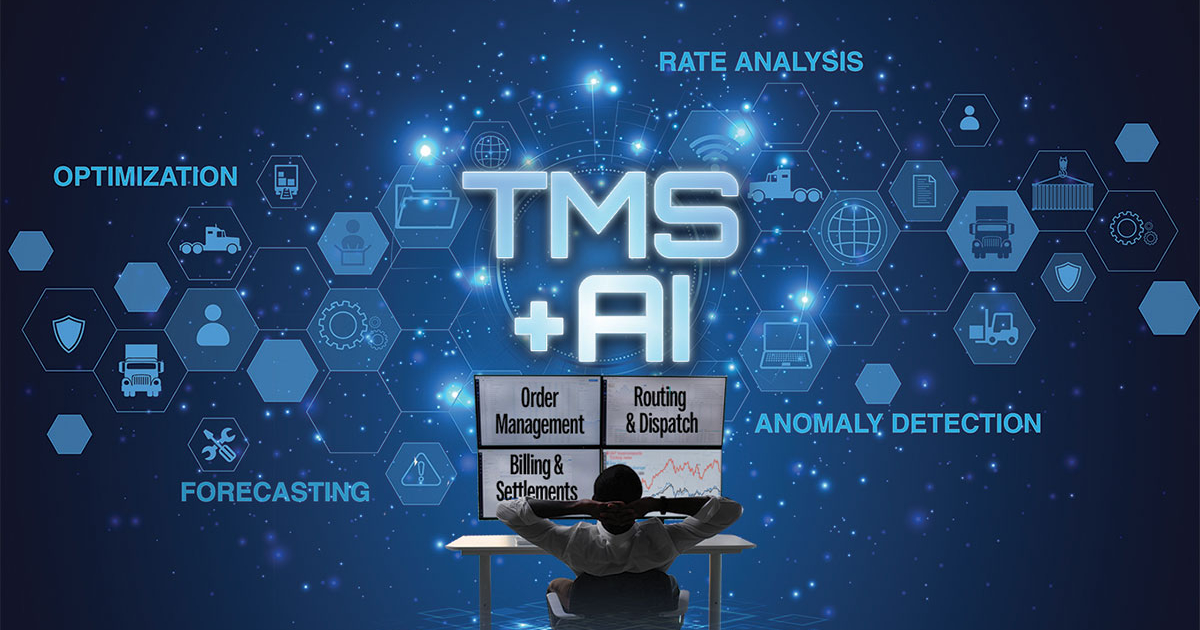
It’s not just about crunching numbers faster anymore. Transportation Management Systems (TMS) are shedding their skin as mere data repositories, evolving into what industry insiders are calling “systems of action.” The distinction is crucial. Classic TMS platforms have been, at best, diligent accountants, meticulously recording every shipment, every invoice. Now, they’re becoming shrewd strategists, not only capturing information but actively interpreting it to drive profitable decisions before a load even leaves the dock.
Is This Just Another Tech Fad, or a Real Shift?
The argument hinges on the practical application of AI, moving beyond theoretical capabilities to tangible results. Companies are reporting a noticeable uptick in win rates and a compression of errors, translating directly to fatter margins. This isn’t some nebulous promise; it’s about AI sniffing out the best freight at the optimal price, automating the tedious dance of dispatch, and essentially, allowing fleets to scale without drowning in administrative overhead. The back office, long a bottleneck, is becoming a growth engine.
Think about the sheer volume of paper. Bills of lading, invoices, delivery confirmations – a constant deluge. AI-powered document processing tools are now wading through this ocean of information, plucking out critical data points and slotting them into the TMS automatically. It’s like giving every clerk a super-powered assistant who never sleeps and never misses a detail. McLeod Software, for instance, is ingesting emails and written communications, keeping humans in the loop for validation but dramatically accelerating the initial data capture. Carrier Logistics is using this speed to auto-create shipments from BOLs, a critical advantage in the fast-paced world of Less-Than-Truckload (LTL), where every minute saved on data processing means more efficient routing and quicker turnaround.
This isn’t just about data entry, though. The real magic happens when AI starts looking ahead, weaving together disparate data streams. Telematics from the trucks, hours-of-service logs, real-time traffic, and historical lane performance – AI is now synthesizing all of it. Bill Cain from Trimble paints a vivid picture of dispatchers making hundreds of micro-decisions daily. AI aims to distill that complexity, offering recommendations or even automating choices about which driver, which load, and what route makes the most sense, especially when the unexpected happens – a blown tire, a sudden road closure. PCS Software’s Cortex AI engine is right in the thick of it, embedding intelligence directly into these critical dispatch and planning workflows. Imagine a dispatcher seeing not just a potential load, but a profitability score, a driver match recommendation, and a backhaul opportunity — all presented instantaneously.
“The back office has been running on gut instinct and spreadsheets for too long. Most fleets aren’t suffering from a lack of data. They’re suffering from data that shows up too late or in the wrong place.”
This is the core of the transformation: moving from reactive management to proactive optimization. When AI can assess a load’s margin potential and historical performance before a dispatcher even considers it, fleets stop taking on unprofitable freight. Dispatcher productivity climbs because decisions are faster and data-backed. And operational costs tumble as automation shoulders the repetitive tasks, from data entry to sending out status updates.
BeyondTrucks is pushing this further with what they call “coding agents.” Think of dispatchers inputting natural language exceptions – “avoid downtown during rush hour due to snowstorm.” The system then translates that into actionable constraints for route optimization. It’s a subtle but profound shift: instead of wrestling with complex software, users can communicate their needs more organically. This also creates a rich dataset for future predictive modeling, learning from every exception, every deviation.
This evolution from passive record-keeping to active intelligence is reminiscent of how financial trading platforms shifted from simply reporting stock prices to offering algorithmic trading and real-time risk analysis. The underlying architecture is morphing; TMS platforms are no longer just ledgers, but sophisticated operational hubs.
What Does This Mean for the Future of Trucking?
Execution agents, a newer frontier in AI, are poised to automate entire tasks rather than just assisting with them. This could mean anything from automatically rescheduling loads based on traffic delays to proactively flagging potential maintenance issues based on telematics data. Jeff Silver of Mastery Logistics Systems sees this as the next logical step, pushing automation further by having AI agents complete tasks, not just suggest them. This is where the back-office workforce sees the biggest impact, not necessarily through job elimination, but through role transformation. The focus shifts from manual processing and data entry to higher-level decision-making, customer relationship management, and exception handling – the uniquely human aspects of the business.
The promise is clear: fleets can grow their capacity and their revenue without a proportional increase in back-office headcount. AI handles the volume, the complexity, and the speed, freeing up human talent for more strategic work. It’s a more efficient, more profitable, and ultimately, more intelligent way to run a trucking operation. The era of the spreadsheet-dependent dispatcher is coming to a close, replaced by an AI-augmented professional who operates with unprecedented insight and speed. The whispers in the digital back office are growing louder, and they’re speaking the language of efficiency and profit.