The Orchestration Mandate
The 4PL market is exploding. We’re not talking incremental gains here; the projections are stark: upwards of USD 163.7 billion by 2035. This isn’t just about moving boxes faster or cheaper; it’s about a fundamental architectural shift in how businesses conceive and manage their entire supply chain ecosystem.
What Exactly is a 4PL?
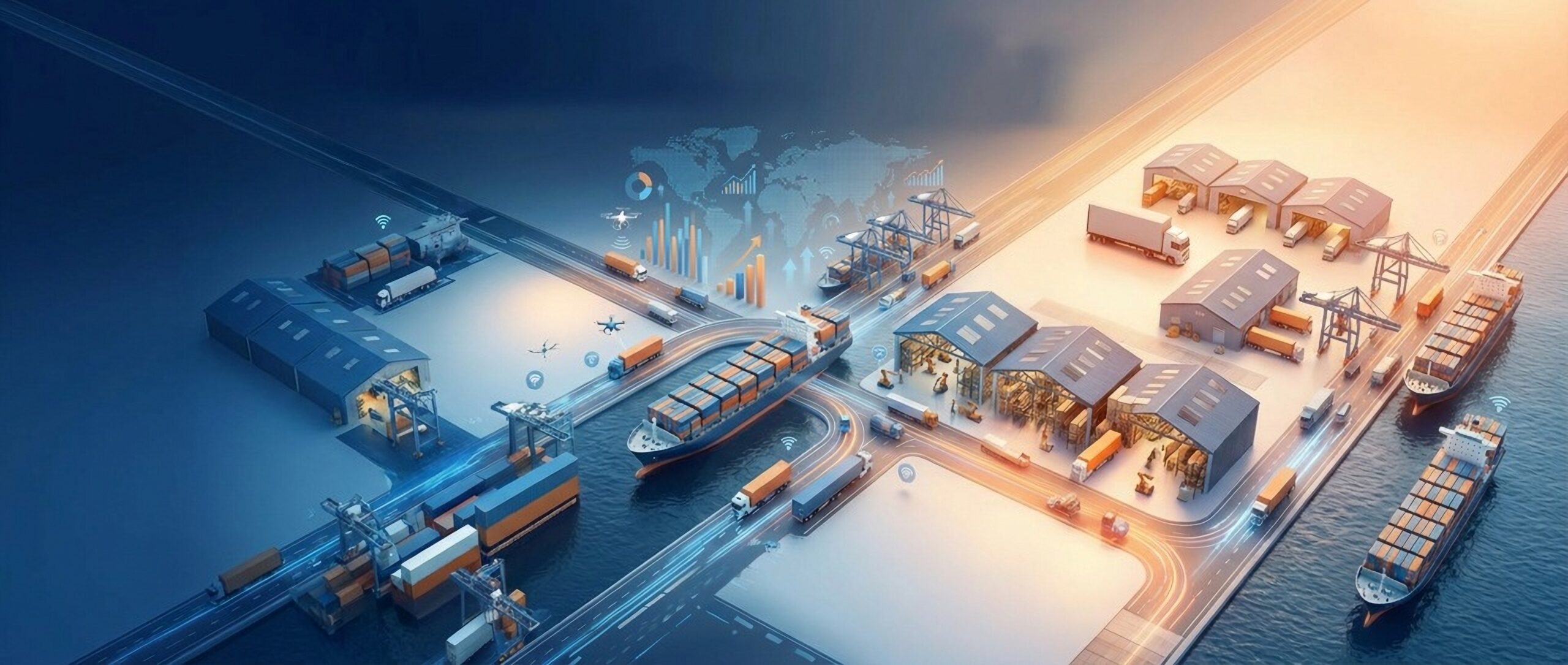
Let’s get this straight: a Fourth-Party Logistics provider isn’t your go-to for a quick buck moving goods from Point A to Point B. That’s 3PL territory. 4PLs are the maestros, the conductors of the entire logistics symphony. They don’t just execute; they design, build, and oversee the complex network of suppliers, carriers, and technology providers. Think of them as the strategic architects, ensuring every component of the supply chain plays its part in perfect harmony, often through a single, unified, tech-driven interface. This consolidation is precisely what the increasingly convoluted global trade routes demand.
Why the Boom? Complexity is the Mother of Invention (and Outsourcing)
Global supply chains have mutated into sprawling, multi-headed hydras. You’ve got suppliers scattered across continents, regulatory hurdles that change with the wind, and customer demands that shift faster than a geopolitical headline. Trying to wrangle this beast internally? It’s a recipe for inefficiency, ballooning costs, and frankly, a massive headache. Enter the 4PL. They’re the specialists who’ve built the infrastructure, the talent, and the technology to manage this chaos. Their core value proposition isn’t just cost savings; it’s about injecting order into the disorder, providing that coveted end-to-end visibility that business leaders are practically hallucinating over.
“This model enables companies to streamline operations, reduce inefficiencies, and gain real-time visibility across their supply chains. As global trade networks become more complex, businesses increasingly rely on 4PL providers as a single point of contact for all logistics functions.”
Digitalization: Not Just a Buzzword, It’s the Engine
And then there’s the digital revolution. It’s easy to dismiss terms like AI, cloud computing, and blockchain as corporate jargon, but in the 4PL space, they are the foundational building blocks. These technologies aren’t just enhancing existing processes; they’re enabling predictive analytics that can foresee disruptions before they happen, optimizing routes with a precision that would make an ancient mariner weep, and managing inventory with an intelligence that borders on prescience. For 4PLs, digital transformation isn’t a ‘nice-to-have’; it’s the very engine that allows them to offer the speed, reliability, and insight that clients now demand. It’s less about a tool and more about the operational DNA.
E-commerce: The Unrelenting Demand for Speed and Agility
This relentless march of e-commerce has been a massive accelerant. Online retail thrives on speed, flexibility, and scalability—especially when it comes to the often-painful last mile and the dreaded returns process. 4PLs are perfectly positioned to untangle these knots. They can coordinate a fractured ecosystem of delivery services, use sophisticated tracking, and manage returns with an efficiency that brick-and-mortar operations often struggle to replicate. Omnichannel strategies, the holy grail for modern retail, further cement the need for this kind of integrated, synchronized logistics management. You can’t afford to have your online stock level not match your in-store availability, and 4PLs are the glue holding these disparate channels together.
My Take: The 4PL Isn’t Just a Service, It’s a Strategic Imperative
Here’s the thing that the market reports often gloss over: the rise of the 4PL signifies a maturing of supply chain thinking. It’s moving beyond the transactional nature of 3PLs to a truly collaborative, strategic partnership. Companies are no longer just outsourcing tasks; they’re outsourcing the management of complexity. This implies a deep trust and a reliance on external expertise that, frankly, few organizations can afford to ignore if they want to compete globally. It’s a move from ‘do it yourself’ to ‘let the experts orchestrate it better than we ever could,’ which, for many, is a profoundly liberating—and necessary—evolution.
Is This Just More Corporate Hype?
It’s easy to get lost in the numbers and the impressive projections. But the underlying trends—globalization’s continued complexity, the insatiable demand for real-time data, and the increasing digitization of everything—are undeniably real. The 4PL model directly addresses these pressures. While some providers might couch their services in marketing speak, the fundamental need for integrated supply chain orchestration is a tangible one. The growth of the 4PL market isn’t about a trend; it’s about a response to the evolving realities of global commerce.
Why Does This Matter for Businesses?
For businesses, embracing the 4PL model, or at least understanding its implications, means rethinking their own operational capabilities. It signifies a potential shift from managing logistics internally to partnering with specialists who can offer superior technology, expertise, and scalability. This can lead to significant improvements in efficiency, cost reduction, and a much-needed increase in supply chain resilience. The alternative—struggling with mounting complexity alone—is becoming increasingly untenable.
🧬 Related Insights
- Read more: Sunrise’s Quick Flip of Gothenburg Warehouse Signals Nordic Logistics Boom
- Read more: Trump AI Order: Early Gov Access to Frontier Models?
Frequently Asked Questions
What is the main difference between 3PL and 4PL?
A 3PL provider focuses on the execution of logistics tasks, like transportation and warehousing. A 4PL provider acts as a supply chain orchestrator, managing multiple 3PLs and integrating all aspects of a company’s supply chain for a unified, technology-driven solution.
Will 4PL services be relevant for smaller businesses?
While traditionally associated with large enterprises due to the scope of services, the increasing availability of modular and tech-enabled 4PL solutions means that specialized orchestration services are becoming more accessible to mid-sized businesses seeking to optimize their supply chains.
What industries are benefiting most from 4PLs?
Industries with inherently complex global supply chains, such as manufacturing, retail (especially e-commerce and omnichannel), healthcare, automotive, and electronics, are seeing the most significant benefits from 4PL adoption.