And just like that, the bargain basement prices for shipping containers are evaporating. We’re seeing container spot rates climb for the third straight week, and if you thought peak season was a summer fling, think again. It’s decided to crash the party early, dragging prices up with it.
Drewry’s World Container Index is now sitting pretty at $2,712 per 40-foot box, a nice 6% jump this week alone. This isn’t just a blip; it’s a trend, and the carriers, bless their profit margins, are riding it hard.
The real fireworks are happening on the Asia–Europe routes. Apparently, the space on vessels is tighter than a rush-hour subway car, and carriers are slapping on those Freight All Kinds (FAK) prices like they’re going out of style. Shanghai to Rotterdam? That’ll be $2,773 per FEU, up a cool 15% week-on-week. Genoa’s even pricier, at $4,082 per FEU, a tidy 10% increase.
Are Carriers Playing Games or Just Prepared?
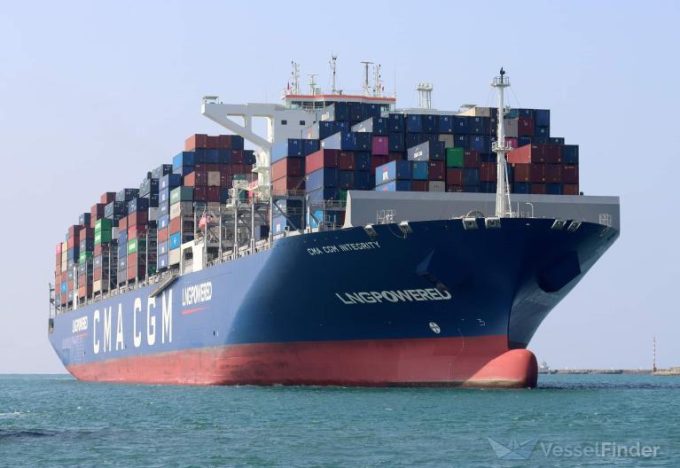
Look, the spin is always that this is all about “market conditions” and “tightening capacity.” But let’s be real: carriers are eyeing that summer cargo rush like a hawk, and they’re not planning on leaving any empty seats on the bus. Blank sailings are practically non-existent on the Asia–Europe corridor, which tells you they want every single container on their books. And then, like clockwork, they’re already announcing price hikes for June. CMA CGM is looking at around $4,700 per FEU for North Europe and a whopping $5,700 for Mediterranean destinations. It’s almost like they knew this was coming.
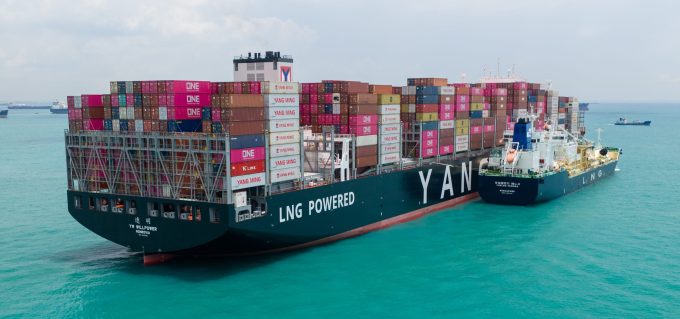
The transpacific market isn’t entirely immune either. It’s strengthening, albeit at a more leisurely pace. Shanghai to New York is nudging up 2% to $4,317 per FEU, and Los Angeles is up 1% to $3,385. But don’t let the slower climb fool you; blank sailings are popping up there too, meaning less space and more use for surcharges. Ocean Network Express is already slapping on a $2,000 per FEU Peak Season Surcharge for eastbound transpacific shipments starting June 1. It’s a classic move: create scarcity, then charge a premium.
Analysts say the combination of rising FAK rates, reduced sailings, and stronger-than-expected cargo volumes is helping carriers regain pricing power across key trade lanes, with further increases likely in the weeks ahead.
This latest rally? It’s happening against a backdrop of geopolitical headaches, particularly around the Strait of Hormuz. Higher fuel costs, those ever-popular emergency surcharges, and general uncertainty in the Gulf are just adding fuel to the fire. It’s a perfect storm: seasonal demand spikes, carriers keeping a tight lid on capacity, and global instability pushing costs up. Who’s making money here? The guys with the ships, that’s who.
It reminds me of the early 2000s, when the shipping industry was consolidating and flexing its muscles after a rough patch. They learned that when demand outstrips supply, even a little bit, they can dictate terms. This current surge feels like a repeat, but with more tech gloss and a dash of global drama.
Why Does This Matter for Shippers?
For businesses relying on moving goods, this means budget lines are going to be strained. That ‘just-in-time’ delivery model? It just got a whole lot more expensive, and potentially more fragile. Companies that haven’t locked in longer-term contracts are going to feel the pinch most acutely. It’s a stark reminder that the seemingly endless capacity of a few years ago was a mirage, and the shipping lines are more than happy to remind us of that.
🧬 Related Insights
- Read more: Giuliani Hospitalized in ‘Critical’ Condition
- Read more: Truck Safety Ratings: OEMs Embrace Third-Party Scrutiny
Frequently Asked Questions
What is the Drewry World Container Index?
It’s a benchmark index published weekly that reflects the current market rate for the carriage of a 40ft Dry Container (FEU) on eight major East-West trade routes. It’s widely used to track global container freight rates.
Will these rate increases continue through the summer?
Analysts suggest that with an early peak season and tight capacity, upward pressure on rates is likely to persist in the coming weeks. Carriers are already planning further price increases for June.
How does the situation in the Middle East affect shipping costs?
Geopolitical instability, especially around key shipping lanes like the Strait of Hormuz, can lead to higher bunker fuel costs, necessitate emergency surcharges, and create general uncertainty, all of which contribute to increased operating expenses for carriers and consequently, higher freight rates for shippers.