Buyer’s remorse hits hard.
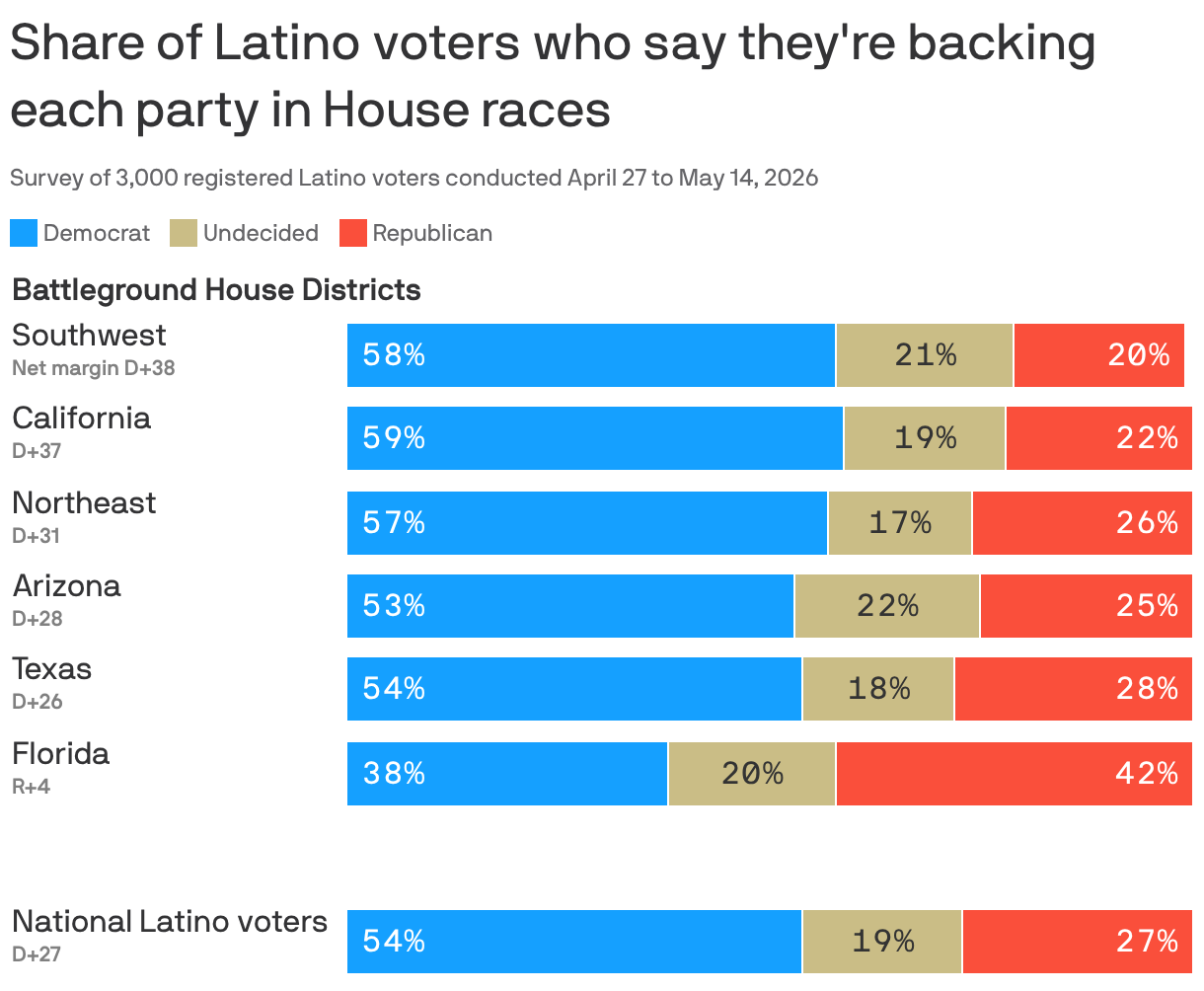
It’s a stark turn of events, and one that should send shivers down the spines of Republican strategists. The narrative of Donald Trump forging a lasting realignment with Latino voters—a story that dominated political analysis after 2024—is now facing a serious, data-driven challenge. A recent UnidosUS poll paints a picture of a highly fluid electorate, particularly in those critical battleground districts where both parties are holding their breath, waiting to see which way the post-2024 political winds will blow.
The Shifting Sands of Support
Here’s the cold, hard number: a quarter of Latino voters who cast a ballot for Trump in 2024 now say they probably or certainly wouldn’t vote for him again. Contrast that with a mere 5% of Kamala Harris voters expressing similar sentiments. This isn’t just a statistical anomaly; it’s a seismic shift indicating that the appeal, whatever it was, proved to be less enduring than many assumed. The GOP had banked on those 2024 gains representing a fundamental, permanent alteration of the electoral map. Now, it looks more like a temporary flirtation, fueled by specific circumstances that are rapidly receding.
This erosion isn’t confined to a specific demographic slice within the Latino community. Two-thirds of Latino voters, according to the poll, disapprove of Trump’s performance, a majority sentiment that holds across various regions, even in traditionally Republican-leaning areas like Florida, where disapproval still hovers around 51%. This widespread dissatisfaction directly translates into a challenging landscape for Republicans heading into the 2026 midterms. Democrats, who feared their footing had been lost, now see avenues to reclaim seats in Latino-heavy districts, pointing to persistent economic anxieties like inflation and tariffs, alongside aggressive immigration enforcement policies, as prime motivators for a return to their fold.
Beyond Immigration: The Economy Reigns Supreme
It’s tempting to frame this re-evaluation solely through the lens of immigration policy, a perennial hot-button issue. However, the UnidosUS data offers a more nuanced, and perhaps more damaging, insight for the GOP: cost of living, not immigration, is the paramount concern shaping Latino voters’ views of Trump. While immigration enforcement does rank a strong second—ahead of jobs, the economy, and even foreign policy concerns like the war in Iran—the economic pinch is the primary driver of dissatisfaction. This suggests that the bread-and-butter issues, the everyday concerns about making ends meet, are now outweighing the more specialized, albeit still significant, anxieties surrounding border security and enforcement.
And the dissatisfaction runs deeper. Beyond the direct electoral calculus, a significant portion of Hispanic voters express profound concerns about the very functioning of government. A staggering 84% feel Congress is failing in its constitutional duties, ceding too much power to the executive branch. Furthermore, a majority (58%) believe their civil rights and liberties have been diminished under a Trump administration. These aren’t just policy preferences; they’re fundamental questions about governance, oversight, and democratic norms.
84% of Hispanic voters are deeply concerned that Congress is failing its constitutional duties by ceding too much authority to the executive branch and failing to act as a proper check-and-balance.
The poll also highlights a clear mandate for congressional oversight on foreign policy. A substantial 79% of Latino voters believe a president should require congressional approval for military action, and a decisive 64% explicitly oppose the war in Iran. These are not fringe opinions; they represent a broad-based desire for a more deliberative, checks-and-balances approach to national security, a stance that directly contrasts with the more unilateral executive actions often associated with Trump’s presidency.
Florida: The Lingering Exception?
Yet, the political map is rarely painted with a single brush. Florida stands out as a conspicuous outlier. In the Sunshine State, Latino voters show a divided preference, with Republican House candidates holding a narrow lead (42% to 38%). This suggests that while a national trend of disillusionment is evident, regional factors, specific candidate appeal, or perhaps a more entrenched conservative sentiment within certain Florida Latino communities, continue to buttress GOP support. It’s the exception that proves the rule, but the rule itself is a powerful warning.
The takeaway here isn’t just about who wins or loses specific races. It’s about the underlying fragility of political alliances and the constant, often unforgiving, recalibration of voter sentiment. The GOP’s carefully constructed narrative of a permanent Latino shift has hit a wall of reality. The question now is whether this “buyer’s remorse” is a fleeting moment of doubt or the harbinger of a more significant electoral realignment, one that could reshape the political landscape for years to come. The data suggests the latter is a distinct possibility, especially if economic anxieties continue to dominate the conversation.
🧬 Related Insights
- Read more: Procurement Chiefs Urge Cautious AI Spend
- Read more: Mexico Exports Surge 33% Amid Tariff Warnings