Forget what the press release says about “connecting what matters.” For the folks actually building the robots—the engineers and integrators sweating over torque curves and actuator responsiveness—this Allient announcement means a few concrete things. It means more options, more integrated solutions, and frankly, more pressure on existing suppliers to keep pace. When a company like Allient, with its deep roots in specialty motion and power, decides to highlight its wares for advanced robotics, it’s not just about showing off shiny new hardware. It’s about staking a claim in a market segment that’s rapidly becoming the backbone of industrial evolution.
So, what exactly are we talking about? Allient plans to trot out its Pyxmos demo, show off custom integrated servo motors that cram motor, electronics, and gearing into tiny packages, and present ready-to-roll frameless motor assemblies. This isn’t just a parts bin display; it’s a curated exhibit aimed squarely at solving complex motion challenges. In a world where robots need to be faster, more precise, and more adaptable than ever, these integrated solutions can shave weeks, if not months, off development cycles. Think about it: instead of sourcing three different components and figuring out how they play nice, you get a near-off-the-shelf solution designed for a specific purpose. That’s a direct path to market for robot makers.
Why Does Allient’s 2026 Robotics Push Matter?
The sheer breadth of Allient’s product catalog on display—from Electroflux Series torque motors to HeiMotion Stainless servo motors built for washdown environments, and even their Quantum advanced motor technology—suggests a strategy of offering a “one-stop shop” for motion control. For machine builders, this is a double-edged sword. On one hand, it simplifies procurement and integration. On the other, it means less room for negotiation with a fragmented supplier base. Allient is betting that by consolidating these capabilities, they can become indispensable. And honestly, the trend toward consolidation and integration in the robotics supply chain is undeniable. We’ve seen it with software platforms, we’re seeing it with end-effectors, and now, it’s hitting the core mechanics of motion.
The big narrative here? Efficiency and specialization. Allient’s claim that their “one-team” approach provides “strong, reliable, and high-value products” sounds like typical corporate speak, but it underscores a critical market demand. The robotics sector can’t afford downtime or precision errors. Whether it’s medical, aerospace, or industrial automation, the stakes are too high. Offering integrated systems that minimize points of failure and maximize performance is precisely what the market is crying out for. This isn’t about inventing a new category of robot; it’s about making the existing and future ones dramatically better, faster, and more cost-effective to develop.
“The combination of precision components, integrated platforms, and live demonstrations highlights the performance and precision required across advanced robotics systems.”
That quote from Robert Mastromattei, Allient’s chief commercial officer, gets right to the heart of it. It’s the combination that matters. It’s not enough to have great individual components anymore; it’s about how they work together, how they’re packaged, and how easily they can be deployed. This focus on integrated platforms is where the real value is being created in the automation space today. If you’re not thinking about how your components assemble into a functional, high-performance system, you’re already behind.
Is This Just Another Trade Show Booth?
Let’s be clear: Allient isn’t reinventing the wheel. They’re refining it, greasing it, and fitting it with a high-performance tire. The market for advanced motion control is incredibly competitive, with players like Rockwell Automation, Siemens, and countless specialized motor manufacturers already entrenched. What Allient seems to be banking on is its ability to engineer and manufacture these systems holistically. Their diverse portfolio, from axial flux to Megaflux motors, and linear motors like the C- and P-Series, suggests a deep technical bench. The critical question for machine builders will be how well these integrated solutions perform in real-world, demanding applications, not just on a convention center floor.
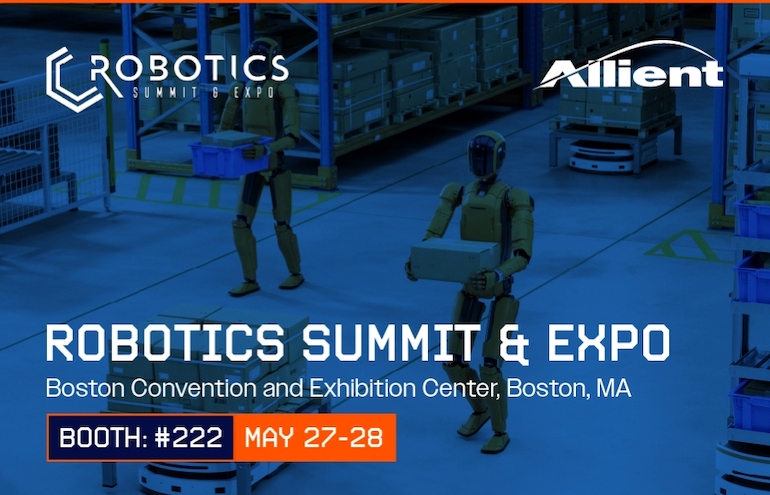
From a financial perspective, this move signals Allient’s commitment to a high-growth sector. The robotics market isn’t just expanding; it’s maturing. This means a shift from basic automation to more sophisticated, collaborative, and intelligent systems. Companies that can provide the enabling technologies for this shift—like advanced motion control—are poised for significant growth. Allient’s presence at the Robotics Summit & Expo in May 2026 is a strategic play to capture mindshare and market share in this crucial period of industry transformation. They’re not just showing up; they’re planting a flag.
What Does This Mean for Real People on the Shop Floor?
For the actual workers who will operate and maintain these advanced robots, this focus on integrated, reliable systems should eventually translate to safer, more ergonomic, and less repetitive tasks. Think of it this way: when the underlying motion control is more precise and less prone to failure, robots can perform tasks with greater finesse, reducing the need for human intervention in dangerous or tedious operations. It’s a long chain, but better components lead to better machines, which lead to better jobs. It’s also worth noting that as these systems become more integrated and potentially software-driven, the need for skilled technicians who can maintain and program them will only increase. It’s not about replacing people; it’s about evolving their roles.
🧬 Related Insights
- Read more: Container Rates Slide: Iran Effect Fades, Capacity Discipline Questioned
- Read more: Air Cargo’s New Reality: Beyond the Fuel Scare
Frequently Asked Questions
What kind of companies will be at the 2026 Robotics Summit & Expo?
The summit attracts companies involved in robotics and automation, including robot manufacturers, component suppliers, integrators, software providers, and end-users from various industries.
Will Allient’s new motion control systems be available immediately after the expo?
While the expo is for demonstration, Allient’s existing product lines are available now, and new integrated solutions often enter production shortly after successful demonstrations and market feedback.
Are integrated motion control systems more expensive than separate components?
Often, integrated systems offer a better total cost of ownership due to reduced development time, simplified assembly, and improved reliability, even if the initial purchase price might appear higher.