Here’s a number that might make you look up from your terminal: 60%. That’s the percentage of cargo processed in Lusaka, Zambia, that ultimately ends up destined for the Copperbelt region or the Democratic Republic of Congo (DRC). For years, that cargo has been bottlenecked, shunted through secondary hubs, or forced onto increasingly strained road networks. But now, a potential widebody freighter service into Ndola’s Simon Mwansa Kapwepwe International Airport (SMKIA) could be the jolt the sector has been waiting for.
NAC2000, the ground handler at Ndola, has confirmed it’s working with the airport operator on preparations for a possible Boeing 787 service. This African-operated route, originating from East Africa and linking Ndola with Lubumbashi, would directly connect two of Africa’s most vital mining powerhouses. Local observers are calling it “market-shifting,” promising significantly greater capacity both in and out of Ndola—relief that’s been a long time coming.
The timing couldn’t be more pertinent. Mining-related and high-value cargo volumes in Zambia and the DRC have surged. Jonathan Lewis, MD of NAC2000, pins this growth on a confluence of factors: macroeconomic stabilization and a renewed investor confidence. “Deliberate policy changes by the Zambian government has spurred growth exponentially in the mining sector,” he stated, highlighting increased foreign direct investment, stabilized foreign exchange, and improved hydropower availability as key enablers of a more conducive operating environment.
What does this mean on the ground? A sharp uptick in demand for time-critical shipments. Think heavy-duty mining spares, essential chemicals for mineral processing, and dangerous goods like detonators – items that aviation, despite its cost, handles with superior reliability and speed. The state of the road infrastructure, often described as “poor,” only amplifies this reliance on air freight.
Why is Ndola Poised for This Cargo Boom?
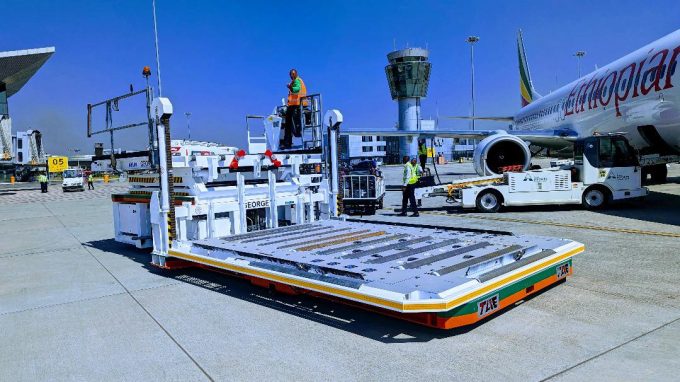
NAC2000’s recent investment in a widebody-capable high-loader is more than just a piece of equipment; it’s a foundational strategic play. Lewis explained, “The equipment has the capability to service both narrow- and wide-bodied cargo aircraft,” effectively opening SMKIA’s doors to all freighter types. This isn’t just about accommodating larger planes; it’s about positioning Ndola as a regional cargo hub, capable of serving not only the immediate Copperbelt but also satellite mining towns and the mineral-rich northwestern province. Lewis even sees potential for agro-export growth and strengthening cross-border trade with a swathe of neighboring countries.
“The airport’s location could support agro‑export growth, while also strengthening cross‑border trade with the DRC, Angola, Congo Brazzaville, Burundi, Rwanda, and even West Africa.”
But it’s not all smooth sailing, even with the new high-loader. Despite the infrastructure upgrades, utilization of Ndola’s new cargo terminal remains stubbornly low. Lewis describes activity as “below par,” attributing it to the continued dominance of narrowbody aircraft, which inherently limits both inbound and outbound volumes. Then there are the bureaucratic hurdles.
Local customs regulations, Lewis points out, can impede optimum utilization. The absence of resident customs officers at the airport, for instance, leads to protracted and “unnecessary delays” in cargo clearance. Compounding these challenges are restricted access to warehousing and delays stemming from unserviceable equipment like x-ray machines and cold rooms. He also notes a “perceived reluctance” among airlines to fully integrate feedback from freight forwarders and handlers—a classic case of operational friction.
Yet, the underlying opportunities remain immense. A booming mining sector, strong repair-and-return flows for spare parts, an established agricultural base, and underutilized cargo facilities all point to substantial untapped potential. The current situation feels less like a structural deficiency and more like a series of friction points that, with focused attention, could be smoothed out.
Is This a True Turning Point or More Hype?
The disconnect between the potential and the current reality highlights a consistent issue in African logistics: stakeholder engagement. While meetings do occur between airport authorities, regulators, customs, and government bodies, Lewis laments they are “generally far and apart” and, crucially, often exclude key cargo stakeholders like Ground Handling Agents (GHAs). This lack of consistent, inclusive dialogue is where promising initiatives can falter.
This isn’t just about a few widebody flights; it’s about a potential architectural shift in how goods move across one of Africa’s most economically vital regions. The push for greater air cargo capacity in the Copperbelt isn’t entirely new, but the convergence of renewed mining investment, government policy adjustments, and now, concrete steps toward widebody freighter integration, feels different. It echoes, in a strange way, the early days of hub-and-spoke development in other continents, where a key node’s capacity unlock could ripple outwards, fundamentally altering flow patterns. If the regulatory and operational kinks can be ironed out with the same vigor applied to the infrastructure itself, Ndola could indeed become the gateway it was long promised to be.
🧬 Related Insights
- Read more: 90% of Losses: Ransomware’s Grip on Manufacturers
- Read more: Box Ship Overcapacity Looms: Suez Return Sparks Fears
Frequently Asked Questions
What is the significance of widebody freighter capacity for Africa’s Copperbelt?
It signifies a potential leap in air cargo volume and efficiency, crucial for transporting heavy mining equipment, spares, and time-sensitive materials where road infrastructure is inadequate.
What are the main challenges hindering cargo operations at Ndola’s airport?
Challenges include insufficient airline utilization, regulatory delays at customs, limited warehousing access, and issues with essential equipment like cold rooms.
How could this development impact regional trade?
Increased capacity and improved connectivity can boost cross-border trade, support agro-export growth, and streamline the movement of goods to and from neighboring mining towns and countries.