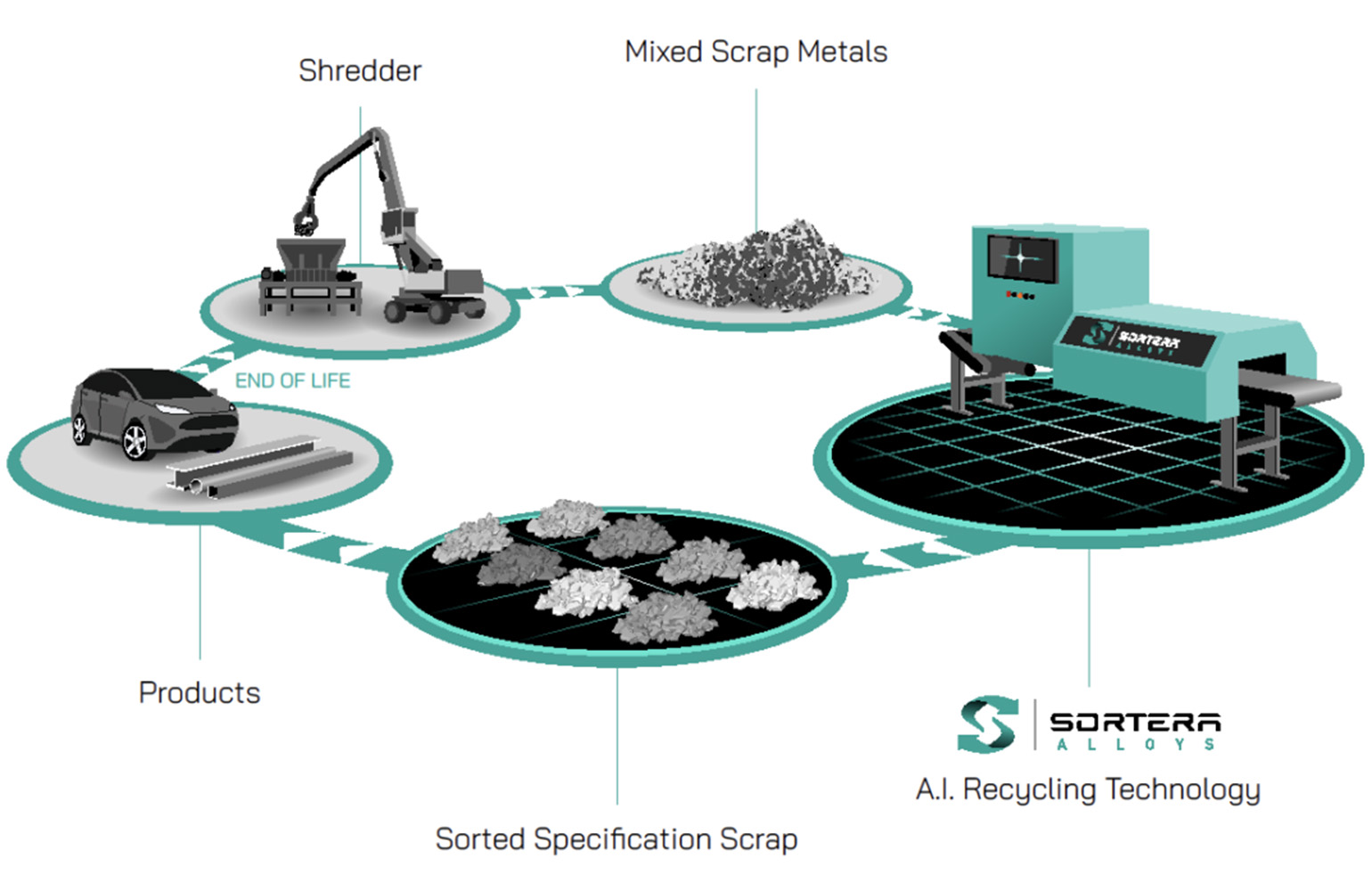
The hum of machinery at Sortera’s new Lebanon, Tennessee facility has officially joined the symphony of American manufacturing, signifying a doubling of the company’s aluminum processing capacity. This isn’t just about more metal; it’s a bet on artificial intelligence as the key to unlocking higher-value recycled materials and bolstering domestic supply chains.
The numbers are stark: Sortera is now positioned to handle an estimated 240 million pounds of aluminum scrap annually across its two facilities, a substantial leap from its previous output. This expansion, anchored by proprietary AI-driven sorting technology, aims to transform mixed scrap – historically a problematic commodity often downgraded or shipped abroad – into high-purity feedstock for critical industries like automotive, construction, and aerospace.
Is This AI Really a Game Changer for Scrap?
Look, the narrative of AI revolutionizing supply chains isn’t new. But Sortera’s approach warrants a second glance. They’re not just using AI for predictive maintenance or route optimization; they’re deploying it at the physical point of material transformation. The Lebanon facility mirrors its successful predecessor in Markle, Indiana, but the stakes are higher. The core promise is to decouple valuable metals from the complex, often inefficient, world of mixed scrap, thereby reducing reliance on volatile international markets and costly imports. It’s a strategic play for material sovereignty.
“By bringing our Lebanon operation online, we are meeting that demand head-on—effectively doubling our capacity and providing a streamlined, localized supply chain for our regional customers. Optimizing our high-speed sorting lines here in Tennessee ensures our partners receive the highest purity feedstock with maximum efficiency and minimal environmental impact.”
That’s Michael Siemer, CEO of Sortera, painting a picture of efficient, localized supply. The claims of 95% less energy consumption and massive CO₂ footprint reduction compared to virgin aluminum production are significant. If these figures hold true at scale, they represent a genuine win for sustainability metrics and corporate ESG goals. This isn’t just about recycling; it’s about making recycled materials competitive, if not superior, to virgin resources on both cost and environmental impact.
Why Does Domestic Production Matter So Much?
The timing here is also critical. In an era marked by geopolitical instability and the persistent nudging towards reshoring manufacturing, Sortera’s focus on keeping critical materials within the U.S. economy is a potent selling point. The company highlights the benefits of strategic logistics, promising reduced transport emissions and costs by supplying regional manufacturers directly. This localized approach bypasses the often-congested global shipping routes and insulates customers from the price shocks that plague international commodity markets.
Ben Pope, Sortera’s COO, chalks this rapid deployment up to the maturity of their AI platform. He notes the facility hit full operational status on schedule and within budget, successfully producing sellable material within its first week. This agility — moving from installation to production without the usual extended commissioning delays — suggests Sortera’s AI isn’t just a research project; it’s a production-ready tool. This speed is precisely what manufacturers clamoring for reliable, domestic material sources need.
My own take? Sortera’s strategy hinges on the premise that AI can solve the age-old problem of scrap purity. If their system can consistently identify and separate aluminum alloys at high speed and with minimal human intervention, they could indeed carve out a significant niche. The challenge, as always with physical AI, is the real-world robustness and the capital investment required to scale. The market demand Siemer mentions is clear, but the execution needs to be flawless. This Lebanon facility is the next major test of that execution. It’s a move that feels less like a tentative step and more like a confident stride toward reengineering the feedstock for American industry.