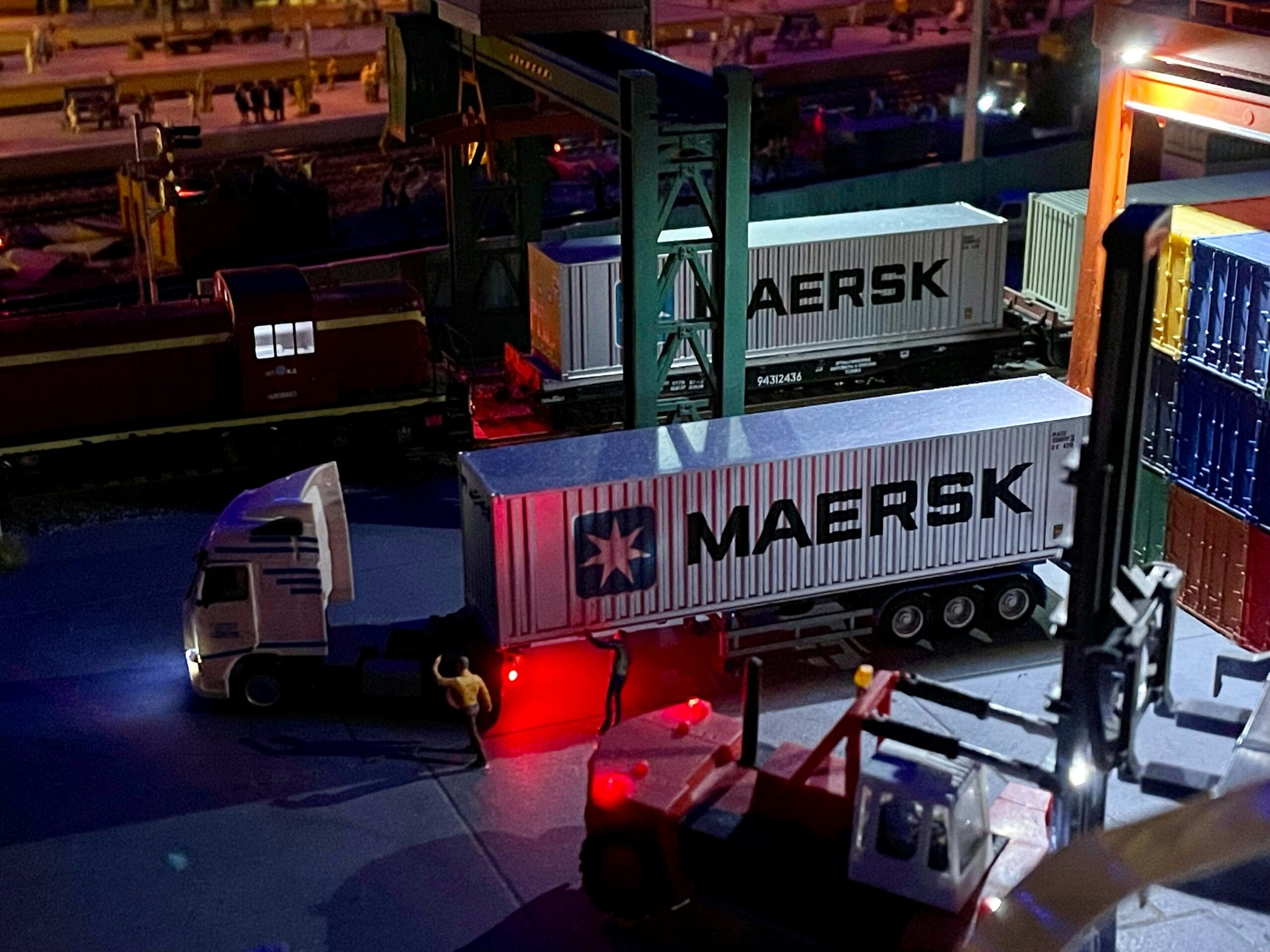
Here’s a number that should make you pause: $54 billion. That’s Maersk’s reported revenue for 2025. Big numbers, sure. But what it signifies is the real story. Maersk isn’t just a shipping line anymore. It’s trying to be everything to everyone in the supply chain. Think ocean freight, terminals, trucking, warehousing, customs, air cargo — the whole nine yards. The goal? Smooth out the wild ride of ocean freight by embedding itself deeper into customer operations. A noble pursuit, perhaps. Or maybe just a desperate grab for more revenue from a notoriously volatile industry.
The Foundation is There, But Is It Solid?
On paper, Maersk’s strategy makes a certain kind of sense. They’ve got the ships. They’ve got the ports. They’re buying up land-based services. It looks like a coherent picture. Revenue is up. Their Logistics & Services segment is showing improvement. Ocean volumes are ticking along. It all points to a company that’s building around its core, not abandoning it.
But building a collection of assets is easy. Making them sing in harmony? That’s the trick. Ocean shipping runs on schedules. Warehousing lives by customer whim. Inland transport reacts to glitches. Air freight screams urgency. Customs demands meticulous paperwork. These aren’t naturally cooperative activities. They’re more like a gaggle of toddlers fighting over a single toy.
When the Wheels Come Off
This is where the rubber meets the road. Or rather, where the container ship reroutes around Africa because someone decided to poke a hole in the Suez Canal. Suddenly, transit times balloon. Schedules disintegrate. Inventory plans go up in smoke. Now, a customer doesn’t just need a fancy dashboard showing them how late their stuff is. They need answers. Real answers.
Will production halt? Do we need to move workers? Should we shift inventory to another region? Is it worth air-freighting half the shipment? Are we going to miss our customer deadlines?
This is the crucible. This is where Maersk’s integrated model either proves its worth or crashes and burns. Participation, as they say, is not the same as coordination. Having a seat at every table doesn’t mean you can orchestrate the meal.
More Than Just More Services
The next phase, according to Maersk’s own pronouncements, isn’t about adding more bells and whistles to the service catalog. It’s about making decisions flow across those services. Can a delay in an ocean vessel trigger an immediate adjustment in warehouse staffing? Can inland capacity magically reconfigure itself? Can the customer see a single, unified operational picture instead of a dozen fragmented ones?
This is the promise. This is where integrated logistics moves from theory to reality. And let’s not forget the commercial angle. It’s not just about grabbing more revenue. It’s about grabbing better revenue. Durable customer relationships, higher switching costs, more relevance in a turbulent market. That’s the real long-term play.
So, is Maersk’s grand strategy gaining traction? The structure is certainly there. The assets, the network, the customer access – it’s a credible attempt. But traction means consistency. It means delivering on the promise of coordination when the network is doing anything but cooperating.
This isn’t a race to offer the most services. It’s a race to manage them intelligently when the unexpected happens. That’s where Maersk is aiming. And that’s where the actual competitive advantage lies – or doesn’t.
Is AI Really Changing Supply Chain Execution?
Forget the shiny copilots. The real revolution is in coordinated, operational decision systems. Think A2A, MCP, and graph-enhanced reasoning. ARC Advisory Group’s white paper dives into how these are starting to reshape how we think about visibility, resilience, and pure execution. It’s a dense download, but for anyone sweating supply chain tech, it’s probably worth the 10-minute read. Whether it’s truly “reshaping” or just repackaging old ideas with new buzzwords remains to be seen.
What’s the Big Deal with Maersk’s Integrated Logistics?
It’s simple, really. Maersk wants to be more than just a box mover. They’re building a one-stop shop for everything a business needs to move goods from point A to point B. The gamble is that by controlling more of the process—from ships to warehouses to customs—they can offer a smoother, more reliable service. The tricky part is making all those different pieces talk to each other effectively, especially when things go wrong. That’s the test.
🧬 Related Insights
- Read more: Box Makers’ War Costs: Record Diesel Prices Sink Industry
- Read more: Lapp USA Turns Inventory Chaos Into Automation [Drone Tech]
Frequently Asked Questions
What does Maersk’s integrated logistics strategy actually do? It combines ocean shipping, terminals, inland transport, warehousing, customs brokerage, and air freight under one roof. The aim is to offer a more smoothly and reliable end-to-end supply chain solution for customers, smoothing out disruptions and creating more durable relationships.
Will this integrated model make supply chains more resilient? Potentially, yes. By having visibility and control over more nodes in the supply chain, Maersk can theoretically react faster to disruptions like port congestion or rerouting. However, the actual resilience depends on how well these disparate services are truly coordinated and how effectively they communicate during a crisis.
Is Maersk trying to eliminate other logistics providers? Not directly. Maersk aims to capture a larger share of customer spending by offering a more comprehensive service. It positions itself as a single point of contact and accountability, which could reduce the need for customers to manage multiple vendors for different parts of their supply chain.