Nearly half of buyers expect capital expenditures on forklift and pallet-handling tech to jump more than 15% this year. That’s not a typo. It’s a statistic from Interact Analysis, and it’s precisely the kind of headline that makes you stop scrolling.
Here’s the thing: the same market sentiment that’s fueling endless AI hype is now apparently trickling down to the warehouse floor. Forklifts and pallet jacks. Who knew?
E-commerce Leads the Pack
E-commerce outfits, predictably, are far more bullish than their retail, manufacturing, or 3PL cousins. Their automation spend index is a whopping 82.9, with 50 being neutral. That’s a landslide victory. They’re not just buying; they’re buying with gusto. Apparently, the relentless pressure to get packages to doors faster than a speeding bullet requires more metal and more motors.
What Do They Care About? Throughput.
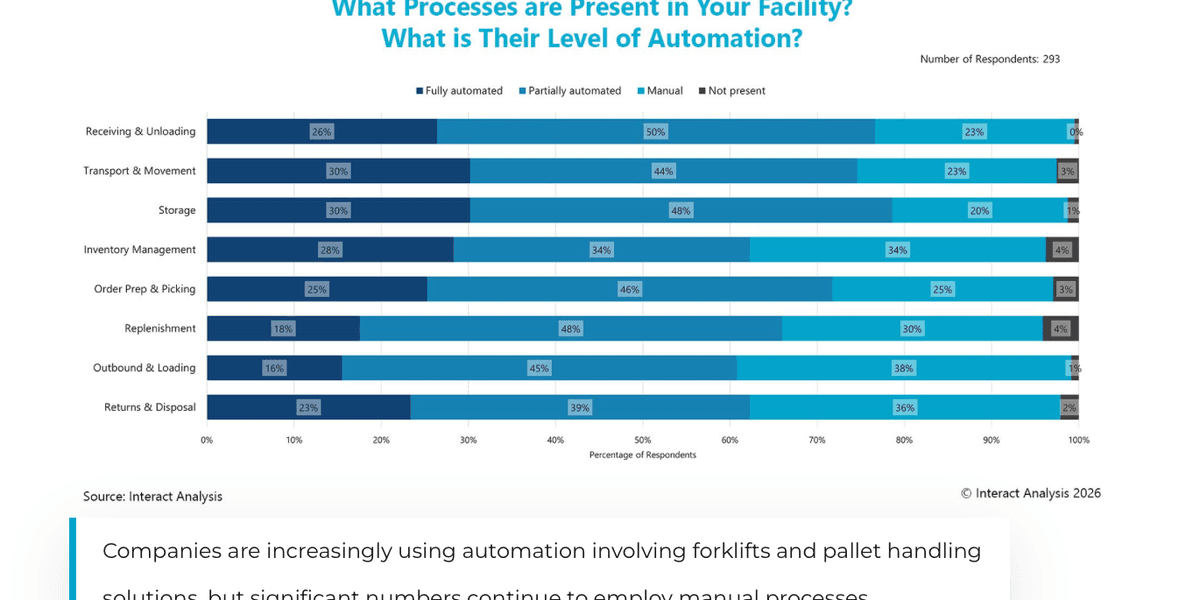
When you’re spending serious coin on warehouse tech, what’s the metric that matters most? Throughput. Naturally. Next up are orders, and then, yes, automation. The report clearly states that storage, receiving, unloading, transport, and movement are already seeing the highest levels of automation. Inventory management too. These are the workhorses, the places where efficiency gains actually translate into dollars saved or, more importantly, more packages shipped.
Receiving and Unloading: The Bottleneck
And where’s the next frontier for automation? Receiving and unloading. Fifty-four percent of respondents flagged this as their top priority. Why? Accuracy and damage. Shocker. Currently, this workflow is only 26% fully automated. Another 50% use some automation. That leaves a healthy chunk still wrestling with manual processes. A classic supply chain headache. To fix it, most plan to throw more labor and more technology at the problem. It’s the old adage: if you’ve got a problem, invest more money.
“As companies continue to invest in more autonomy and warehouse technologies, it is important that spending is carefully planned to ensure that solutions integrate effectively and safely into their existing operations,” according to Interact Analysis.
That quote is pure corporate speak. Translation: Don’t buy fancy robots if they’re going to smash into your forklifts and take out half the staff. Sound advice, really. Though one suspects many will ignore it in their rush to adopt the latest shiny object.
Is this a sign of true operational maturity, or just more pandemic-induced panic buying dressed up as strategy? The numbers suggest a genuine uptick in investment, but the jury’s still out on whether it’s truly about optimizing operations or just keeping pace with the e-commerce beast.
What’s missing from this picture? Any mention of sustainability, worker well-being, or—dare I say it—actual ROI beyond mere throughput increases. This report paints a picture of companies throwing money at automation to solve immediate problems, a strategy that’s worked wonders in other sectors (looking at you, AI). Let’s hope these forklift and pallet-handling investments have a bit more staying power than some of the more ephemeral tech fads.
🧬 Related Insights
- Read more: $127B Tariff Refunds: CBP Portal Launches April 20
- Read more: Trump Admin Sues Church for Border Wall Land
Frequently Asked Questions
Will this increase automation in warehouses?
Yes, the report indicates a strong intention to increase capital expenditures on forklift and pallet-handling technology, with a focus on areas like receiving and unloading that currently have lower automation levels.
Are e-commerce companies investing more than others?
Absolutely. E-commerce companies reported a considerably more bullish outlook and a higher automation spend index compared to retail, manufacturing/production, and third-party logistics sectors.
What are the main goals for this investment?
Throughput is the top-ranked key performance indicator (KPI), followed by order fulfillment and overall automation. Improving accuracy and reducing damage in receiving and unloading processes are also key drivers for planned investments.