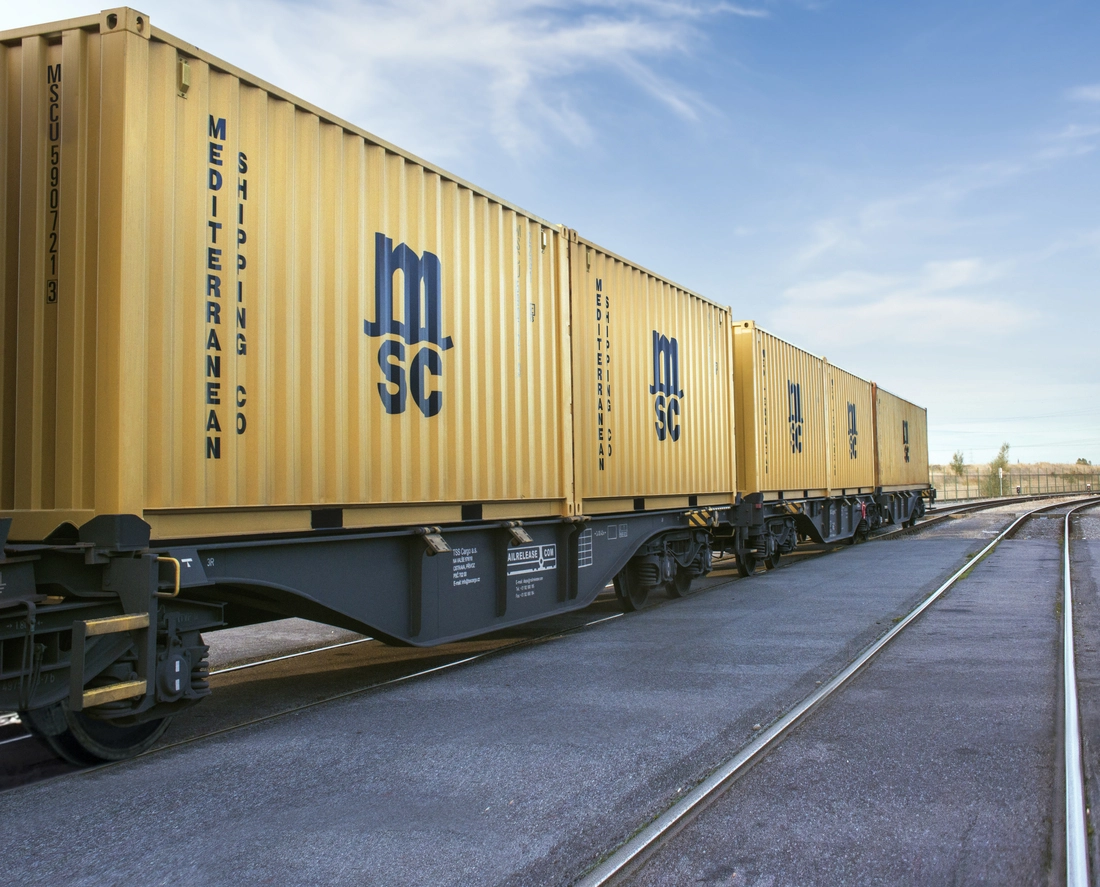
Has the humble shipping container finally met its match… in moving inland? For years, the grand ballet of global trade has been about getting goods onto ships and then off them at bustling ports. The gritty, often chaotic, dance of getting them from port to final destination, however, has remained a persistent, infuriating bottleneck. But now, the Mediterranean Shipping Company (MSC), a titan of the seas, is betting big on the ground. They’ve just launched a comprehensive inland rail logistics solution right there in Australia, and frankly, it feels like a major evolutionary leap for supply chains.
This isn’t just another freight service tacked on as an afterthought. MSC’s move is about creating a single, elegant symphony out of what has traditionally been a cacophony of third-party haulers, conflicting schedules, and endless administrative headaches. Think of it this way: before, getting your cargo from Sydney to a regional hub was like trying to conduct an orchestra where each musician plays a different tune, off-key, and only shows up when they feel like it. MSC is handing the conductor’s baton to one maestro – themselves.
The Big Picture: Unifying the Journey
The core of this new service is its ambition to knit together the maritime ports and crucial inland markets into one cohesive, flowing river of goods. Cargo can now be routed directly from Sydney terminals to Minto, or from Melbourne terminals to vital regional hubs like Ettamogah, Griffith, and Bomen. This isn’t about shuffling containers around; it’s about eliminating unnecessary stops and, more importantly, unnecessary delays. The goal? Keep those goods moving, frictionlessly.
Why This Matters for Consumers (Eventually)
Look, the immediate beneficiaries are the businesses that rely on these import/export flows. But let’s be honest, that translates down the line. When your supply chain moves faster and more efficiently, who do you think reaps the rewards? It’s us, the end consumers, who might see quicker availability of products, potentially even more stable pricing because the cost of moving goods has been optimized. It’s a bit like when Amazon perfected its own logistics – suddenly, you got that package the next day. This feels like that, but on a national scale for a major shipping line.
A Single Booking, A World of Difference
Here’s where the “human” touch of AI meets the practicalities of logistics. For customers, the experience is designed to be blissfully simple. Instead of juggling multiple contracts and coordinating with various trucking companies, you place one booking. One. With predefined port-of-discharge and place-of-delivery options, MSC assumes responsibility for the entire journey. They’re not just moving your container from A to B; they’re owning the entire leg. This is the kind of end-to-end accountability that has been missing for far too long in complex supply chains.
Imagine the administrative relief! No more chasing down invoices from different haulers, no more deciphering confusing bills of lading from disparate entities. It’s a streamlined approach that cuts through the noise. This isn’t just about speed; it’s about clarity and reducing the mental overhead for supply chain managers.
MSC created this unified one-stop approach to eliminate the need to coordinate with multiple third-party haulers. It does this by integrating maritime ports and crucial inland markets, ensuring that goods keep moving without unnecessary delays.
What’s particularly brilliant is the direct pick-up of full import containers at dedicated inland depots. This optimizes the often-clunky final stages of the distribution process, bringing the container closer to its ultimate destination before it even hits the road for its final mile. And that single de-hire location for all container types? Chef’s kiss. It removes the administrative nightmare of managing multiple return sites, a small but significant win for operational efficiency.
A Platform Shift in Logistics?
This feels bigger than just a new service offering from MSC. It smacks of a platform shift. We’re talking about a fundamental change in how large-scale logistics are conceived and executed. When a company like MSC, with its vast global footprint and deep understanding of maritime flow, decides to vertically integrate and offer a cohesive inland solution, it signals a recognition that the old way simply won’t cut it anymore. AI and advanced analytics are no doubt underpinning the efficiency of this network, allowing for predictive routing, optimized load balancing, and real-time tracking that were previously impossible.
It’s like going from a handful of disconnected tools to a sophisticated, integrated workbench. This unified approach isn’t just about moving containers; it’s about creating a more intelligent, responsive, and ultimately, more resilient supply chain infrastructure for Australia.
It makes you wonder: will other major shipping lines follow suit? Will this pressure less integrated players to adapt or become obsolete? The future of logistics is looking a lot more connected, and frankly, a lot more exciting.
What Does This Mean for Australian Businesses?
For businesses operating in or trading with Australia, this could be a genuine boon. Reduced transit times, simplified booking processes, and increased visibility are not just buzzwords; they are the bedrock of a competitive supply chain. MSC’s commitment to taking full responsibility for the entire journey, from port to regional hub, offers a level of predictability that’s often elusive. It’s a signal that the era of fragmented logistics is giving way to a more integrated, and perhaps more automated, future.
It’s a bold move, and the success of this new Australian rail logistics service will be watched closely. If it delivers on its promises, it could very well set a new standard for inland operations globally. We’re not just moving goods anymore; we’re building intelligent supply chain arteries.
🧬 Related Insights
- Read more: Redistricting: Democrats’ 2028 Playbook
- Read more: Iran War Fuels Airfreight Price Surge: Jet Costs Double, Rates Climb to $2.98
Frequently Asked Questions
What does MSC’s new Australian rail service actually do? MSC’s new service offers a unified, one-stop rail logistics solution in Australia, allowing cargo to be routed directly from Sydney or Melbourne terminals to designated inland hubs, simplifying the process for customers by managing the entire journey with a single booking.
Will this service replace trucking companies in Australia? MSC’s rail service is designed to integrate with and complement existing logistics networks, rather than entirely replace trucking. It aims to optimize the longer-haul inland legs of the journey, likely working in conjunction with trucking for final-mile delivery.
How can I book this new rail service? Customers can book the new service by placing a single booking with predefined port-of-discharge and place-of-delivery options through MSC.