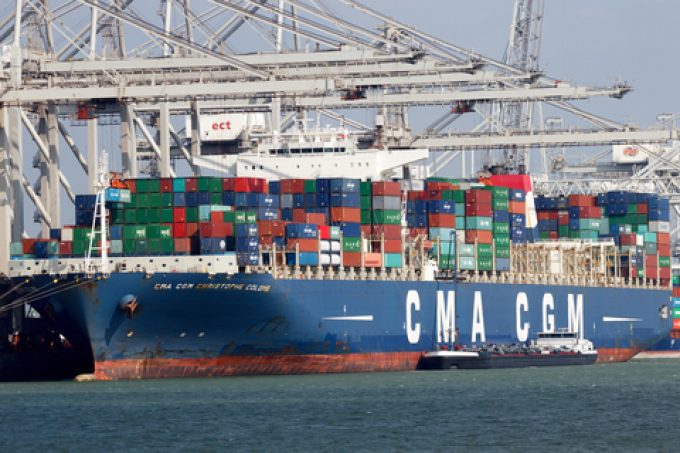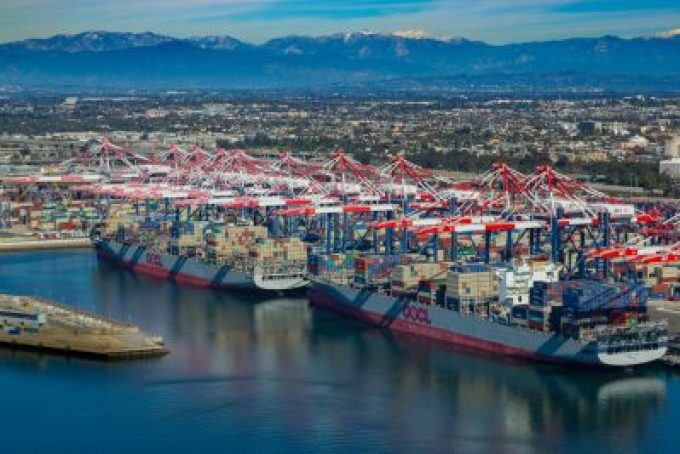
Forget the dry spreadsheets and abstract market indices for a moment. Think about the actual stuff you buy, the things that fill your homes and power your businesses. That flat-screen TV you’ve been eyeing? The components for that next product launch? The price of getting them from A to B just went up, and it’s not a gentle nudge.
Right now, ocean carriers are playing a strategic game of ‘less is more.’ They’re blanking sailings – essentially canceling voyages – and the results are starting to ripple outwards. This isn’t some abstract economic theory playing out; it’s a direct translation into higher freight rates, particularly on the vital transpacific routes connecting Asia to North America. The World Container Index, a usually stoic bellwether, is showing the Shanghai-Los Angeles leg jumping 2% week-over-week, now sitting a hefty 34% above where it was right before the tensions flared in the Strait of Hormuz. That’s not pocket change; that’s a tangible shift in the cost of goods.
“Part of it is arguably due to the smart capacity management post-Chinese New Year… But 50% up is also proof to the fact that carriers have successfully been pushing up rates amid all the uncertainty that shippers also had to handle.”
This isn’t just a post-holiday correction or a simple market ebb and flow. We’re seeing carriers actively managing capacity. It’s like a conductor, seeing an orchestra getting a bit too loud and unruly, tapping their baton and bringing the volume down strategically. The intention? To create scarcity, and in turn, drive up prices. And it appears to be working with a vengeance. Data from Xeneta paints a stark picture: Far East to US West Coast and East Coast rates have climbed by an average of 50% since the current geopolitical friction began. That’s a massive surge, and it’s forcing businesses to re-evaluate their entire supply chain calculus.
Are Shippers Just Panicking?
Now, you might be tempted to say shippers are just overreacting, like kids hoarding candy before a long winter. And to some extent, there’s truth there. We’re seeing early signs of inventory replenishment, a ‘better safe than sorry’ mentality taking hold. Companies are front-loading shipments, fearing potential congestion during the traditional peak season in the third quarter. Imagine Adidas, for example, pushing goods ahead of the World Cup – they don’t want to be caught with empty shelves when demand is sky-high. It’s a rational, albeit expensive, hedge against future uncertainty.
But let’s not paint carriers as mere opportunists. They’ve been navigating a sea of overcapacity for a while, and this capacity management is a calculated response. Seven blank sailings announced for the upcoming week alone on the Asia-North Europe trade demonstrate a clear intention to tighten the screws. This isn’t chaos; it’s control. The effective capacity is expected to shrink by 3% month-on-month on Asia-North Europe and a significant 10% on Asia-Mediterranean. This disciplined approach is what’s allowing them to push rates higher.
A Tale of Two Trade Lanes
The picture isn’t uniform, though. While the transpacific is seeing eye-watering jumps, the Asia-Europe trades are telling a slightly different story. The Shanghai-Rotterdam leg dipped 1% week-on-week, and Shanghai-Genoa saw a similar decline. Drewry notes that rates into North Europe and the Mediterranean had already peaked three weeks prior, and with capacity now up 6-9%, it’s a bit of a mixed bag. Still, don’t get too comfortable. Carriers are eyeing May 15th as a date to reset FAK (freight all kinds) rates, with ambitions from the likes of Hapag-Lloyd and CMA CGM aiming for a hefty $3,500 per 40ft to North Europe and around $4,500 to the Mediterranean. MSC is chiming in with a $4,400 quote for both regions. These aren’t shy figures; they represent a clear signal of where carriers want to steer these costs.
This entire dance is a proof to AI’s growing influence, not in the AI itself, but in the strategic decisions it enables. Algorithms crunching demand forecasts, predicting port congestion, and modeling the impact of blank sailings are becoming the silent architects of these pricing moves. It’s a sophisticated game, far removed from the days of simple supply and demand. We’re witnessing the birth of a new era in logistics, one where data-driven intelligence, coupled with old-school capacity management, dictates the flow of global commerce. The future isn’t just coming; it’s already here, and it’s being shipped at a premium.
Will this increase impact my daily life?
Yes, absolutely. Increased shipping costs for businesses often translate into higher prices for consumers on a wide range of goods, from electronics to clothing and furniture. Businesses will absorb some costs, but a significant portion is typically passed on.
Why are carriers blanking sailings?
Carriers blank sailings primarily to address overcapacity in the market. When there are more ships and containers available than needed for the cargo, rates tend to fall. By canceling voyages, they reduce the available capacity, creating a tighter market and giving them use to increase freight rates. This is a strategic move to improve profitability in a competitive industry.
Is this a sign of a prolonged shipping crisis?
It’s too early to call it a prolonged crisis, but it’s a clear indicator of market dynamics at play. Geopolitical events, coupled with carriers’ proactive capacity management, are creating upward pressure on rates. Shippers are also contributing by front-loading inventory ahead of potential peak season congestion. The situation warrants close monitoring, as sustained increases could signal broader economic shifts.