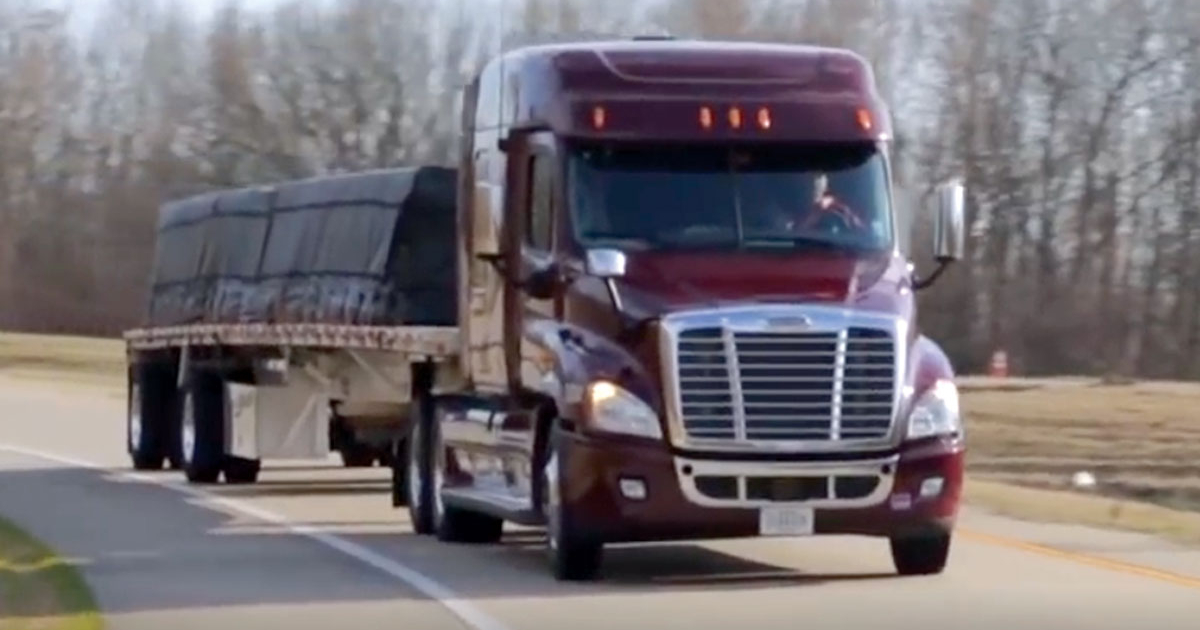
The hum of a powerful diesel engine faded into the rearview mirror of a Maverick truck as the driver, a veteran of countless miles, contemplated a new, significantly fatter paycheck. It’s a tangible reality for many today, a concrete outcome of a company deciding to invest heavily in its most crucial asset: its people.
But let’s be clear, this isn’t just about a generous bonus or a cost-of-living adjustment. This is a signal flare, shot high into the sky of the logistics world, proclaiming that the old ways are being rewritten by forces that are both profoundly human and undeniably digital. Maverick’s move to raise pay for its flatbed over-the-road drivers is more than just a talent retention strategy; it’s an acknowledgment that the economics of trucking are fundamentally shifting, and artificial intelligence is the architect of this new blueprint.
Think of AI not as a fancy robot parked in a server room, but as the invisible conductor of an orchestra, bringing disparate elements into perfect, synchronized harmony. It’s the intelligence that optimizes routes, predicts maintenance needs before a breakdown grinds operations to a halt, and yes, it’s increasingly understanding the true cost of keeping skilled drivers behind the wheel.
AI-powered platforms are now capable of granular analysis that was simply impossible a decade ago. They can dissect demand patterns, fuel efficiencies, driver hours, and even the subtle psychological toll of long-haul driving. This data, once crunched by human analysts over days, is now instantaneous, allowing companies like Maverick to see with astonishing clarity the return on investment in driver compensation.
And that’s the core of it, isn’t it? Maverick isn’t throwing money at drivers out of pure altruism. They’re doing it because the data, powered by sophisticated AI, is showing them that a well-compensated, motivated driver is a more efficient, safer, and ultimately, a more profitable driver. It’s a feedback loop, a beautiful, complex dance between human expertise and machine intelligence.
The Human Element in an Automated World?
This might sound counterintuitive. We’re always hearing about robots taking over, about autonomous trucks rendering human drivers obsolete. But here’s the thing: the path to full autonomy is long and winding. And in the meantime, the AI systems we have today are making the current human-driven system so much more efficient and understandable. Maverick’s pay raise is a powerful proof to the fact that even as technology advances, the value of skilled human labor, when properly supported and valued, becomes even more pronounced.
It’s like upgrading from a horse-drawn carriage to a self-driving electric vehicle. The underlying goal – transportation – remains the same, but the mechanics, the economics, and the necessary skills to manage the whole ecosystem have been completely reimagined. AI is the engine of this reimagining, and Maverick is demonstrating they’re ready to put premium fuel in that engine.
“We believe in taking care of our drivers and treating them with the respect and compensation they deserve. This pay increase is a reflection of that commitment and the value they bring to our company and our customers.”
This quote, while corporate-sounding, rings true in the context of AI’s emergent capabilities. The “value they bring” isn’t just hours spent on the road; it’s the nuanced judgment, the problem-solving on the fly, the human connection with dispatch and clients. AI quantifies this value in a way that allows for strategic, data-driven investment, which in turn makes those statements of commitment financially sound.
Is This a Nationwide Trend?
So, what does this mean for the broader trucking industry? If AI can so clearly articulate the economic benefits of driver retention, we’re likely to see more companies following Maverick’s lead. The competitive pressure will mount. Those carriers who embrace AI-driven analytics will be better positioned to attract and keep the best talent, creating a virtuous cycle of efficiency and profitability. Those who lag behind will find themselves struggling to fill seats, watching their operational costs creep up as they try to compensate for inefficiencies that AI could have smoothed out.
This isn’t about a few isolated companies. This is about a fundamental platform shift. AI isn’t just a tool; it’s becoming the operating system for modern logistics. It’s transforming how we think about labor, resources, and the very flow of goods that powers our world. Maverick’s pay raise is a bright, shining example of what happens when a company understands this, and isn’t afraid to act on it. The future of trucking is here, and it’s being driven by intelligence – both human and artificial.
🧬 Related Insights
- Read more: Joby Aviation’s eVTOL Gamble: Vertical Integration Savior or Supply Chain Trap?
- Read more: Qatar’s Quiet Diplomatic Play for Peace
Frequently Asked Questions
What does Maverick’s pay increase specifically entail? Maverick has significantly boosted pay for their flatbed over-the-road drivers, aiming to improve driver retention and acknowledge their value. The exact figures are substantial, reflecting a strategic investment in their workforce.
Will AI eventually replace truck drivers like those at Maverick? While AI is driving greater efficiency and is crucial for route optimization and predictive maintenance, fully autonomous trucking for long-haul routes is still some way off. Companies like Maverick are investing in their human drivers today because they remain essential for complex operations.
How does AI influence driver pay decisions in trucking? AI analyzes vast datasets on route efficiency, fuel consumption, driver performance, and market demand. This sophisticated analysis allows companies to quantify the economic impact of driver satisfaction and retention, leading to more strategic and data-backed pay decisions.