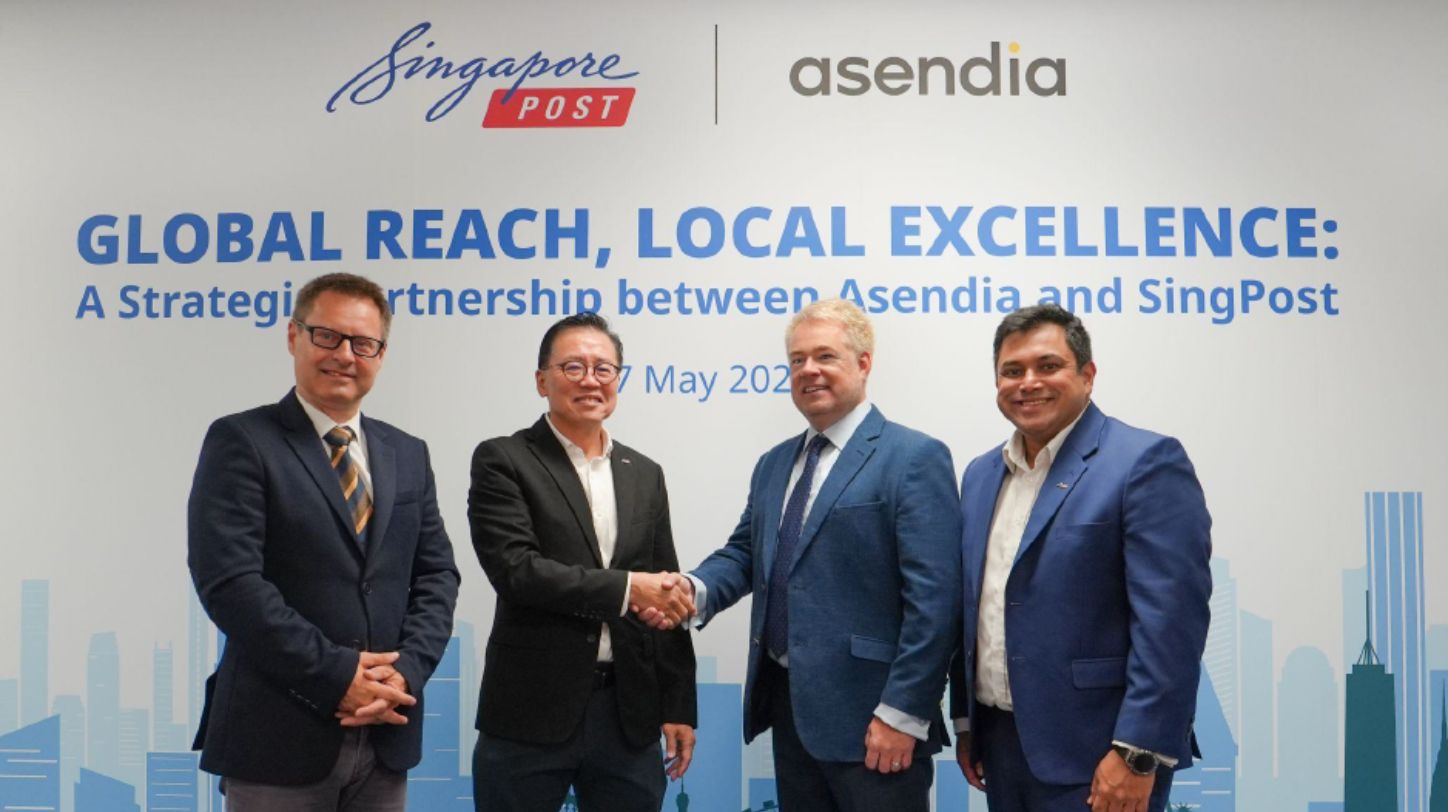
And just like that, the world of cross-border e-commerce gets a little less chaotic. Or at least, that’s the hope. Asendia, the mail and parcel giant, has inked a deal with Singapore Post (SingPost). Their grand plan? Fortify their logistics game across Singapore and the broader Asia-Pacific region.
Look, the e-commerce train isn’t slowing down. But the tracks? They’re getting complicated. This partnership aims to punch up delivery speeds, make things scalable, and generally open doors for merchants flinging their wares into and out of APAC. It’s also a nice little nod to Singapore, cementing its spot as a regional e-commerce hub. Because who doesn’t love a hub?
Why now? Because Europe is about to slap down some new rules. Come July 2026, that €150 de minimis customs duty exemption in the EU? Poof. Gone. Replaced by a flat €3 fee on all low-value imports. Fun times for everyone involved, I’m sure.
Naturally, Asendia and SingPost are already talking up Delivered Duty Paid (DDP) solutions for the EU. They’re pitching this as a shield against customs delays and rejected packages. Anything to keep the cash flowing and avoid that dreaded “return to sender” stamp.
“This partnership comes at a critical juncture for global trade,” declared Mark Chong, SingPost’s chief executive. He’s not wrong. With the US ditching its de minimis exemption next August, and the EU following suit, businesses are staring down a regulatory minefield.
By extending our cross-border partnerships, we are providing businesses with the support to manage these complexities, ensuring that our customers can maintain access to these markets, minimising the risk of delivery friction or doorstep rejection.
This partnership isn’t just for the little guys either. International marketplace sellers on behemoths like Amazon, eBay, and Etsy are squarely in their sights. So, your artisanal catnip mouse from Bali might just get to its destination a tad faster.
What does this actually mean on the ground? SingPost customers gain a golden ticket to Asendia’s sprawling network—think Europe, the Americas, the Middle East, Oceania. Asendia customers, in turn, get SingPost’s regional muscle in Southeast Asia, including its last-mile chops. It’s a classic handshake deal, but with more tracking numbers.
Expect to see Asendia’s e-PAQ Home Delivery, e-PAQ Out-of-Home Delivery, and e-PAQ Returns services baked into the offering. Because let’s face it, returns are the unsung villain of e-commerce. Making them less painful is practically a public service.
Lionel Berthe, Asendia’s APAC chief, pointed to a survey. Apparently, 32% of APAC retailers are tearing their hair out over border delays, customs headaches, and cross-border returns. This partnership, he insists, is the band-aid for those specific wounds. Singapore’s the focal point, but the ambition stretches across the region. Scalable, cost-effective growth? That’s the buzzword bingo card they’re playing.
A Tale of Two Customs Regimes
The looming EU reform is the glaring catalyst here. For years, low-value shipments breezed through customs, often without a second thought (or a duty stamp). This made sending small items from, say, China to Germany incredibly simple. But the landscape is shifting. The EU’s move, mirroring the US, signals a desire to capture more tax revenue and level the playing field for local businesses.
For Asendia and SingPost, navigating this requires more than just faster planes. It demands sophisticated customs brokerage, pre-payment of duties, and clear communication with both shippers and recipients. The DDP solution is the holy grail, but its execution is where the real magic—or misery—happens.
Is This Just More Corporate Speak?
Maybe. It’s a partnership. Companies partner. It’s what they do. But the timing, with these significant regulatory changes, lends it a certain urgency. Is it a “game-changer”? Probably not. But it’s a calculated move to address a very real, very impending headache for a massive chunk of the e-commerce world.
They’re essentially trying to build a smoother path through the bureaucratic jungle. Whether they succeed will depend on the nitty-gritty of their integration and how well they can translate their combined network into tangible benefits for merchants. The proof, as always, will be in the delivery.
🧬 Related Insights
- Read more: Humanoid Robots in Warehousing: 1.5% Efficiency Gain Spotted?
- Read more: Amazon Logistics Opens Up: A Market Shake-Up?
Frequently Asked Questions
What is Asendia and SingPost’s goal with this partnership? Their goal is to improve cross-border e-commerce logistics, making it faster, more scalable, and easier for merchants to ship into and out of the Asia-Pacific region, especially in light of new EU customs regulations.
How will the EU’s new customs rules affect e-commerce sellers? Starting July 1, 2026, the EU will eliminate the €150 de minimis customs duty exemption. All low-value imports will face a flat €3 customs duty, potentially leading to delays and increased costs if not managed properly.
Will this partnership help with returns? Yes, the partnership includes access to Asendia’s e-PAQ Returns services, aiming to streamline the process of handling cross-border returns, which is a significant friction point for retailers.