Everyone was expecting, well, more of the same. Another software update here, a slightly faster algorithm there. We were told AI would optimize, streamline, perhaps even automate a few tedious tasks. And sure, it’s done all that. But that’s like saying the steam engine just improved horse-drawn carriages. The truth, the dazzling, sometimes terrifying truth, is that AI represents a fundamental platform shift for supply chains. It’s not just an evolution; it’s a revolution, a veritable Cambrian explosion of possibility and, frankly, disruption.
Think of it this way: before the internet, businesses operated like isolated islands. Information trickled, data was siloed, and collaboration was a painstaking, analog affair. Then the internet arrived, not just as a faster communication channel, but as an entirely new infrastructure – a global nervous system. AI is that level of change for the physical world, for the flow of goods. It’s the nervous system for how we build, move, and consume.
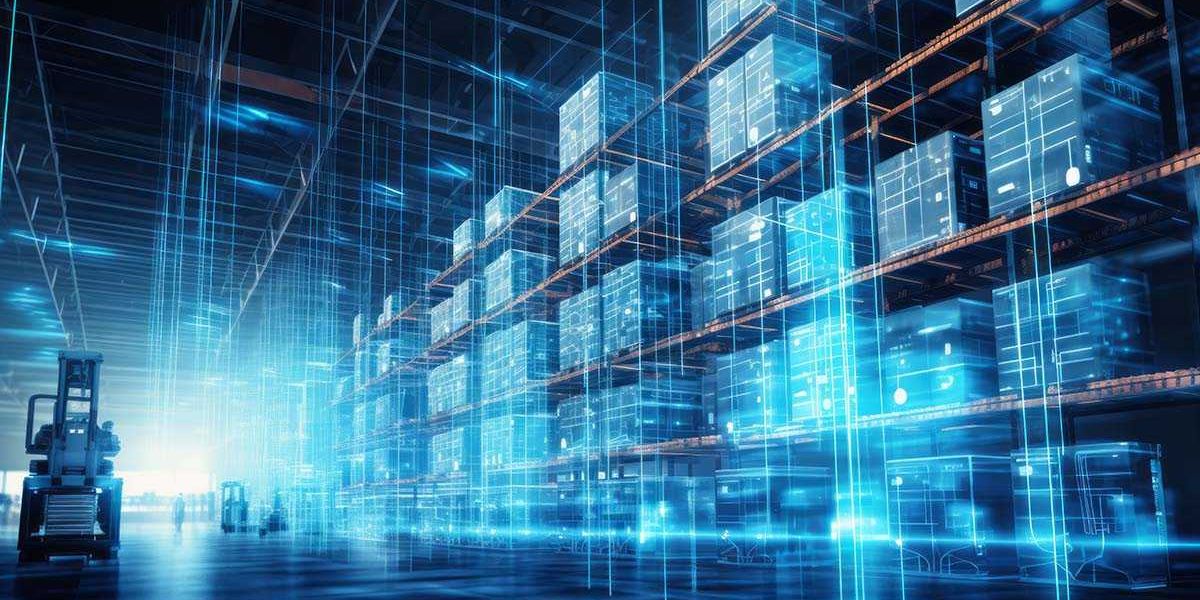
We’re witnessing the birth of what can only be described as intelligent infrastructure. This isn’t about better spreadsheets; it’s about systems that can perceive, reason, and act in ways previously confined to science fiction. For years, we’ve been cobbling together disparate systems, hoping they’d talk to each other. Now, AI promises to knit them together, not just with wires and APIs, but with shared understanding. It’s like moving from a collection of individual light bulbs to a fully interconnected smart grid.
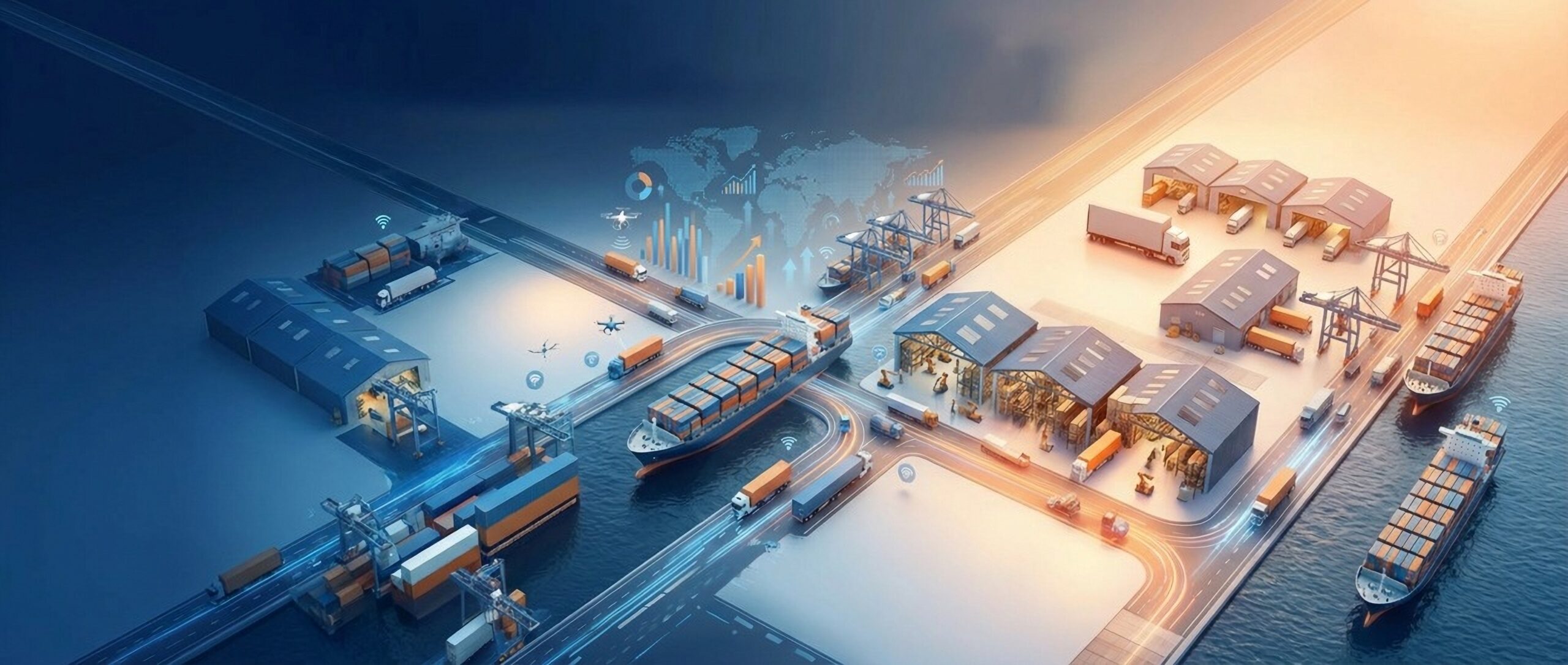
And here’s the thing that gets many folks in the industry a little antsy: this isn’t just about efficiency gains you can measure in basis points. This is about reimagining entire business models. The capacity dynamics we’re seeing in ocean freight, for example, are no longer just about market forces and steel. They’re increasingly about predictive analytics that can anticipate demand shifts with uncanny accuracy, about autonomous vessels that could reshape global shipping routes, and about AI-powered platforms that can dynamically reallocate resources before a problem even manifests. The original article touches on the evolution of ocean capacity, but frames it through a somewhat traditional lens of trade needs and market dynamics. That’s like describing a smartphone by talking about the evolution of the rotary dial.
“The alignment between demand and the supply of capacity has individual dynamics across each trade lane and different consequences for the newbuild, second-hand and charter markets.”
This quote, while accurate in its description of market mechanics, feels almost quaint in the face of what AI is enabling. It’s like talking about the physics of flight while ignoring the jet engine. The underlying AI capabilities – from predictive demand sensing at a granular level to sophisticated risk modeling that can reroute entire fleets in real-time – are what’s truly reshaping these dynamics. It’s not just about aligning capacity; it’s about creating hyper-agile capacity that adapts on the fly.
Why Does This Matter for Your Supply Chain?
It matters because the rules of the game are changing. Companies that view AI as a mere efficiency tool will be outmaneuvered by those who understand it as a foundational platform. Imagine supply chains that don’t just react to disruptions, but actively predict and neutralize them. Imagine logistics networks that self-optimize, re-routing cargo before a port congestion even hits the news. This is the promise of AI as a platform shift. It’s about moving from reactive firefighting to proactive orchestration.
This paradigm shift also means the skills required are changing, and fast. We’re not just looking for people who can push buttons on existing software. We need individuals who can understand the logic of AI models, who can interpret their outputs, and who can work alongside these intelligent systems. It’s a partnership, a co-evolutionary dance between human ingenuity and machine intelligence.
Look, the ILWU chief slamming ‘foreign shipping companies’ is a symptom, not the root cause, of evolving trade dynamics. The real story is the underlying technological tsunami. The ability of AI to manage complexity, to process vast datasets, and to make high-stakes decisions at speed means that borders, regulations, and even company structures might need to be rethought in a world of increasingly intelligent, interconnected logistics.
This isn’t hyperbole. We’re at the dawn of a new era where AI is no longer a feature; it’s the fundamental operating system. The companies that grasp this will not only survive but thrive. Those that don’t? Well, they’ll be the digital equivalent of horse-drawn carriage manufacturers in the age of the automobile.
🧬 Related Insights
- Read more: Charleston Port Eyes Ro/Ro Expansion with AI Potential
- Read more: Gulf’s Post-Oil Dream Crumbles: UAE Exits OPEC, Saudi Cuts LIV
Frequently Asked Questions##
Will AI replace supply chain jobs?
AI will undoubtedly change the nature of many supply chain jobs, automating routine tasks and requiring new skills. The focus is shifting from manual execution to strategic oversight, data interpretation, and collaboration with AI systems. Think augmentation, not outright replacement for many roles.
How can my company start leveraging AI?
Begin by identifying specific pain points and opportunities where AI can provide significant value. Start with pilot projects in areas like demand forecasting, route optimization, or inventory management. Crucially, focus on data quality and building a culture that embraces data-driven decision-making.
Is AI a fad or a lasting change for logistics?
AI is not a fad; it’s a fundamental platform shift. Its ability to process complex data, learn, and adapt makes it a foundational technology that will continuously evolve and integrate deeper into all aspects of supply chain operations, similar to the internet or mobile computing.