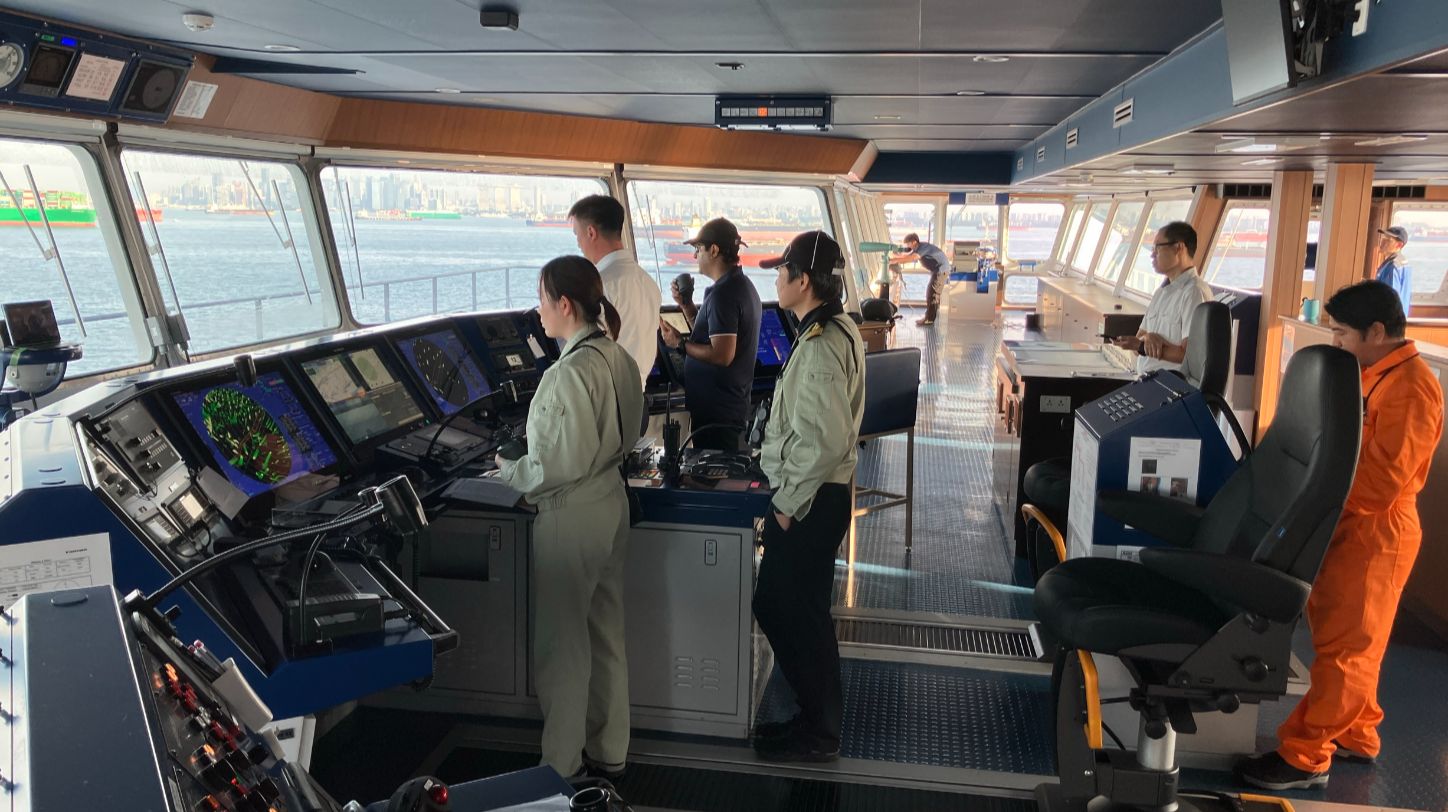
When you picture a massive car carrier gliding into a major global hub like Singapore, you probably imagine a captain barking orders, a pilot guiding the behemoth, and a flurry of communication. But what if that process is already being rewritten, not with louder shouts, but with silent streams of data? The NYK-operated car carrier Elder Leader recently made its first call at Singapore, not just as a cargo stop, but as a real-world proving ground for its advanced autonomous navigation system. This wasn’t just a theoretical exercise; it was a rigorous test of interoperability between the ship’s tech and the port’s digital infrastructure.
This isn’t just another shiny new feature tacked onto a ship. The Elder Leader is billed as a next-generation vessel, bristling with marine DX (Digital Transformation) technologies. We’re talking about a sophisticated autonomous navigation system, yes, but also a motion mitigation system that sounds like something out of a sci-fi flick and a ship-wide Wi-Fi network that probably boasts better coverage than some terrestrial ISPs. Oh, and it runs on LNG, which NYK is quick to point out reduces CO2 emissions. Decarbonization and digitalization – the twin pillars of modern maritime ambitions.
The Quiet Integration: What Actually Happened?
The demonstration itself was meticulously planned, a far cry from a rogue AI taking the helm. It occurred under the auspices of a 2024 Memorandum of Understanding (MOU) between NYK and the Maritime and Port Authority of Singapore (MPA), focused on decarbonization, digitalization, and workforce development. Safety was paramount, with strict management protocols, prior risk assessments, and the ship master, bridge team, and a pilot all present. Remote pilotage was confined to navigating channels and fairways – baby steps, but significant ones.
The real meat of the trial lay in the data handshakes. The vessel successfully transmitted its voyage planning data to MPA’s prototype next-generation vessel traffic management system (NGVTMS). Conversely, pilotage route information flowed from shore to the ship, alongside a real-time deluge of operational data and video. Perhaps most crucially, MPA’s Just-in-Time (JIT) platform was employed, aiming to streamline vessel arrivals – a critical efficiency gain for any port operator.
The outcomes obtained from this demonstration trial are expected to be utilised in the study of MPA’s next-generation vessel traffic management systems, as well as shore-based support systems capable of interfacing with autonomous vessels.
This quote, straight from the horse’s mouth (or rather, the press release), underscores the iterative nature of this development. This trial isn’t the end goal; it’s a crucial data point feeding into the design of future port systems and shore-based control centers. The architecture being built here is one where ships and shore become deeply interconnected digital entities.
Beyond the Hype: The Architectural Shift
Look, the term ‘autonomous’ gets thrown around a lot, often masking systems that are really just advanced assisted driving for ships. But what’s happening here feels different. It’s not just about removing the human from the immediate helm, but about fundamentally re-architecting how vessels interact with the maritime environment. We’re witnessing the birth of a distributed control plane for shipping – a system where decisions aren’t solely onboard but can be influenced, optimized, and even dictated by shore-based intelligence, all facilitated by a strong data pipeline.
This moves beyond simple route optimization. The Elder Leader’s demonstration points towards a future where a vessel’s arrival isn’t a static event but a dynamic, negotiated outcome. The JIT platform, for instance, suggests a future where ships don’t just “turn up” but arrive precisely when needed, minimizing waiting times and optimizing berth allocation. This requires an unprecedented level of trust and data transparency between ship and shore – a trust that must be built on secure, reliable, and standardized communication protocols.
Why Does This Matter for Global Trade?
The implications here are enormous, and not just for the tech enthusiasts. For the supply chain professional, this points to a future of potentially more predictable transit times, reduced demurrage costs, and greater efficiency across the board. Imagine container ships arriving with the precision of a commuter train, their schedules perfectly aligned with port operations. This level of coordination, enabled by autonomous navigation and advanced traffic management, could iron out some of the chronic bottlenecks that plague global trade.
However, it’s also a stark reminder of the ongoing consolidation of power. Companies like NYK, in partnership with port authorities like MPA, are not just developing technology; they are shaping the future operating standards of global maritime logistics. This push for standardization in data exchange and system interoperability is critical, but it also means that the players with the most advanced systems will likely set the pace.
The Road Ahead: Challenges and Opportunities
This demonstration is undeniably a significant step. But we’re still a long way from seeing fully autonomous cargo ships navigating the world’s oceans without human oversight. Regulatory hurdles remain immense, international standards need to be hammered out, and the cybersecurity implications of such interconnected systems are staggering. Any compromise in the data stream could have catastrophic consequences.
Yet, the direction is clear. The Elder Leader’s visit to Singapore wasn’t just about showcasing a ship; it was about demonstrating a paradigm shift. It’s about ships becoming nodes in a larger, intelligent logistics network, communicating and coordinating with ports and other vessels in ways we’re only beginning to comprehend. The quiet hum of data transmission is, in its own way, far more powerful than any engine roar.
🧬 Related Insights
- Read more: [2026] Iran Mines Strait of Hormuz Again: Oil Chaos Deepens
- Read more: MSC’s European Box Trade Grip Tightens: 45.5% Capacity Share
Frequently Asked Questions
What does the ‘Elder Leader’ autonomous navigation system do?
The system is designed to allow the vessel to navigate autonomously, managing its course and speed with reduced human intervention. During the demonstration, it successfully transmitted voyage plans and received pilotage route information from shore-based systems.
How does this differ from current ship navigation?
This represents a significant leap towards full autonomy, integrating the vessel’s navigation system with port traffic management and just-in-time arrival platforms. It emphasizes data exchange and coordination between the ship and shore-based operations.
What are the potential benefits for the shipping industry?
Potential benefits include increased efficiency, reduced transit times, optimized port calls, lower operational costs, and enhanced safety through precise data-driven decision-making.