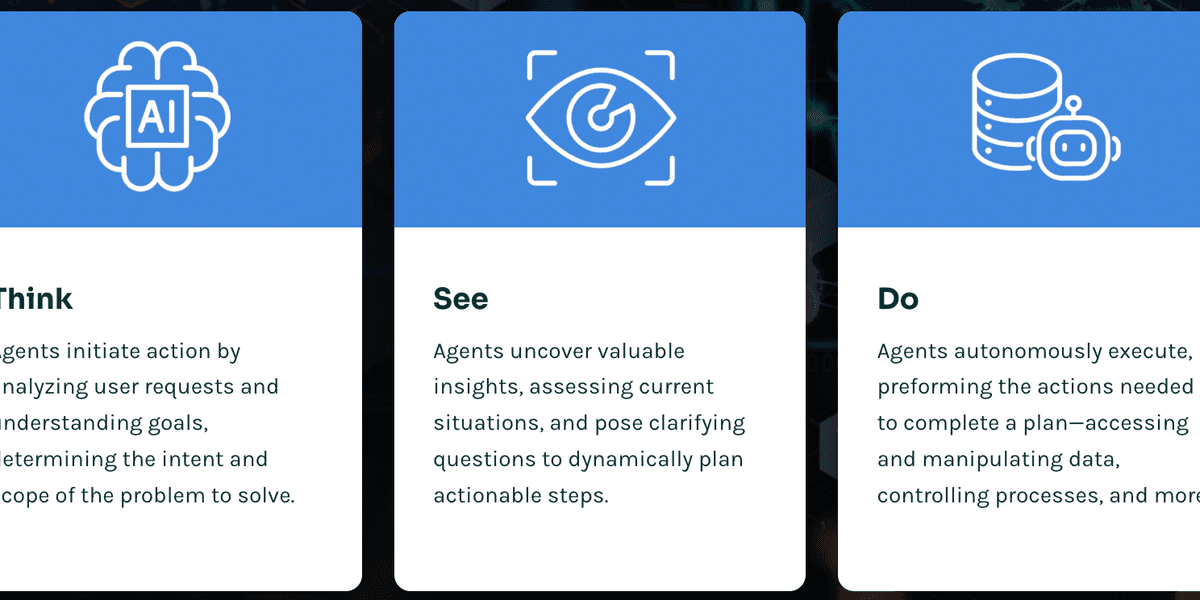
The hum of servers is getting louder, isn’t it? Everywhere you look, there’s talk of AI agents leaping into action, optimizing, predicting, and automating the complex dance of global supply chains. But here’s the thing: Manhattan Associates, a major player in this space, is sounding a note of grounded enthusiasm. They’re not just seeing AI as a self-driving car for logistics; they’re talking about a sophisticated co-pilot, where human intent is the absolute linchpin. Forget AI as the sole master of the warehouse – that’s a recipe for disaster when a tiny error can cascade into massive problems.
The IQ-EQ Tango: Where AI Meets Human Wisdom
Manhattan is pitching a future where enterprise software isn’t just about raw processing power (that’s the ‘IQ’ part, the algorithmic muscle). It’s about blending that with ‘EQ’ – an emotional quotient, or more accurately, a contextual intelligence. Think of it like this: your smartest AI might be able to predict demand with uncanny accuracy, but it doesn’t inherently understand the delicate human relationships, the historical context of a specific supplier relationship, or the strategic importance of a particular customer. That’s where we, the humans, come in. Manhattan’s mantra is deceptively simple: “you manage the intent, we manage the machinery.” It’s a powerful framing that underscores the idea that AI is an incredibly potent tool, but we’re the ones who need to point it in the right direction.
Why ‘Almost Correct’ is a Supply Chain Nightmare
Sanford Siotia, Manhattan’s CTO, hit the nail on the head during their Momentum conference. He acknowledged the valid apprehension many supply chain professionals feel about handing over the reins to a fully autonomous AI. And he’s right. In our world, “almost correct” doesn’t cut it. It’s the difference between a perfectly timed delivery and a monumental screw-up that can cost millions. This isn’t like a spell-check where a minor error is easily fixed. Supply chain optimization is a high-stakes game where precision, not approximation, is paramount.
“in our business, ‘almost correct’ is the same as ‘wrong’,” Manhattan Associates CTO Sanjeev Siotia said.
This is why Manhattan’s approach, as outlined by Siotia, is so compelling. It’s not about an AI running wild. It’s about human experts – those with years of experience navigating the choppy waters of logistics – setting the clear rules of engagement. They define the business logic, the workflows, the non-negotiable guardrails. Only then, once the human-defined boundaries are firmly in place, do we unleash the probabilistic power of AI agents to do their predictive magic within those safe confines. It’s a controlled explosion of efficiency.
The Unification Imperative: A Single Source of Truth for AI
And here’s another critical piece of the puzzle, often overlooked in the AI gold rush: unification. AI, no matter how brilliant, can’t operate in a vacuum of siloed data. For it to truly shine in a supply chain context, it needs a unified view. Imagine trying to understand a symphony by listening to individual instruments playing in separate rooms – you’d miss the harmony, the crescendo, the entire emotional arc of the piece. Manhattan’s vision requires a cloud-based, unified platform that brings together all the disparate supply chain functions. This creates a single source of truth, an omniscient view that allows AI to make truly informed analyses, rather than just educated guesses based on incomplete information.
Siotia’s statement, “AI alone is not the answer. But AI plus unification plus human ingenuity is the combination that can make it work,” perfectly encapsulates this synergistic approach. It’s a powerful reminder that technology, while transformative, doesn’t replace the fundamental need for human insight and well-structured data environments.
Building the Intent Engine: Manhattan’s Solution Design Studio
So, how do we actually manage this human intent? This is where Manhattan’s new “Solution Design Studio” comes into play. Think of it as a translator between human needs and AI capabilities. Instead of requiring users to wade through complex software configurations or, worse, translate business requirements into cryptic code, this studio is designed to ingest a raw business requirements document and intelligently configure itself. It’s about making AI accessible and controllable, allowing the human element – the intent – to be the driving force behind the technological machinery. This isn’t just about adding AI; it’s about fundamentally rethinking how we interact with supply chain software. It’s a platform shift, plain and simple. We’re not just augmenting existing processes; we’re building entirely new ways of operating, fueled by human intention and powered by intelligent automation. It’s like moving from a horse-drawn carriage to a jet engine – the fundamental purpose (transportation) is the same, but the capability and the experience are utterly, wonderfully different.
Is This Just Hype, or a Real Platform Shift?
The enthusiasm around AI is undeniable, and for good reason. It is a platform shift, akin to the advent of the internet or mobile computing. Manhattan’s approach, however, injects a healthy dose of pragmatism into the narrative. By emphasizing human intent and contextual intelligence alongside raw AI power, they’re not just selling a product; they’re articulating a philosophy for successful AI adoption. This focus on human-AI partnership, rather than AI supremacy, feels less like corporate jargon and more like a realistic roadmap for harnessing AI’s true potential in complex domains like supply chain management. It’s a future where technology amplifies human capability, not replaces it, creating a more resilient and intelligent supply chain ecosystem.
What Does This Mean for Supply Chain Professionals?
This isn’t about AI taking jobs; it’s about AI changing them. Professionals who can master the art of defining intent, setting guardrails, and interpreting AI-driven insights will be invaluable. It elevates the human role from task execution to strategic direction and complex problem-solving.
**
🧬 Related Insights
- Read more: $130 Billion Tariff Refund Frenzy Hits Supply Chains as Trade Walls Rise
- Read more: Diesel Spike and AI Mirage: The Real Supply Chain Mess of 2026
Frequently Asked Questions**
What does Manhattan Associates’ ‘Solution Design Studio’ actually do? It reads raw business requirements documents and automatically configures AI solutions, reducing the need for manual coding or complex screen navigation.
Will AI agents replace human decision-making in supply chains? Manhattan Associates argues against complete autonomy, emphasizing that human intent and business rules must guide AI agents to ensure accuracy and safety.
How important is data unification for AI in supply chains? Extremely important. AI needs a unified collection of cloud-based data and applications to gain a comprehensive oversight for informed analysis and decision-making.