Forget flying warehouses or sentient forklifts for a moment. The real bottleneck, the gritty, unglamorous truth holding back AI’s promised supply chain revolution isn’t a lack of algorithms, it’s a fundamental failure in data plumbing. And according to recent industry studies, a staggering 67% of shippers and 73% of 3PLs are already dabbling in AI, with 80% and 81% respectively leaning on advanced analytics. They’ve bought the fancy AI engine, but it’s sputtering on a diet of dirty, disconnected fuel.
Here’s the thing: AI technology is a voracious beast. It thrives on data. Not just any data, but vast, interconnected, and timely data. Organizations are drowning in the stuff – from TMS and WMS systems, carrier portals, ancient spreadsheets, and the digital detritus of endless email chains. The issue isn’t scarcity; it’s an architectural failing, a fragmented mess that makes a real-time, holistic view feel like a mythical quest. PwC’s 2025 Digital Trends in Operations Survey nails it: integration with existing systems and data availability/quality are the twin specters haunting AI scalability.
Think about it. A manager trying to track a crucial shipment is playing digital whack-a-mole, juggling multiple systems, manually compiling reports, all while the precious window for intervention slams shut. By the time the pieces are assembled, the anomaly—the potential delay, the inventory glitch—has already morphed into a full-blown crisis. This isn’t optimization; it’s damage control dressed up in a quarterly report.
The Data Silo Smashing Act
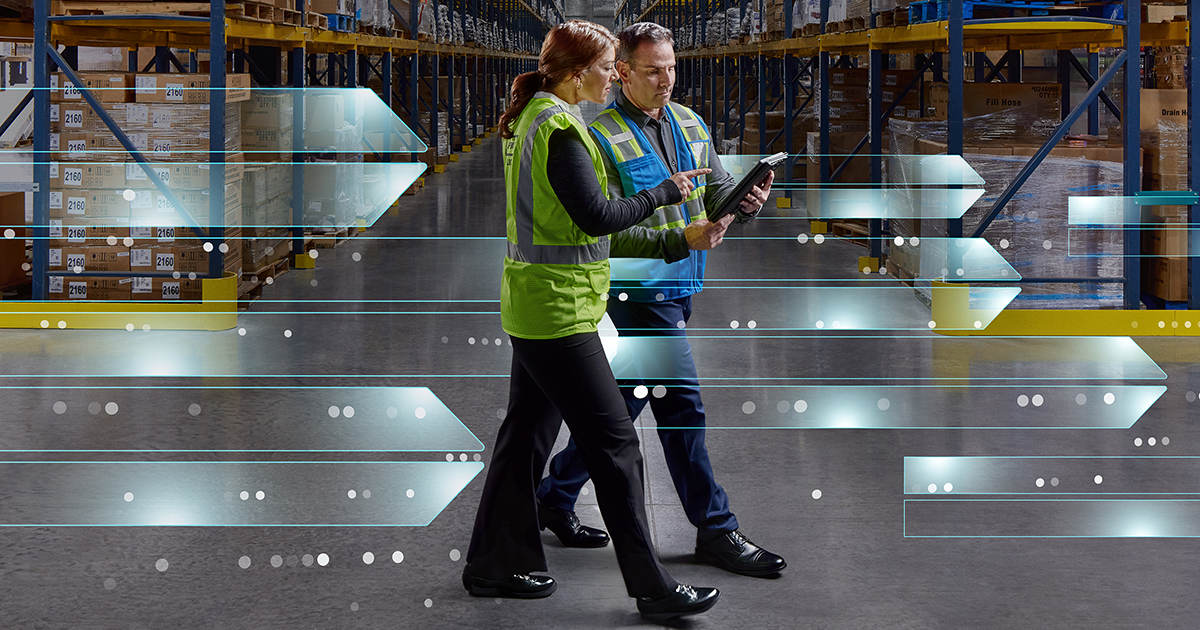
This is where platforms like Penske Logistics’ Supply Chain Insight come into play. It’s not about inventing new AI models; it’s about finally making the existing ones sing by feeding them clean, unified data. The core architectural shift here is the move from disparate data islands to a singular, unified digital ocean. This platform is designed to pull information from any source—including those frustrating non-Penske systems—into one cohesive interface. Suddenly, loads, orders, inventory levels, and performance metrics aren’t scattered across a digital Wild West; they’re presented in a single, real-time pane of glass. Both operations teams and their clients can look at the same data, at the same time. Imagine that.
When data is centralized, decisions don’t just get faster; they become fundamentally different. Instead of reacting to yesterday’s problems, teams can foresee tomorrow’s, or at least, the immediate disruptions lurking around the next digital corner. A supply chain manager can trace a load’s entire journey, see every stop, understand the precise inventory being dropped, and even overlay external factors like weather or traffic. This isn’t just visibility; it’s predictive foresight born from data fusion.
“No two operations run the same, and the way teams use data should reflect that,” said Mike Medeiros, executive vice president of operations at Penske Logistics. “With Supply Chain Insight, our customers can define the metrics that matter most to their business, set performance thresholds and focus on areas that can drive increased efficiency and results.”
For those on the ground, the immediate wins are often about time. A logistics coordinator at a food manufacturing company put it plainly: “I like Supply Chain Insight because it tells me a complete story — everything from quantity of loads and orders running and especially the late loads. The information is very helpful to stay ahead of any potential late deliveries for the stores.” This isn’t just efficiency; it’s about preventing costly stock-outs and maintaining customer trust – tangible business outcomes that AI should be delivering.
Beyond the Real-Time Dashboard: Uncovering Deeper Truths
But the value proposition extends beyond immediate operational alerts. The platform’s ability to retain historical KPI data—up to 13 months—opens up a new layer of analysis. This isn’t just about spotting current delays; it’s about understanding systemic weaknesses, measuring the true impact of implemented changes, and distinguishing between random hiccups and recurring structural problems. It allows for a far more nuanced understanding of supply chain performance, moving from a reactive firefighting mode to a proactive, strategic improvement cycle.
The architectural implication is significant: the shift from transactional data silos to a foundational layer of integrated intelligence. This isn’t just about a new software tool; it’s about rethinking the very data infrastructure that underpins modern logistics. The AI boom was predicated on data-driven insights, but the supply chain world has been too slow to build the connected conduits required to deliver that data effectively.
This is the quiet revolution happening in logistics technology: the realization that the ‘smart’ in AI isn’t about the algorithms themselves, but about the intelligence enabled by making data accessible, coherent, and actionable. Penske’s move isn’t just another product launch; it’s a signal that the industry is finally confronting the foundational data challenges that have been holding back its digital transformation. The future of AI in supply chains isn’t just about smarter predictions; it’s about the fundamental architecture that makes those predictions possible.
🧬 Related Insights
- Read more: Kalshi’s Kid-Proofing: Does It Really Protect Young Traders?
- Read more: Iran Strikes and Tariff Tantrums: Your Wallet’s New Nightmare
Frequently Asked Questions
What does Penske’s Supply Chain Insight do?
Supply Chain Insight is a platform that integrates data from various logistics systems (transportation, warehouse, carrier portals, etc.) into a single interface, providing real-time visibility into loads, orders, inventory, and performance metrics to help businesses identify issues and optimize operations.
Is this the first platform to connect supply chain data?
While data integration solutions exist, Supply Chain Insight aims to simplify the process by pulling data from disparate, often non-Penske, systems into a unified view, emphasizing real-time visibility and customizable performance metrics for both internal teams and external customers.
Will this replace my job as a logistics manager?
These platforms are designed to augment, not replace, human expertise. By automating data aggregation and providing advanced insights, they free up logistics managers to focus on strategic decision-making, exception management, and proactive problem-solving, rather than manual data compilation.