The air is thick with talk of tariffs. You’d think with the Supreme Court’s February ruling striking down a chunk of IEEPA tariffs and the subsequent April 20th opening of the CAPE refund portal — potentially disgorging $166 billion across months, or even years — that the trade war itself was the headline act for any North American shipper. But listen closely, and you’ll hear a different, far more gnawing anxiety. It’s not the tariffs themselves; it’s the raw, unadulterated volatility they’ve unleashed, a storm that most transportation management systems (TMS) were simply never built to weather.
Talk to anyone deep in the trenches of logistics right now, and the story is chillingly consistent. A new duty slaps down on a Tuesday. By Friday, sourcing teams are frantically repricing SKUs. The following week, procurement is in emergency sessions with carriers, all while the TMS, that bedrock of supposed planning, is still churning out optimal lanes based on cost tables last updated in Q1. It’s a replay of an old show with a new, destructive script.
Here’s the stark reality: for two decades, TMS platforms have operated on a fundamental assumption of stability. Duties, surcharges, fuel rates, even those pesky carrier accessorials – they were all treated as fixed inputs, refreshed perhaps quarterly. That comforting predictability has evaporated. Now, tariffs are just one variable in a rapidly accelerating, real-time flux, alongside fuel prices that dance to geopolitical tunes, carrier capacity that constricts and expands with the tides of reshoring, and dynamic pricing models that are already the default in most contracts. This isn’t some abstract spreadsheet exercise; it’s direct, brutal margin leakage on every single load you dispatch.
Lane decisions that seemed sound on Monday are obsolete by Wednesday. Carrier selections become a gamble against the latest surcharges. Planning cycles, designed for glacial shifts, are utterly outmatched by the breakneck pace of cost structure evolution. The variance doesn’t slap you in the face until the invoice lands, and by then, you’ve already made that same flawed decision three more times. It’s a compounding error, a silent killer of profitability.
Is the Real Disruption Coming From Within?
The tariff narrative, with all its geopolitical drama, misses the deeper operational crisis. The immediate pressure on North American shippers isn’t the levy itself; it’s the seismic reshoring response it’s triggering. We’re seeing manufacturing jobs boomerang back to the US, not as tentative experiments, but as concrete, multi-billion-dollar commitments. IndustrialSage’s tracker paints a staggering picture: as of March 31, 2026, roughly $1.595 trillion in announced US investment has poured into 132 companies across 32 states. That translates directly into more road freight, more trucks vying for limited domestic lanes, and a decision-making process for capacity that butts up against an already strained labor market. The driver shortage was a live problem. Now, even the white-collar logistics planning side is tightening. Experienced hands are retiring, and the next generation, saddled with the industry’s antiquated tools, isn’t exactly lining up.
So, the variable that’s shifting fastest isn’t the tariff rate. It’s the sheer volume and complexity of domestic freight that US shippers must now plan and execute, all while facing a dwindling, and increasingly overwhelmed, workforce. Tariff litigation is the noisy headline. A domestic logistics surge overwhelming systems and teams built for a bygone era is the silent, operational story unfolding beneath it.
What Does a Resilient Logistics Architecture Actually Look Like?
The fundamental shift required is this: stop treating cost volatility as an anomaly requiring special management. Start acknowledging it as the baseline condition your entire platform must be designed to handle.
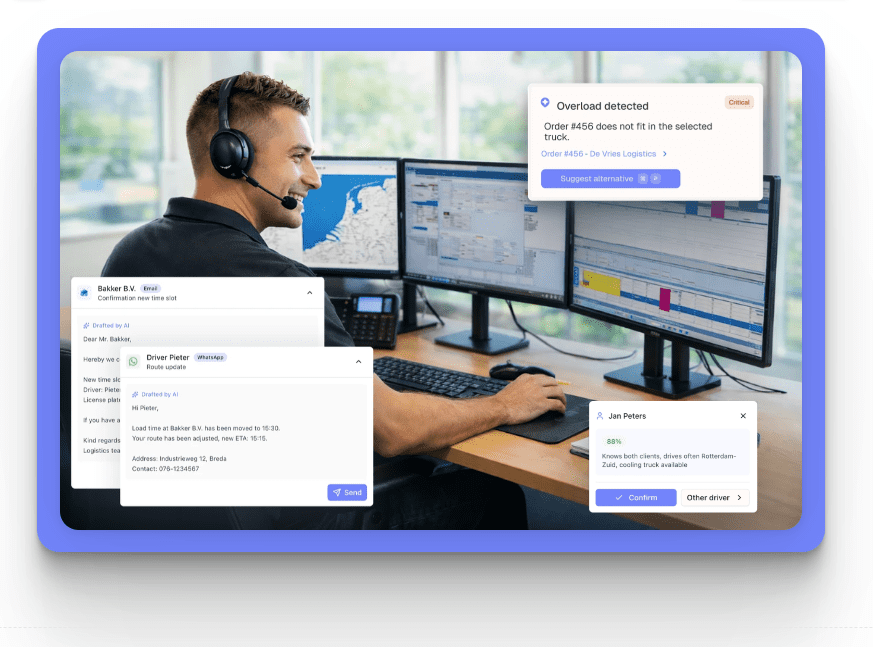
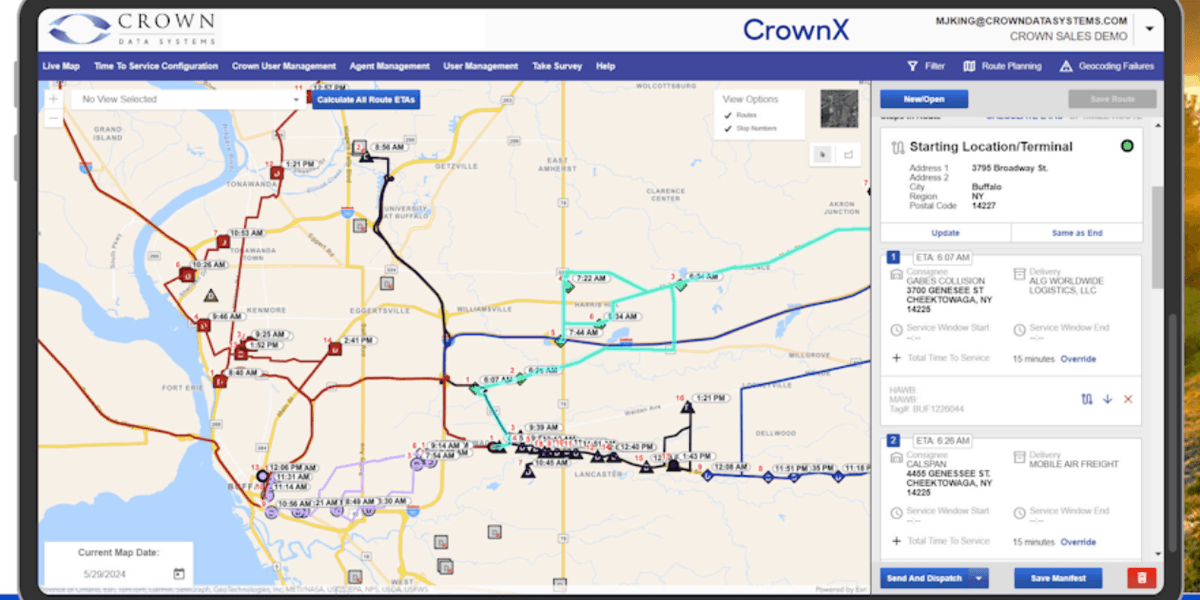
This means real-time data streams feeding routing and carrier decisions, not the familiar quarterly refresh. It demands scenario planning that can model a new tariff regime or a never-before-seen Section 232 expansion in a matter of hours, not weeks. It requires dynamic surcharge and fuel logic to be wired into the very core of your optimization engines, not tacked on later as an afterthought, a digital band-aid.
And crucially, it necessitates an honest reckoning with your existing architecture. A TMS that merely glues volatility-handling features onto a legacy core will inevitably hit a ceiling, and that ceiling is far lower than most vendors are comfortable admitting. The systems that will truly stand the test of time are those fundamentally architected on the assumption that the cost environment will never, ever be stable again.
So, if you’re auditing your tech stack today, the pertinent question isn’t “Does our TMS handle tariffs?” No. It’s a far more existential one: When our cost structure shifts next month under a legal authority that doesn’t even exist today, how long will it take our system to accurately reflect that shift in a routing decision? If your answer is measured in weeks, your system isn’t a solution. It’s the problem.
The Clock is Ticking Faster Than You Think
The freight generated by $1.595 trillion in committed manufacturing build-out isn’t going to wait politely for a TMS re-implementation. The first fabrication plants are rolling off the construction lines right now. Volume production is ramping up throughout 2026. And the full staffing push will continue right through the end of the decade. The operational reality is barreling down on you, and your TMS, built for a world that no longer exists, is staring down the barrel.
“The gap most leaders aren’t naming is that most TMS platforms were designed for a stable cost environment, with duties, surcharges, fuel rates, and carrier accessorials all treated as fixed inputs on a quarterly refresh. That assumption held for twenty years. It doesn’t anymore.”
The sheer speed of change is the true disruptor. Your TMS isn’t just an operational tool; it’s a strategic liability if it can’t keep pace. The volatility isn’t coming; it’s here, and it’s forcing a fundamental re-evaluation of what a logistics technology stack must be capable of.
🧬 Related Insights
- Read more: Infrastructure’s Hidden Grip on Global Trade [5 Shifts Revealed]
- Read more: What to Watch This Week: Geopolitical Tensions, AI Disruption, and Regulatory Scrutiny
Frequently Asked Questions
What does a TMS do? A transportation management system (TMS) is software designed to help businesses manage their freight operations more efficiently. It typically handles tasks like shipment planning, execution, tracking, carrier selection, and freight accounting.
Will tariffs impact my shipping costs directly? Tariffs are taxes imposed on imported goods. While they don’t directly increase shipping rates, they increase the cost of the goods being shipped, which can lead to renegotiations of freight contracts, changes in sourcing locations, and overall increased supply chain costs that may indirectly affect transportation decisions.
Can my current TMS be updated to handle volatility? While some TMS platforms offer bolt-on modules or configurations for dynamic pricing and surcharges, a truly volatile environment often requires a core architectural rethink. Systems not built with real-time data integration and dynamic optimization at their foundation may struggle to provide timely and accurate decisions, regardless of updates.