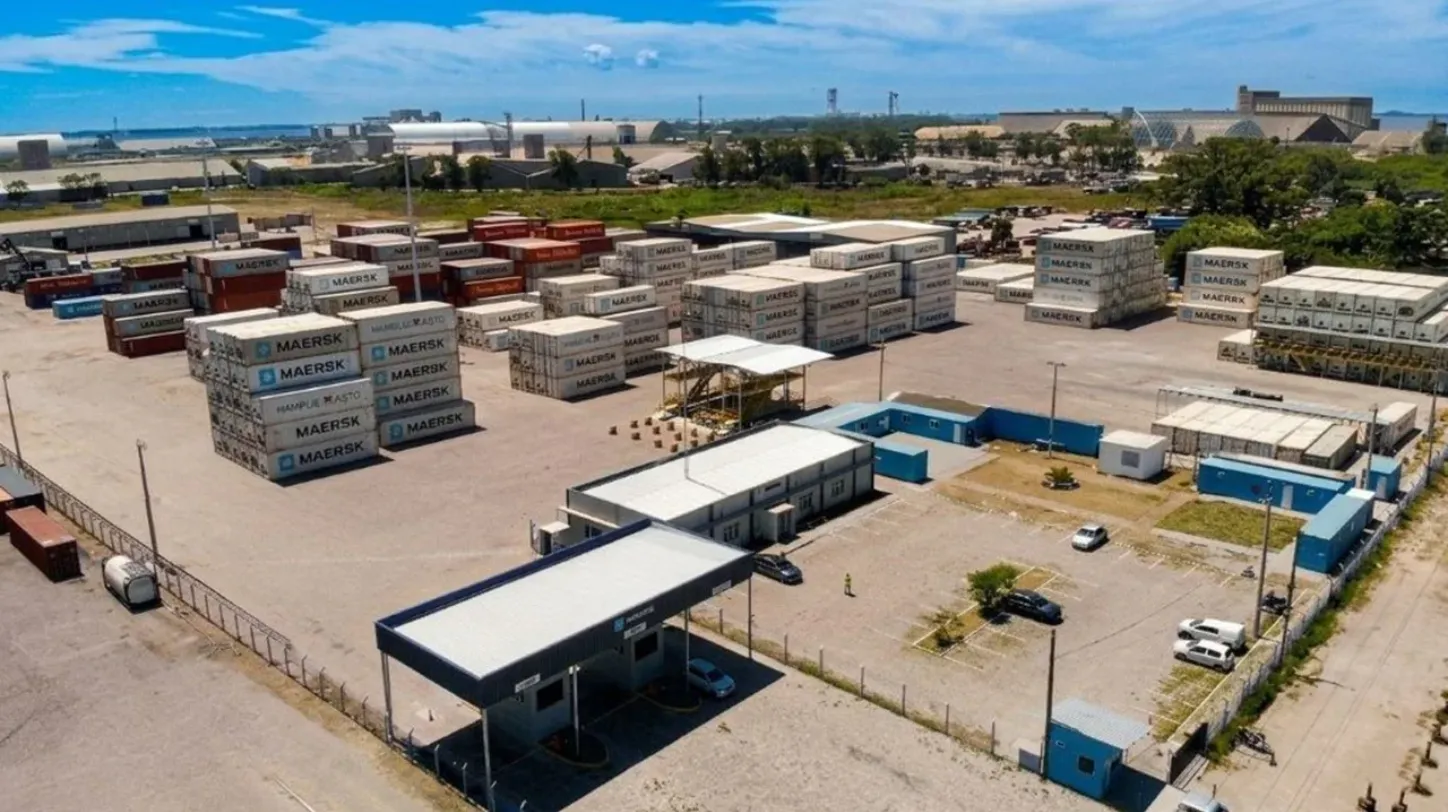
Here’s the thing about logistics giants like Maersk: they don’t just buy a few trucks and call it a day. They architect networks. And when a company that big makes a move—particularly an investment of this scale, though the exact figures are still a bit opaque beyond the implicit commitment—it’s worth dissecting the underlying ‘why’ and ‘how’. Maersk’s recent announcement of expanding its logistics network in Southern Brazil, specifically with new investments in inland facilities at Rio Grande (RS) and Paranaguá (PR), isn’t just about adding square footage. It’s about recalibrating the flow of goods, chipping away at those pesky friction points that plague even the most strong supply chains, and frankly, deepening their control over the entire value chain.
Think about the stats. Brazil’s agribusiness and industrial sectors are global powerhouses. Moving that cargo, particularly refrigerated commodities and time-sensitive industrial components, through the country’s notoriously complex infrastructure, is a perpetual challenge. Maersk’s rationale is clear: these locations are chosen for their perch within high-volume export corridors and their proximity to major production centers. This isn’t a random scattershot; it’s precision engineering applied to physical flow.
Is This Just More of the Same?
You might be thinking, ‘Okay, so Maersk is building more warehouses.’ But that’s like saying a surgeon is just making incisions. The real work happens in the architecture of the operation. These aren’t just standalone depots. The language used—‘strengthen connectivity between ports, hinterland markets, and crossborder flows’—speaks to an ambition beyond mere storage. It’s about creating nodes in a larger, more intelligent grid. They’re positioning these facilities to be more than just places where containers sit; they’re active participants in the logistics ballet.
The facilities will offer container inspection, cleaning, repairs, and operational support. This is where the devil, and the opportunity, truly resides. By bringing these ancillary services in-house, or at least under their direct operational umbrella, Maersk is doing several things simultaneously. First, it’s a massive play for lead-time reduction. Customers, especially those dealing with perishables or tight manufacturing schedules, detest delays. Offering these services adjacent to the port, or a short haul away, drastically cuts down the waiting game. Second, it’s about quality control and standardization. Maersk can now exert greater influence over the condition of the containers themselves, reducing surprises further down the line.
The Architecture of Integration
Ricardo Rocha, Maersk’s managing director for the East Coast of South America, put it plainly: “By expanding capacity near the ports of Rio Grande and Paranaguá, we strengthen inland reliability, support peak season demand, and create simpler end to end logistics solutions for the sectors driving Brazil’s trade growth.” That’s the corporate speak, of course, but strip away the polish, and you see the strategic intent.
“These investments respond to the needs of customers moving agribusiness, refrigerated commodities, and industrial cargo through Brazil’s main export corridors.”
This isn’t just about making things easier for Maersk; it’s about making the entire system more resilient. Brazil, like many emerging markets, experiences significant seasonal demand spikes. By bolstering inland capacity, Maersk is creating a buffer, a shock absorber for these peaks, preventing the bottlenecks that can cripple export operations when demand surges. This integrated approach, weaving depot operations with inland transport, customs activities, and ocean services, is the holy grail of modern logistics. It’s the difference between a series of discrete steps and a fluid, unbroken chain.
The inclusion of support for Aliança Navegação e Logística’s cabotage network at Rio Grande is also a crucial detail. Cabotage—the domestic shipping of goods along a coast—is increasingly vital for alleviating pressure on land-based infrastructure. By integrating these inland facilities with domestic shipping, Maersk is not only diversifying its own service offering but also promoting a more sustainable and efficient multimodal approach.
A Cautionary Note on Consolidation
While this move undoubtedly signals a more efficient future for many shippers in Southern Brazil, it’s also a stark reminder of the ongoing consolidation in the logistics sector. When a company like Maersk invests so heavily in owning and controlling more pieces of the supply chain puzzle, it naturally raises questions about competitive pressure on smaller, independent players. Will this lead to greater efficiency and lower costs for everyone, or will it further concentrate power in the hands of a few global giants?
The historical parallel here, though perhaps a bit dramatic, is the railroad barons of the late 19th century. They didn’t just lay track; they built entire towns, controlled distribution networks, and exerted immense influence over commerce. Maersk isn’t building towns, but by integrating these inland hubs with port operations and transportation, they’re essentially building critical arteries for trade.
The ‘how’ is through a strategic placement of assets and an operational philosophy that prioritizes integration. The ‘why’ is multifaceted: to capture more value, to offer a superior customer experience by reducing lead times and improving reliability, and to solidify their position as an indispensable partner in global trade, especially in a market as dynamic and crucial as Brazil. This isn’t just about expansion; it’s about deeper integration and control, a classic move in the high-stakes game of global supply chain architecture.