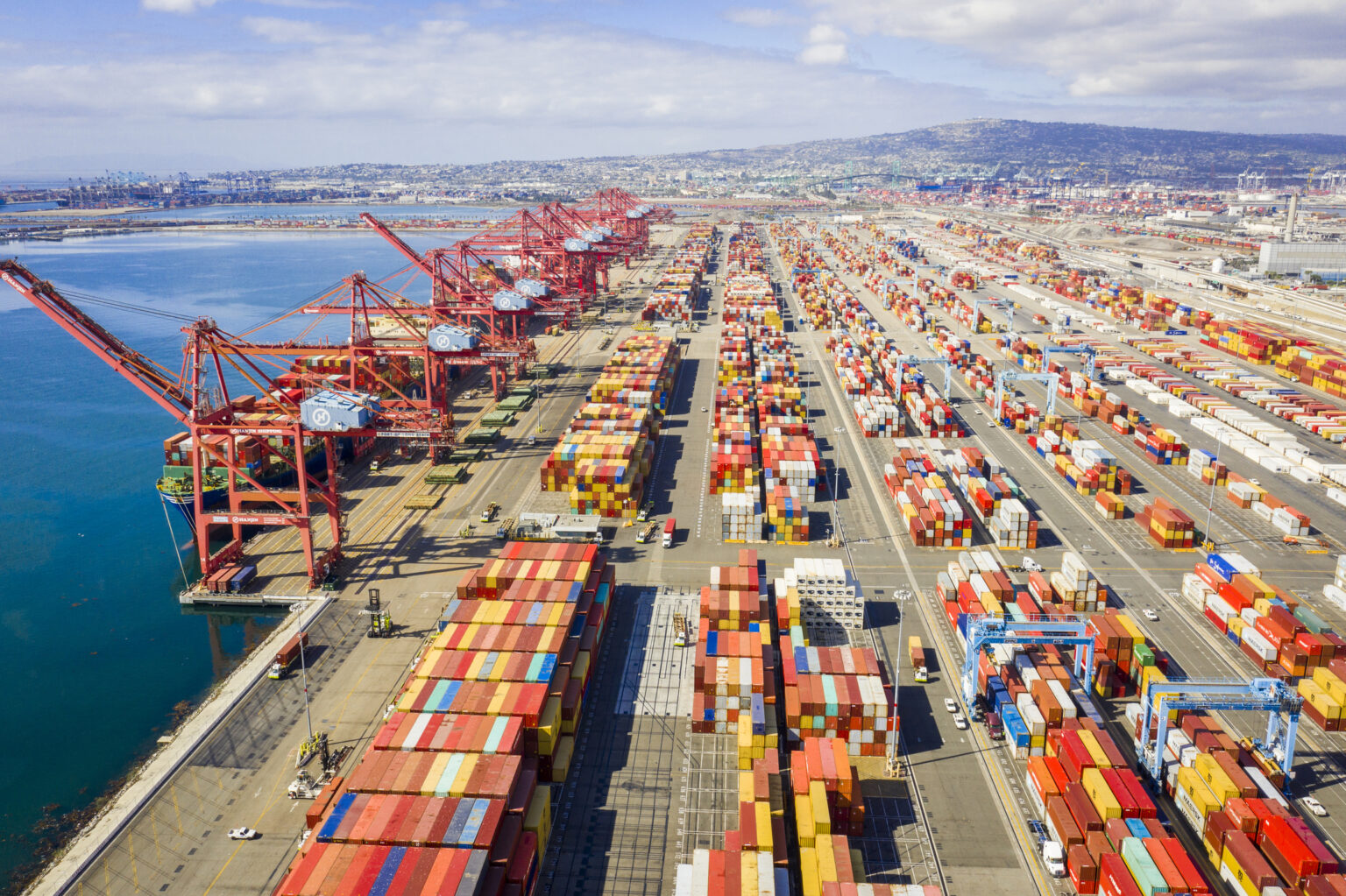
The drone attack, a whisper in the digital ether, has rippled outwards, forcing a hard reset on how the world moves its vital resources.
Governments and corporations across the Middle East and beyond are accelerating a major reconfiguration of global trade routes as the Hormuz shipping crisis continues without resolution. The International Energy Agency has stated that the current disruption has already exceeded the scale of the oil shocks experienced in the 1970s. This isn’t a temporary glitch; it’s a structural realignment.
Is Fujairah the New Backbone of Middle Eastern Exports?
The most recent development occurred on Tuesday, when AD Ports Group and Abu Dhabi petrochemical company Borouge signed a partnership agreement to evaluate the creation of an alternative international export hub on the UAE’s east coast. This hub would utilize AD Ports’ Fujairah Terminals and eastern port facilities as its foundation. Borouge is AD Ports’ largest exporter and the two entities have collaborated since 2001. The new agreement broadens their relationship, with both organizations pledging to assess dedicated polyolefins infrastructure on the east coast and to work jointly with shipping lines to establish new routes via Fujairah, thereby decreasing reliance on the restricted maritime passages through Hormuz.
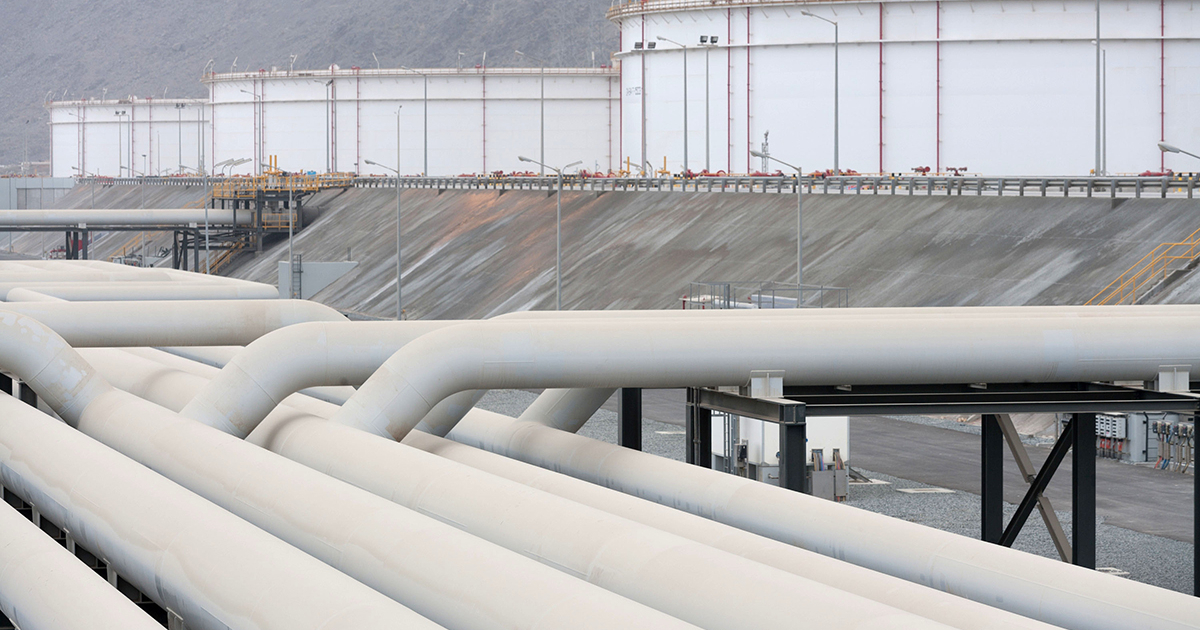
Fujairah is located outside the Strait of Hormuz on the Gulf of Oman, making it the UAE’s most strategically vital port under current conditions. However, the facility has not escaped the conflict; drone attacks have interrupted oil loadings there since the war began in late February. The UAE is proceeding despite these challenges. Abu Dhabi Crown Prince Sheikh Khaled bin Mohamed bin Zayed announced last week an acceleration of a new West-East Pipeline project, which will double export capacity through Fujairah. The pipeline is scheduled for completion in 2027. ADNOC already operates the 360 km Abu Dhabi Crude Oil Pipeline from Habshan to Fujairah, which has a capacity of approximately 1.5 to 1.8 million barrels per day.
Saudi Arabia and Iraq’s Pipeline Gamble
Saudi Arabia’s East-West pipeline, stretching 1,200 km from Abqaiq to the Red Sea port of Yanbu, provides an estimated effective export capacity of 4.5 million barrels per day. Aramco’s chief executive has described it as a critical lifeline. Together, these two Gulf pipelines fall significantly short of the roughly 20 million barrels that passed through Hormuz daily before the war. It’s a stark reminder of the sheer volume transit bottlenecked by the strait.
Iraq is moving to restart its long-idle Kirkuk-Ceyhan pipeline to Turkey’s Mediterranean port of Ceyhan, initially at 170,000 barrels per day with plans to increase to 250,000. Baghdad is also revisiting previously shelved proposals for pipelines to Oman’s port of Duqm, Jordan’s Red Sea port of Aqaba, and onward to Egypt—projects that were earlier abandoned due to cost, conflict, and political complexity. The resurrection of these dormant projects signals a desperation to diversify, underscoring the fragility of reliance on a single choke point.
Iran’s own Goreh-Jask pipeline, which could theoretically allow Tehran to bypass the strait it has blockaded, remains effectively non-operational. A test shipment was exported from Jask in late 2024, but no further cargoes have followed, and the IEA stated in February that the terminal is not considered a viable crude export option. A grand vision, hobbled by execution.
The ‘Great Diversion’ Isn’t Just About Oil
More ambitious concepts are also being discussed. A canal through the Hajar Mountains to Fujairah—a Gulf equivalent of the Suez or Panama Canals—has been debated, though analysts describe the engineering difficulties as extreme and the cost potentially reaching hundreds of billions of dollars. This is, frankly, fantasy economics right now.
The reshaping of corridors is not limited to the Gulf. China, which depended on Hormuz for a significant portion of its energy imports, is accelerating investment in the Trans-Caspian International Transport Route, also known as the Middle Corridor, which connects China to Europe via Kazakhstan and the Caspian Sea. Road transport now accounts for more than 50% of China’s trade with Central Asia, up from less than 20% a few years ago. Bilateral trade between China and Kazakhstan reached a record $48.7 billion in 2025, an 11% increase year-on-year. The Baku-Tbilisi-Kars railway, a key link on the Middle Corridor, has had its annual capacity upgraded from 1 million to 5 million tonnes following modernization completed in early 2024, with long-term targets of up to 50 million tonnes by the mid-2030s. This is a strategic pivot, decoupling Asian markets from traditional maritime routes.
Analysts describe what is occurring as a structural shift in the Middle East’s logistics architecture, moving away from dependence on the Persian Gulf’s established but vulnerable infrastructure and toward a new trade geography with multiple nodes connecting the Indian Ocean to the Mediterranean. It’s the dawn of a polycentric trade world, driven by necessity rather than foresight.
Analysts describe what is occurring as a structural shift in the Middle East’s logistics architecture, moving away from dependence on the Persian Gulf’s established but vulnerable infrastructure and toward a new trade geography with multiple nodes connecting the Indian Ocean to the Mediterranean.
My take? This isn’t just about rerouting oil; it’s about a fundamental re-evaluation of geopolitical risk embedded in global supply chains. The days of singular, vulnerable chokepoints dictating global commerce are ending, replaced by a more distributed, albeit more complex, network. The sheer scale of investment in alternative routes, from pipelines to rail, suggests a commitment that will outlast any immediate Hormuz resolution. We’re witnessing the birth pangs of a new global trade order.
🧬 Related Insights
- Read more: Hyundai Xcient Trucks Drive Into Canada: Who Wins?
- Read more: AI Isn’t Magic, It’s Integration
Frequently Asked Questions
What is the Strait of Hormuz crisis? The Strait of Hormuz crisis refers to the ongoing disruptions and tensions in maritime shipping lanes through the Strait of Hormuz, a critical global energy transit point, impacting oil and gas exports.
How are companies adapting to the Hormuz crisis? Companies are developing and utilizing alternative export hubs and pipelines to circumvent the Strait of Hormuz, aiming to reduce reliance on vulnerable maritime routes.
What is the Middle Corridor? The Middle Corridor, or Trans-Caspian International Transport Route, is a trade and transport network connecting China to Europe via Central Asia, the Caspian Sea, and countries like Azerbaijan, Georgia, and Turkey, gaining prominence as an alternative to traditional routes.