The hum of servers in a data center, a symphony of processing power, suddenly feels less like a technical marvel and more like a strategic battlefield. That’s where the supply chain technology market finds itself, thanks to artificial intelligence.
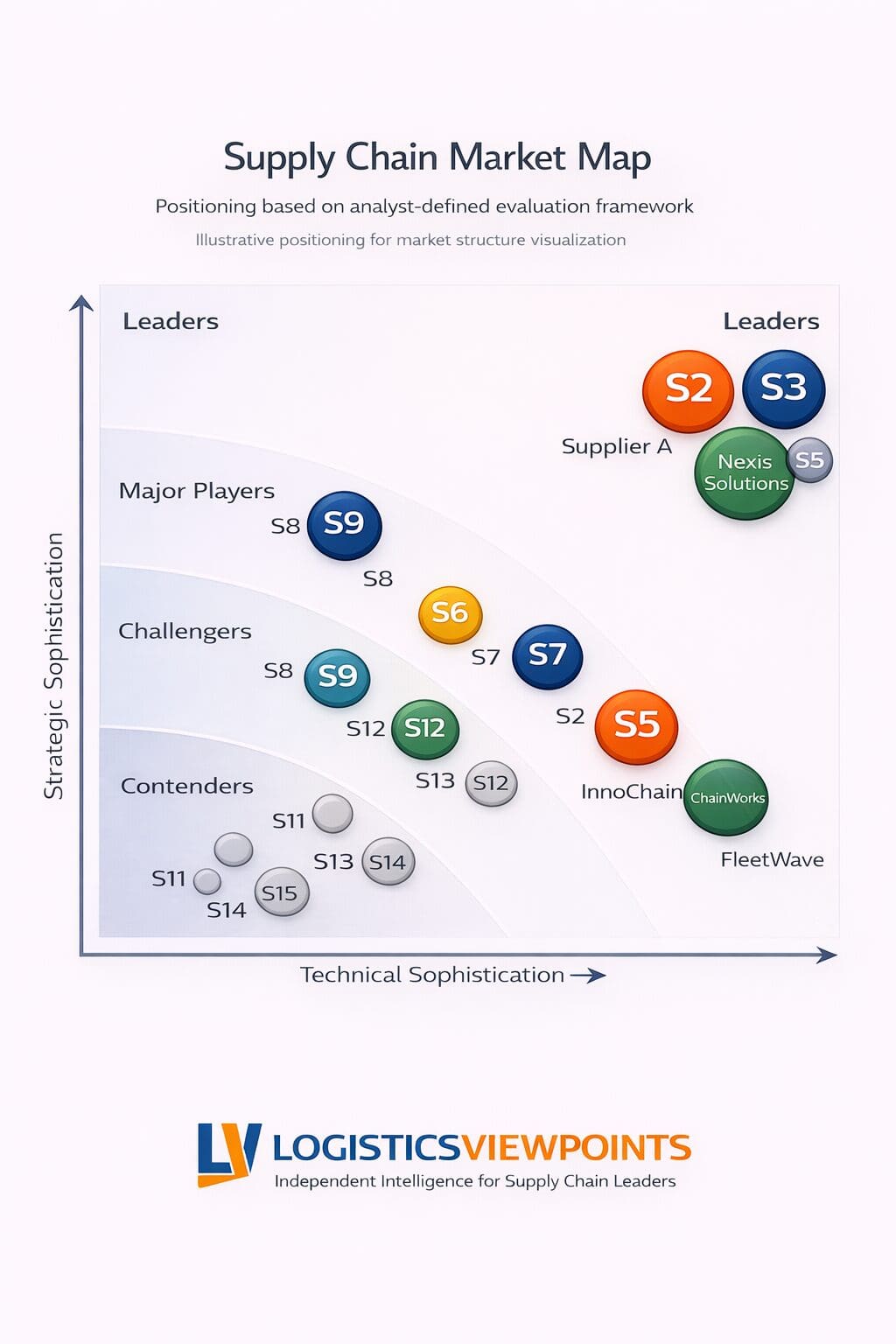
For decades, the gospel in supply chain software buying centered on functional boxes: planning, transportation management (TMS), warehouse management (WMS), visibility, procurement. Each served its domain, a neat, compartmentalized approach reflecting real operational silos. Forecasting here, routing there, inventory movement in another. These categories were, and frankly still are, useful. They mirror the physical and organizational divisions we’ve built our supply chains around.
But AI isn’t playing by those old rules. It’s forcing a hard look at the fundamental question buyers should be asking. It’s no longer just about what a system does, but what decisions it makes better. This is a critical pivot.
Is This AI Just Another Shiny Object?
Think about it. A planning system might help refine demand forecasts. A visibility platform might flag a shipment delay. A TMS could reroute a truck. A risk platform might flag a supplier issue. These are functional improvements, incremental gains. But AI’s real power, and its disruptive potential, lies in its ability to connect dots across these traditional silos, enabling decisions that transcend single-function applications. A late inbound shipment, for instance, isn’t just a transportation problem; it’s an inventory risk, a potential production bottleneck, a customer commitment challenge, and a financial impact ripple. The decision to manage that event involves multiple systems and functions.
AI is causing these categories to blur because many of the highest-value decisions do not sit neatly inside one functional application.
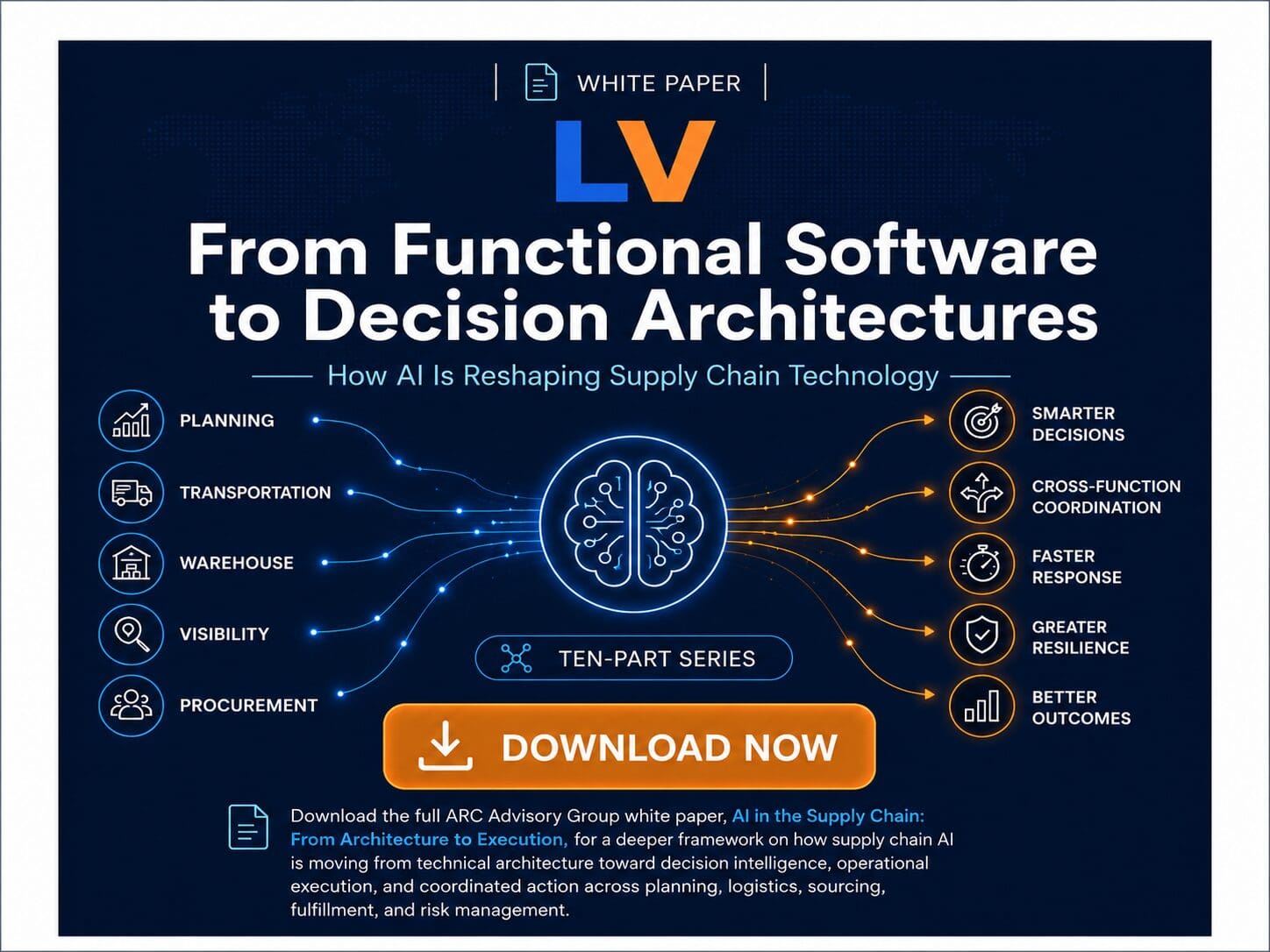
This is where vendors are pushing, embedding AI not just within their existing functional offerings, but as a bridge between them. They’re moving towards what ARC Advisory Group calls “decision intelligence.” This means AI that doesn’t just identify an issue, but understands the operational constraints, recommends specific actions—or even initiates execution—across multiple domains. It’s about building “decision architectures” that can orchestrate complex responses to dynamic events.
Why Does This Matter for Buyers?
So, what does this mean for those on the front lines, tasked with procuring and implementing these technologies? It demands a different evaluation framework. Instead of asking if a vendor has “AI,” the real question becomes: What specific decision is this AI designed to improve? What data and context does it use? Does it offer insights, recommend actions, or trigger execution? And crucially, how auditable are these AI-driven recommendations? Can they be overridden? How well do they integrate with existing ERP, WMS, TMS, and other core systems?
The closer AI gets to impacting operational execution—changing inventory levels, selecting carriers, adjusting customer commitments, or altering supplier sourcing—the more critical governance, auditability, and smoothly integration become. A flawed forecast recommendation is one thing; a flawed execution recommendation can have immediate, costly consequences. AI capability alone is insufficient; it must be embedded within a relevant and strong decision environment.
Historically, we’ve seen similar shifts. The move from monolithic ERP systems to best-of-breed applications was a functional specialization phase. Now, AI is forcing a re-aggregation, not by function, but by the decision workflow. This is a more complex undertaking, requiring a deeper understanding of interdependencies and potential downstream impacts.
This evolving market structure also means that the vendors themselves are beginning to realign. Those that can demonstrate clear value in orchestrating cross-functional decisions, rather than just optimizing individual functions, are likely to gain significant traction. We’re likely to see further consolidation and strategic partnerships emerge as companies strive to offer more complete decision-support capabilities.
The trajectory is clear: from functional software modules to integrated decision architectures. The winners will be those who can harness AI to enable smarter, faster, and more coordinated decision-making across the entire supply chain. It’s a complex, messy, and undeniably exciting evolution.
**
🧬 Related Insights
- Read more: Iran War Skirts U.S. Ports—Fuel and Tariffs Ready to Pounce
- Read more: Fuel Spikes Cloud Logistics Demand [ING Warning]
Frequently Asked Questions**
What is a decision architecture in supply chain technology? A decision architecture refers to the interconnected systems and processes that support and enable complex decision-making within a supply chain, particularly as AI becomes integrated to improve insights, recommendations, and execution across multiple functional areas.
How does AI change the evaluation of supply chain software? AI shifts the focus from evaluating software based on its functional category (e.g., planning, TMS) to assessing its ability to improve specific decisions and how directly those decisions are linked to operational execution.
Will this AI shift replace supply chain planners? While AI will automate certain tasks and enhance decision-making, it’s more likely to augment the roles of supply chain planners, allowing them to focus on higher-level strategy, exception management, and complex problem-solving, rather than routine analysis.