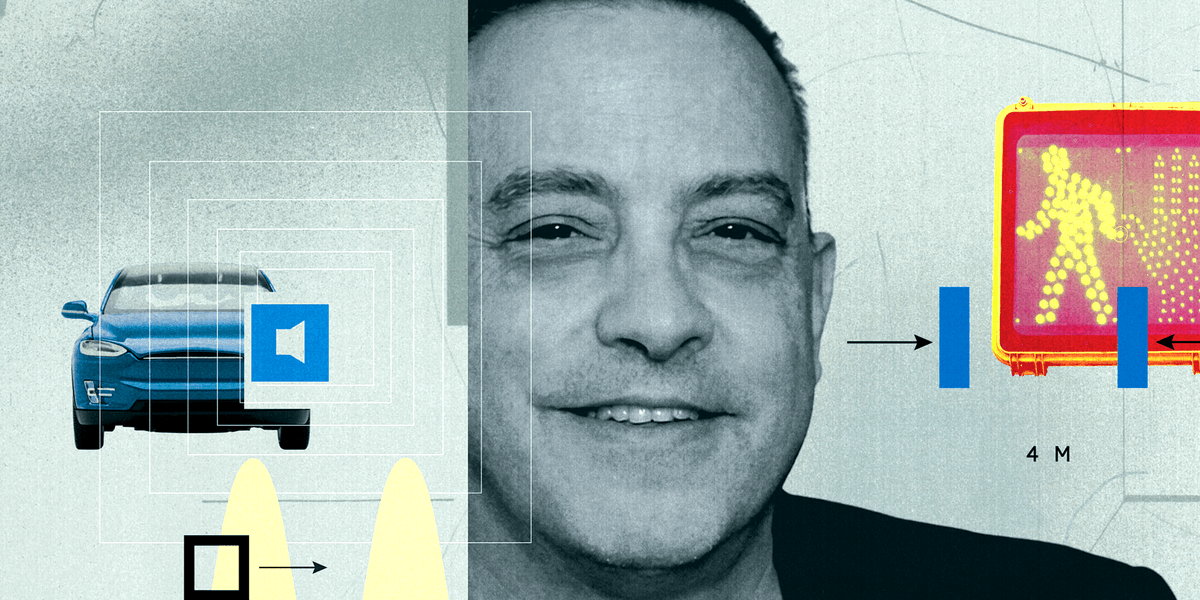
Here’s a stat to make you do a double-take: 70% of EVs sold in 2023 were quieter than a normal conversation. That’s a recipe for disaster on our increasingly electric streets. So naturally, governments are slapping mandates on automakers to make these silent assassins beep and boop at low speeds. Simple, right? Wrong. Turns out, designing an artificial sound that’s both safe and, you know, not soul-crushingly annoying is proving to be one of the thorniest engineering problems facing the auto industry today. And believe me, I’ve seen them spin a lot of fluff over the years.
The Unheard Problems with Hearing EVs
So, you think slapping a speaker on a car and playing a noise is easy? My twenty years covering Silicon Valley have taught me one thing: nothing involving consumer products and regulations is ever easy. This isn’t just about slapping a siren on a Prius. We’re talking about acoustics, signal design, how human ears — particularly those of visually impaired folks — actually process sound, and then, of course, the endless labyrinth of regulatory compliance. BMW, Hyundai, Mercedes — they’re all hiring sound designers, acoustics eggheads, even musicians to nail this. But apparently, it’s a minefield.
Michael Roan, a professor of mechanical engineering at Penn State, laid it out for IEEE Spectrum. He’s knee-deep in this stuff, researching how we humans perceive these fake noises. And his take? It’s complicated. Apparently, speakers themselves have quirks. They create “dead zones” where the sound just doesn’t reach. Then, the very nature of these sounds — they’re often “tonal,” Roan explains, which can lead to weird interference patterns. That means you might have spots where the EV is blaring its warning and then, just a few feet away, you can’t hear it at all. Trying to get an even sound distribution around a whole car? Apparently, that’s a real headache.
Safety vs. Sanity: The Great EV Sound Debate
When automakers are trying to get this right, what’s the priority? Roan spells it out: safety, then brand identity, and then, way down the list, cost. Nobody wants to spend a fortune putting a sound system in a million cars. But the real clash? Trying to hit those safety regulations without making the car sound like a dying robot vacuum cleaner. We’ve all heard it, right? That high-pitched, shrill whirring that’s supposed to alert you. It technically works, but it’s grating. It’s the sonic equivalent of nails on a chalkboard.
Roan points out the European sensitivity to noise pollution. A car sitting at an intersection? Fine. But what about fifty EVs lined up? Is that going to turn our cities into sonic warfare zones? Balancing the need to be heard with the desire not to annoy — and crucially, not to contribute to urban noise pollution — that’s the tightrope walk. And honestly, it’s a tightrope walk that seems perpetually wobbly.
Does Anyone Actually Know If These Sounds Work?
This is where my skepticism really kicks in. Roan admits it: “I don’t think anyone has answered that yet.” Nobody has a magical formula that says, “Satisfy regulation X, and you’re Y amount safer.” It hasn’t been properly tested in the chaotic symphony of a real-world city intersection. It’s all a bit of a gut feeling, based on anecdotal evidence, but not proven science. So, we’re mandating sounds that, by the expert’s own admission, we don’t fully understand the effectiveness of in the real world. Sounds familiar.
And standardization? Forget it. Carmakers want their unique sonic signature, their little bit of brand differentiation. They don’t want their silent whisper to sound like the guy next door’s silent whisper. It’s about exclusivity, about being special. So, a one-size-fits-all solution is likely dead on arrival.
The Expensive Fixes: Beamforming and Beyond
What would it actually take to make an EV sound loud enough, safe enough, and not infuriating? Roan mentions some possibilities, like using the car’s hood as a soundboard with piezoelectric actuators. But the real futuristic (and wallet-emptying) solution? An array of speakers on the bumper, front and back, that use “beamforming.” This technology would focus the sound like a laser pointer, only audible in a narrow range along the sidewalk as the car passes. Ideal for quieting the background noise pollution, but, as Roan bluntly states, “it’s very expensive.”
So, we’re stuck. Automakers are trying to meet regulations with technology that’s still evolving, facing acoustic challenges, and trying to appease both regulators and pedestrians without driving everyone mad or bankrupting themselves. It’s a classic tech problem: a regulatory push meets complex engineering, with the promise of safety often mired in the messy reality of implementation. Who’s making money here? Well, the companies selling the fancy speaker arrays and the signal processing tech, I’d wager. For the rest of us, we’re just trying to hear our pizza delivery guy over the cacophony of mandatory EV beeps.
My take? This isn’t just about designing a car sound. It’s about the perennial struggle to balance innovation with practical, real-world concerns. It’s a problem that’s only going to get louder as more EVs hit the road, and the search for the perfect — or at least acceptable — EV warning sound continues. We’ve seen this play out before: initial hype, mandates, and then a slow, messy crawl toward a workable (and hopefully not too annoying) solution.