This isn’t about magic code generation. It’s about what happens when powerful AI tools meet the gritty, complex reality of moving goods across the planet.
The conversation swirling around ‘vibe coding’—the notion that AI has made software development so simple anyone can just ask for an app—misses the point entirely. What we’re witnessing is a profound shift, not in the fundamental nature of craftsmanship, but in its tooling. Developers aren’t being replaced; they’re getting a megawatt upgrade.
It’s easy to get swept up in the hype. AI assistants can churn out functional code at speeds that would have seemed like science fiction a few years ago. But here’s the thing: a prototype that generates a few lines of Python isn’t a production-ready global freight management system. The craft of building something that can withstand the relentless pressures of real-world logistics—with its complex documentation, ever-shifting regulations, and high financial stakes—remains a deeply human endeavor.
Is AI Actually Building Our Future Logistics Systems?
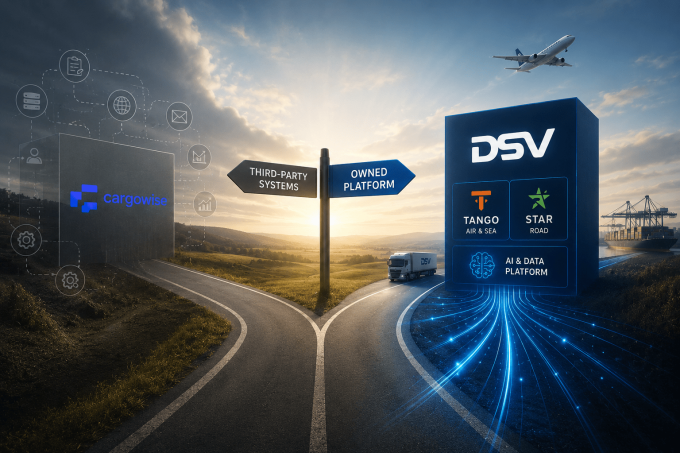
The allure for freight forwarders to ‘build versus buy’ is understandable, especially with AI accelerating the prototyping phase. These businesses operate on hyper-specific workflows, navigating a labyrinth of customs requirements and regional compliance standards that off-the-shelf solutions often struggle to match. The promise of rapid iteration, fueled by AI, seems like a direct path to a tailored solution.
But let’s get real. Generating code is one thing; taking ownership of a mission-critical logistics backbone is an entirely different beast. Building a system that’s not just functional but also scalable, secure, and resilient enough to handle real-time, high-volume operations requires more than just clever algorithms. It demands an institutional memory, a deep understanding of integrations with carriers, customs agencies, and an array of global partners. It means architecting for evolving trade laws and building defenses against cyber threats that never sleep.
AI compresses timelines dramatically. It does not compress the judgment required to ship something you’d stake your business on.
When a company opts to build using AI, they aren’t just buying a faster coding tool. They’re signing up for ongoing responsibility for everything that makes a logistics operation tick. That includes future-proofing against regulatory shifts, ensuring data security for sensitive shipment and financial information, and building an infrastructure that can grow alongside their business. The talent dependency is another huge factor; relying on a small internal dev team creates significant risk if key personnel depart. The total cost of ownership, when you factor in sustained maintenance and development, invariably balloons beyond initial projections.
Compare that to established commercial platforms. These systems have been forged in the crucible of thousands of real-world operations, refined through years of feedback from actual freight forwarders. That accumulated operational intelligence is a deep well of architectural wisdom, informing more strong integrations and a more agile response to regulatory changes. In an age of AI’s rapid ascent, that hard-won, real-world foundation becomes even more valuable.
Why the Human Touch Remains Non-Negotiable
There’s a critical element often sidelined in the AI frenzy, particularly for those of us immersed in customs compliance, warehousing, and overall supply chain management: the non-negotiable requirement for human oversight. Customs regulations, for instance, are explicitly designed to require human accountability. AI can assist, it can process, but the ultimate responsibility for what is filed and shipped rests with a licensed professional.
Consider carrier contract management. These agreements are dense, complex tapestries of rates, surcharges, and specific terms. While AI’s ability to parse and extract this data is impressive, it’s not infallible. The analyst reviewing that data before it enters your operational systems isn’t performing a superfluous task; they are engaged in critical risk management. A single error in contract data can cascade through every subsequent booking, invoice, and settlement, creating a cascade of financial and operational headaches.
The same principle applies across the board—from booking management and document processing to any high-stakes workflow in our industry. AI is an incredible accelerator, a powerful enhancer. But the human expert, armed with the contextual understanding of international trade, legal nuances, and commercial realities, is the indispensable final arbiter. AI amplifies their capabilities, it doesn’t supplant their critical judgment.
What this means for real people—the logistics professionals, the compliance officers, the operational managers—is a future where their skills are not devalued, but amplified. The ability to reason, to strategize, to manage exceptions, and to bear ultimate responsibility is precisely what AI cannot replicate. The companies that succeed will be those that skillfully integrate AI as a powerful co-pilot, augmenting human intelligence, rather than chasing the illusory dream of full automation in domains that demand human accountability.