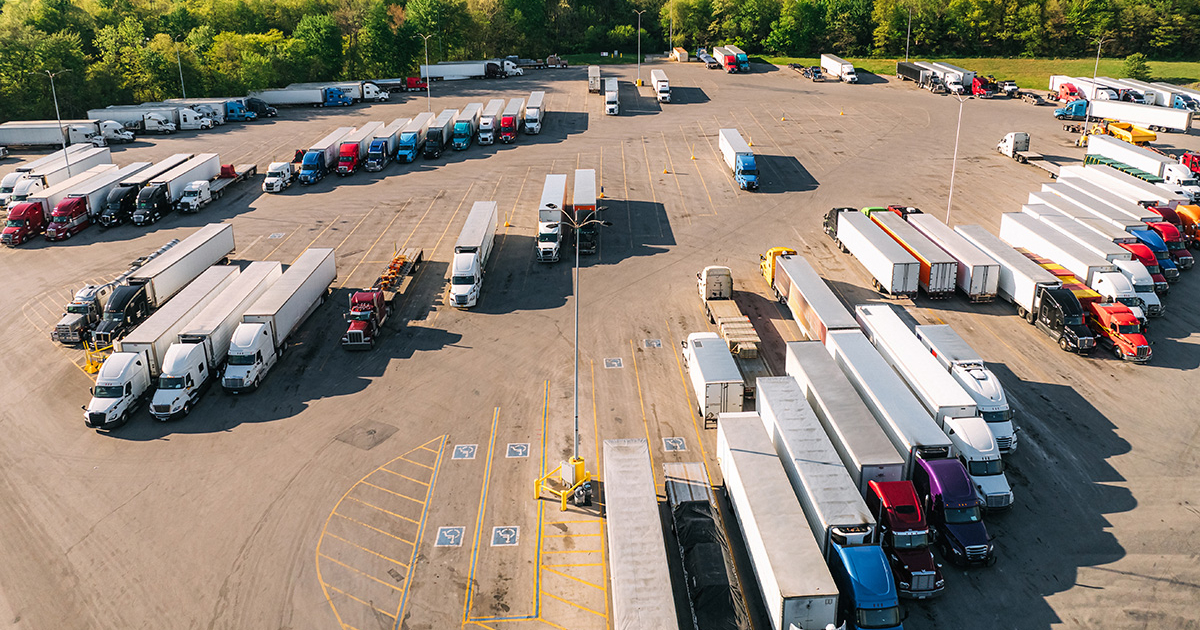
A lone semi idles by a closed truck stop, its driver slumped against the wheel, another night spent in a dangerous, unofficial spot.
The American Trucking Associations (ATA) is banging the drum, loudly, for dedicated, multiyear funding for truck parking in the next highway bill. Apparently, lawmakers are finally getting around to drafting this legislative behemoth, and the ATA wants to make sure truck parking doesn’t get lost in the shuffle. Good. Someone has to.
Alex Rosen, the ATA’s Senior Vice President of Legislative Affairs, is practically shouting it from the rooftops: they want federal funds specifically for parking. Not scattered, not vaguely allocated, but a clear, dedicated stream. Congress has tossed around some $200 million for truck parking lately, which sounds like a lot until you realize it’s a drop in the ocean. Rosen points out the obvious: larger, shinier projects always seem to eclipse the humble need for a place to park a rig.
“When you have truck parking competing with these other projects, it always seems to fall at the bottom of the list,” Rosen said.
Quelle surprise.
The ATA is backing the Truck Parking Safety Improvement Act, a bill that would earmark a cool $755 million over five years. Their endgame? Shove this into the main highway bill. Make it happen.
Rep. Mike Bost (R-Ill.), the bill’s sponsor, gets it. He’s been there. He knows the struggle.
“I know firsthand how difficult, and oftentimes dangerous, it is when America’s truckers are forced to push that extra mile in search of a safe place to park,” Bost said.
This isn’t just some fringe issue. Truck parking snagged the fourth spot on the American Transportation Research Institute’s top industry issues list for 2025. Bost, apparently, is the trucking industry’s knight in shining armor on this. Rosen describes him as a “loud champion.” Good. We need more loud champions.
The ATA isn’t letting up. They’re planning a full-court press on Capitol Hill. This bill is slated for consideration before Memorial Day. Even if it slips into the next Congress – you know, depending on who’s in charge – the ATA expects this truck parking stuff to stick.
Why the urgency? Safety. And recruitment. Especially for women.
Rosen hammers home that the parking shortage is a major hurdle for bringing in and keeping good drivers. And women? For them, it’s often a deal-breaker. Safe, well-lit parking with basic facilities isn’t a luxury; it’s a fundamental requirement. The ATA’s Women In Motion Council has been yapping at lawmakers’ heels, making it clear that reliable parking is a serious deterrent for women considering trucking.
“Safe restrooms and a secure place to rest aren’t luxuries,” Rosen explained. “They’re basic needs, and Congress has the ability to address them.”
It’s about time someone pointed out that truck drivers are human beings who require basic amenities. This isn’t rocket science. It’s just a colossal failure of foresight and investment in infrastructure that directly impacts the backbone of the American economy. Think about it: if drivers can’t park safely, they can’t rest. If they can’t rest, they can’t drive. If they can’t drive, your stuff doesn’t move. It’s that simple.
This entire saga, stretching back years, is a perfect microcosm of how many essential industries are treated. We laud the truckers, we rely on them, but we consistently fail to provide them with the most basic infrastructure. It’s the same old story: treat the symptoms, not the cause. We throw money at appropriations here and there, hoping it sticks, instead of building a durable, long-term solution. The ATA’s push is less about a new idea and more about finally getting the powers-that-be to acknowledge a problem that has been staring them in the face for decades.
Is Truck Parking Really That Big a Deal?
For anyone who’s ever been stuck in traffic behind a backed-up on-ramp or seen a truck precariously parked on the shoulder, the answer is a resounding yes. Drivers are often forced to choose between parking illegally and unsafely or driving while fatigued. This creates a direct risk to the driver and everyone else on the road. Furthermore, the lack of parking is a massive impediment to attracting and retaining drivers, a problem that plagues the industry. For women drivers, the issue is compounded, often due to safety and privacy concerns related to inadequate facilities.
Why Isn’t This Fixed Already?
Frankly, it’s a funding issue, plain and simple. Truck parking competes with a whole host of other, often more politically palatable, transportation projects. Dedicated, multiyear funding, like what the ATA is pushing for, has been elusive. States and local entities often lack the resources or the mandate to tackle large-scale parking infrastructure. It’s a classic case of a vital need being de-prioritized in favor of less critical, but perhaps more visible, infrastructure projects.
🧬 Related Insights
- Read more: Cold Chain Logistics: Challenges and Solutions for Temperature-Sensitive Goods
- Read more: PPF’s 13% Capacity Jump with ketteQ: Excel Escape or Optimizer Mirage?
Frequently Asked Questions
What does the ATA want in the highway bill? The ATA wants a dedicated, multiyear funding stream specifically for expanding truck parking capacity across the nation.
How much money is the ATA asking for? The ATA is pushing to include the Truck Parking Safety Improvement Act, which would authorize $755 million over five years, within the larger highway reauthorization bill.
Why is truck parking so important to female drivers? Lack of safe, well-lit parking with adequate facilities is cited as a significant barrier, making them hesitant to enter or remain in the trucking profession.