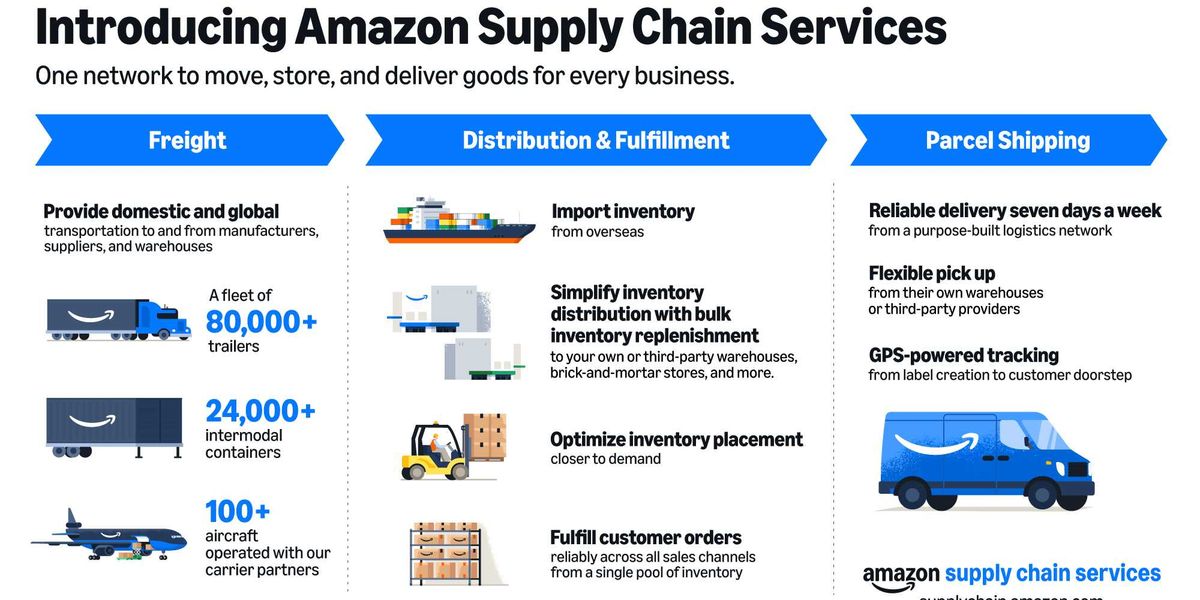
Everyone expected Amazon to keep growing, right? We’ve watched them gobble up retail, then cloud computing, then streaming, and goodness knows what else. But this? This is different. Amazon Supply Chain Services (ASCS) — yeah, they even gave it a fancy acronym, bless their hearts — isn’t just tweaking an existing service. They’re formally inviting the entire world to play in their logistics sandbox. For years, the whispers were about how sellers on Amazon could use their network. Now? Anyone with a product needing to get from point A to point B, and potentially C and D, can theoretically sign up.
It’s a move that’s been brewing, sure. For years, Amazon has been building this beast of a supply chain, ostensibly to serve its own insatiable appetite and those of its third-party sellers. We’ve seen the warehouses sprout like mushrooms, the Prime trucks become as common as potholes, and the constant push for faster delivery windows. The company claims this is about sharing the wealth, democratizing their logistics magic. Peter Larsen, VP of ASCS, even spouted the classic Amazonian comparison: “much like Amazon Web Services did for cloud computing.” And yeah, AWS was a pretty big deal, so the comparison isn’t entirely baseless, though it does feel a bit… polished.
Look, the narrative they’re pushing is that supply chain wasn’t just a department; it was their “differentiator.” The secret sauce. The reason they could promise that magical fast, dependable delivery nobody else could touch. Now, they’re saying, any business can tap into that same efficiency, that same speed. It’s a bold claim, and if they can pull it off at scale for external clients without tripping over their own shoelaces, it’s going to send shockwaves through the entire 3PL industry. Imagine trying to compete with a company that owns the pipes and the pressure.
We’ve already got a few big names dipping their toes in the water. Procter & Gamble, 3M, Lands’ End, American Eagle. These aren’t mom-and-pop operations; these are behemoths. They’re not just shipping widgets; they’re talking about raw materials, finished goods, unified inventory across multiple channels. That’s serious logistics. It’s the kind of stuff that can make or break a company, and they’re entrusting it to Amazon. The question for them is simple: is it worth the risk and the price?
Who’s Actually Making Money Here?
This is the question, isn’t it? For Amazon, the answer seems obvious: more money. They’ve built this colossal infrastructure, and like any smart business, they’re looking to monetize every square inch of it. For the initial customers like P&G and 3M? If Amazon can truly deliver cost savings and improved efficiency over their existing logistics partners, then yes, they stand to gain. Think about the complexity of moving raw materials for a company like 3M, or managing inventory for a retailer like Lands’ End across various sales channels. If Amazon can streamline that, it’s a win. But let’s be honest, Amazon’s history is littered with examples of entering markets, disrupting them, and often, eventually dominating them. So, while these early adopters might see benefits, the long-term play for Amazon is clear: lock in customers, gather data, and build another revenue stream that use their existing, massive, and frankly, terrifyingly efficient network.
Is This Just Another Amazon Power Grab?
Let’s not pretend this is purely altruistic. Amazon’s modus operandi involves identifying a need—or creating one—and then fulfilling it with their own infrastructure. They didn’t build AWS because they wanted to share their spare server capacity; they built it because they recognized the immense profit potential of cloud computing and already had the core technology. The same logic applies here. They’ve perfected logistics for themselves. Why wouldn’t they sell that perfection to others? It’s a natural extension of their business, and given their track record, you can bet they’re going to aggressively pursue market share. They’re not just opening their doors; they’re inviting you to become dependent on their system. It’s less about sharing and more about expanding their ecosystem’s gravitational pull.
This move also positions Amazon to gather an even deeper understanding of global supply chains. More data points, more insights into what’s moving where, when, and how. That intelligence, when combined with their AI capabilities, is a potent weapon. They’ll know more about the flow of goods than almost anyone else on the planet. And for a company that already seems to know what we want before we do, that’s a very powerful position to be in.
So, while the big brands might get a taste of Amazon’s logistics prowess, and perhaps even some cost savings, the real winner here is almost certainly Amazon. They’re not just offering a service; they’re subtly — or not so subtly — extending their influence and control over the very arteries of commerce. It’s a calculated move, dressed up in the language of partnership, but driven by the same relentless ambition that’s defined Amazon for two decades.
🧬 Related Insights
- Read more: Iran’s Strait Deadline Lights Fuse Under Oil Routes and Stock Markets
- Read more: Fuel Spikes Cloud Logistics Demand [ING Warning]
Frequently Asked Questions
What does Amazon Supply Chain Services (ASCS) do? ASCS is a new business unit from Amazon that offers its vast warehousing, transportation, and fulfillment network as a third-party logistics (3PL) service to businesses outside of Amazon’s direct retail platform.
Who can use ASCS? Amazon states that businesses of all types and sizes can utilize ASCS, extending their logistics solutions beyond just Amazon sellers.
Will ASCS be cheaper than existing 3PL providers? Amazon claims its services offer cost efficiency, speed, and reliability. However, actual pricing and competitiveness will depend on specific service levels and market adoption.