The promise of AI in education is an exciting one: imagine personalized learning experiences, automated administrative tasks, and teachers freed up to do what they do best — teach. Yet, for the educators on the front lines, this technological tidal wave is less a supportive current and more a chaotic surge. A significant disconnect exists between the rapid adoption of AI by students and the lack of formal guidance provided to teachers, according to recent reports from Gallup and the Walton Family Foundation.
This isn’t just an abstract problem for administrators; it directly impacts the daily lives of teachers and the quality of education our children receive. We’re talking about professionals juggling lesson plans, classroom management, and the ever-increasing demands of the job, now facing a powerful new technology without a clear roadmap. The result? Stress, uncertainty, and potentially, an uneven application of AI’s benefits.
The Stark Reality: A Guidance Deficit
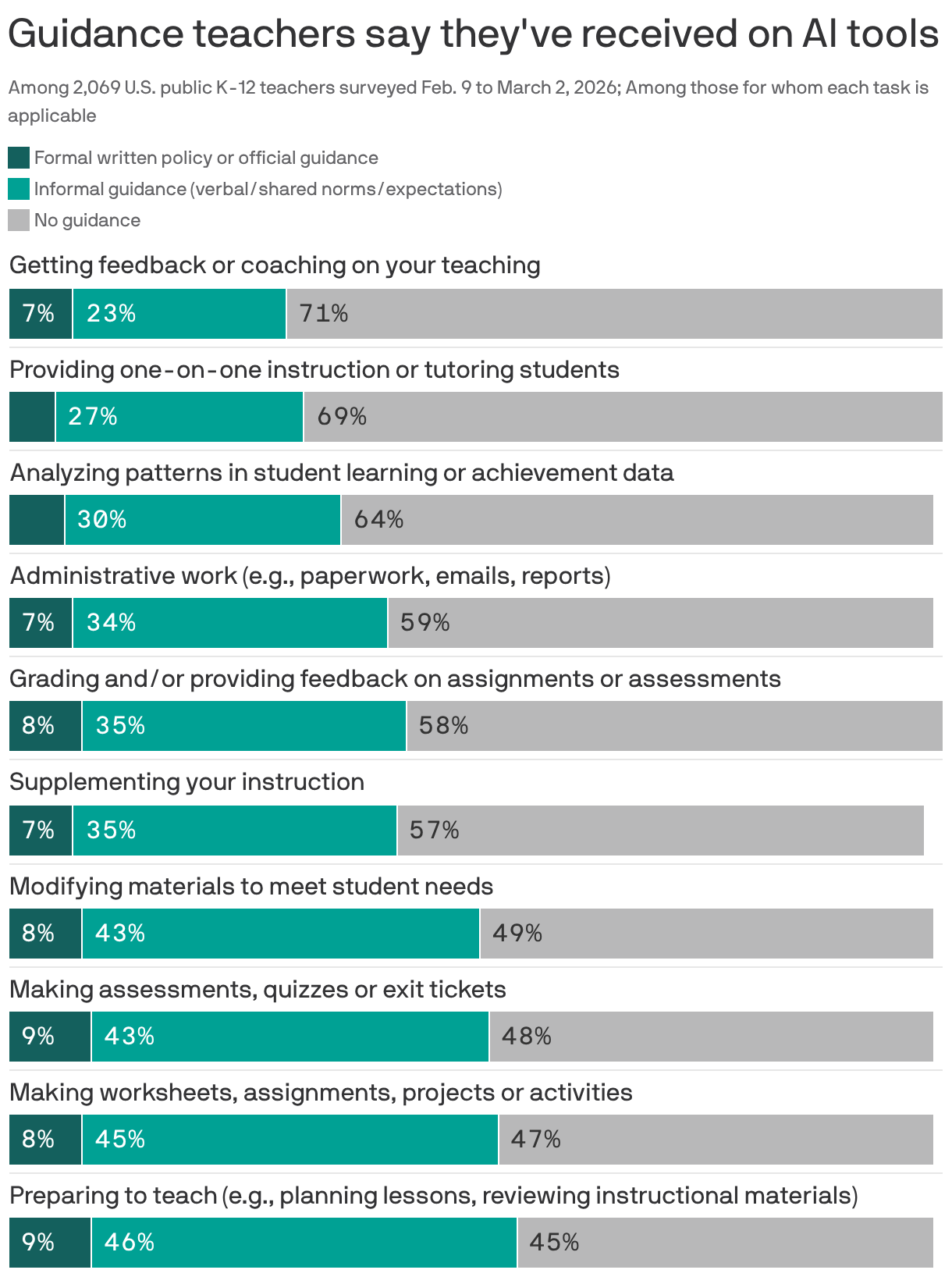
Let’s cut to the chase: the numbers paint a concerning picture. While a growing number of K-12 teachers are already experimenting with AI in their daily work — with some reporting saving significant amounts of time — a staggering 80% have received no formal guidance on how to apply these tools. Think about that. They’re being told to embrace innovation, but they’re often doing it blindfolded. This guidance gap is particularly acute when it comes to using AI for crucial tasks like providing feedback or one-on-one tutoring, areas where personalized human interaction is paramount. Around 7 in 10 teachers report receiving zero guidance on these fronts.
It’s not just about general usage either. A majority of educators have also been left to figure out AI’s application for analyzing student learning patterns, administrative tasks, grading, and supplementing instruction on their own. This isn’t a minor oversight; it’s a systemic failure to equip our educators with the knowledge and support they desperately need.
Why This Matters for Real People (Teachers and Students)
This isn’t some theoretical debate happening in a university hall; it’s playing out in classrooms across the country. Students, particularly college-bound high schoolers, are already anticipating the need to use AI, with some even shifting their academic paths based on its emerging capabilities. This suggests a rapid integration of AI into the student workflow, independent of any formal institutional embrace. Teachers, meanwhile, are left to grapple with how to address this new reality, often without institutional backing or even basic best practices. It creates a breeding ground for academic integrity issues, and more broadly, it means that the potential benefits of AI in education are being unevenly realized, if at all.
“AI is out there. It’s not a question of whether or not our students are going to be using it; it’s a question of how well our educators are supported and receive the ongoing professional learning and capacity building to be able to be confident in it.”
This quote from Amy Loyd, CEO of All4Ed, perfectly encapsulates the urgency of the situation. It’s not about stopping AI; it’s about empowering the people who are meant to guide its use. The current approach, or lack thereof, is essentially asking teachers to become AI experts on their own time and dime, while their primary focus should be on delivering quality education.
The Uneven Playing Field: Wealthier Schools Lead the Way
As if the general lack of guidance wasn’t bad enough, the data reveals another layer of inequity. Teachers in wealthier school districts are more likely to receive some form of guidance, particularly around creating student materials and assignments, compared to their counterparts in higher-needs institutions. This creates a digital divide not just in access to technology, but in access to the knowledge and training needed to effectively use that technology. The very schools that might benefit most from AI-driven efficiencies and enhanced learning tools are the ones least equipped to implement them strategically.
Is AI a Burden or a Boon? It Depends on Leadership
The core of the issue lies in leadership’s perception and implementation strategy. Arman Jaffer, CEO and founder of Brisk Teaching, points out that the broad nature of AI technology makes it difficult for districts to create one-size-fits-all guidance. Too often, he notes, administrators treat AI as just another optional tool, like Canva or Quizlet, rather than recognizing its transformative potential. This perspective is precisely where the misstep occurs.
AI, when wielded correctly, isn’t just another app; it’s a fundamentally different kind of technology that can amplify the best aspects of teaching. But, as Jaffer warns, it can just as easily amplify the worst. Without strategic implementation and strong professional development, AI risks becoming another overwhelming demand on already strained educators. The goal shouldn’t be more AI, but smarter, more targeted use that actually streamlines work and improves educational outcomes, rather than simply adding another layer of complexity.
This situation isn’t sustainable. School leaders need to move beyond viewing AI as a optional add-on and recognize it as a foundational shift in how education can be delivered. Providing teachers with clear, actionable guidance and ongoing support isn’t just good practice; it’s essential for harnessing AI’s potential and ensuring that it serves, rather than burdens, our educators and students.
What Does This Mean for Teachers?
It means that, unless your school district has a proactive AI integration plan, you’re likely on your own. You’ll need to actively seek out professional development, experiment cautiously, and advocate for structured support. The burden of navigating this new frontier falls disproportionately on your shoulders.
Will AI Replace Teachers?
No, not in any meaningful sense that matters to student development. AI can automate tasks and provide data, but it cannot replicate the empathy, critical judgment, and human connection that are core to effective teaching. The goal should be to use AI to augment teachers, not replace them.
How Can Schools Bridge the Guidance Gap?
Schools need to establish clear AI policies, invest in comprehensive professional development that is tailored to different subject areas and grade levels, and foster collaborative environments where teachers can share best practices and challenges. It requires a strategic, top-down approach, not ad-hoc experimentation.
🧬 Related Insights
- Read more: Bissell’s AI Leap: Supply Chain Planning Now Days, Not Weeks
- Read more: AI’s Power Hunger Forces Nuclear Back Into Supply Chain.
Frequently Asked Questions
What is the main problem with AI in schools according to the report? Teachers are not receiving adequate formal guidance on how to use AI tools, despite students’ increasing adoption.
Are all teachers receiving the same level of AI guidance? No, teachers in wealthier schools are more likely to get guidance than those in higher-needs institutions.
What is the key takeaway for school leaders? School leaders must move beyond treating AI as an optional tool and proactively develop strategies and provide training to support teachers in its effective implementation.