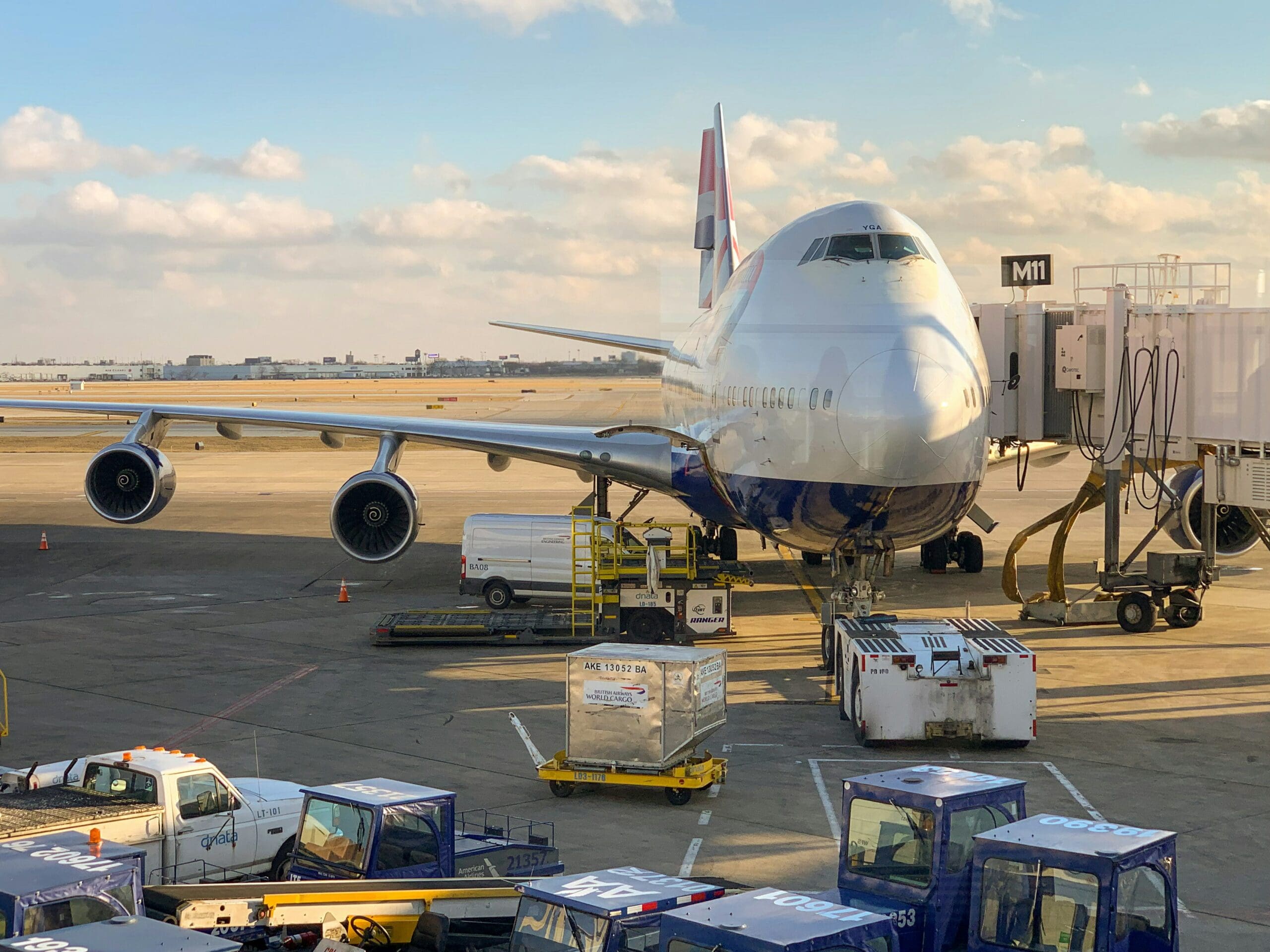
The conventional wisdom, the almost rote expectation, was that air cargo would remain a niche player, the express lane for the truly desperate or the absurdly wealthy. Think life-saving organs, last-minute product launches, or critical components that simply couldn’t wait for the next container ship. It was the expensive insurance policy, pulled out only when the house was already on fire. But the fires in global supply chains haven’t exactly been put out; they’ve multiplied. And in this new, perpetually volatile environment, air cargo is shedding its emergency-only skin and emerging as a deliberate, strategic lever. This changes the calculus for anyone managing the flow of goods.
Disruption Isn’t Just an Inconvenience Anymore—It’s Repricing Speed
Look, the math on air freight has always been straightforward: it’s fast, it’s reliable, and it costs an arm and a leg. For decades, this meant its use was granular, confined to high-value, time-sensitive goods where the premium was justifiable. Pharmaceuticals, cutting-edge electronics, crucial aerospace parts – these were the usual suspects. The operating environment, however, has undergone a seismic shift. We’re talking about persistent ocean disruptions, a geopolitical landscape that’s less a chessboard and more a minefield, and a general erosion of service level predictability. Suddenly, that expensive air option doesn’t look quite so extravagant when the alternative is weeks of unpredictable delay, ballooning inventory holding costs, and potentially lost sales.
Recent data from freight market analysts paints a clear picture: geopolitical instability is actively pushing freight volumes away from sea routes, simultaneously constricting air cargo capacity and driving up its price. It’s a feedback loop. This isn’t to say companies are ditching container ships en masse – ocean freight remains the undisputed workhorse for global trade. But the decision-making process is getting far more nuanced, far more tactical. When lead times stretch into an abyss, when inventory buffers are drawn thinner than a supermodel’s patience, or when crucial customer commitments hang precariously in the balance, air cargo offers a lifeline. The premium is still there, absolutely, but in many scenarios, the cost of not shipping by air—the cost of delay—now demonstrably outweighs the cost of the flight itself.
Is This a Boon for Air Cargo Demand?
Indeed, the numbers are showing it. Global air cargo demand is ticking upwards year-over-year, with capacity expanding in parallel. International routes, in particular, are seeing significant strength. This isn’t indicative of an unhinged, speculative boom, but rather a more measured, deliberate utilization of airfreight services. Companies are no longer treating it as an ‘oh crap’ button; they’re integrating it into their operational blueprints. The strategy is selective, not wholesale. Think of it less as a mass migration and more as a precision strike. Businesses are identifying specific products, specific routes, and specific customer promises where speed offers a genuine, quantifiable strategic advantage.
This analytical approach is precisely what’s needed. Air cargo becomes a net positive when it actively compresses uncertainty. For a low-cost, high-volume commodity with stable demand, the economics might still be prohibitive. But for high-margin electronics, critical medical supplies, semiconductor components, or vital industrial replacement parts, the economic equation can flip on a dime. The question becomes: what’s the business consequence of being late? That’s a fundamentally different framing than simply asking, ‘Is air freight expensive?’
The High-Value Use Cases Are Clear
Where does air cargo truly shine in this new paradigm? Where time is a critical factor and the value density of the goods is high. Electronics and semiconductors, with their rapid product cycles and substantial per-unit value, often make the air freight case a slam dunk. Pharmaceuticals and healthcare products demand not just speed but also stringent reliability and controlled environments, which air cargo is well-equipped to provide. Aerospace and industrial spare parts can command premium freight because the cost of downtime for a grounded aircraft or a halted production line can dwarf transportation expenses. Even certain consumer goods might see airfreight treatment during peak demand periods or to hit crucial product launch windows. These aren’t generic freight flows; they are meticulously planned supply chain decisions. The distinction is vital. Air cargo is a drain on profitability when it’s used as a band-aid for poor planning. It transforms into an invaluable asset when it’s intentionally designed into the supply chain as a proactive risk-mitigation tool.
Capacity: The Ever-Present Constraint
Now, let’s not get carried away. Air cargo capacity isn’t an infinite well. It’s a bifurcated beast, reliant on both dedicated freighter aircraft and the belly capacity of passenger planes. Freighter capacity is inherently limited. Belly capacity, on the other hand, is inextricably linked to passenger flight networks and their economic viability. When major air corridors face disruption—as we’ve seen with recent events in the Middle East impacting airspace access and hub congestion—capacity can tighten with alarming speed. This vulnerability means that shipments, from perishables to vital aircraft parts, can face delays or find themselves stranded. It’s the inherent paradox of air cargo: it’s a powerful resilience tool, yet it’s intrinsically susceptible to its own network’s constraints. Companies must, therefore, bake this reality into their planning. Air cargo should be a component of a broader resilience strategy, not the sole fallback position. Relying on it exclusively is a recipe for disappointment.
Planned Optionality Trumps Last-Minute Expediting
The most sophisticated and effective deployment of air cargo isn’t reactive emergency expediting. It’s what I’d call ‘planned optionality.’ Emergency expediting is, by its nature, reactive. Something goes wrong, inventory levels plummet, and a company scrambles, paying whatever the market demands to rectify the situation. Planned optionality, however, is proactive. It involves pre-emptively identifying which specific products, which lanes, and which customer commitments warrant the inclusion of air cargo as a viable, planned-for option before a crisis erupts. This isn’t just about hedging against risk; it’s about building flexibility and responsiveness directly into the supply chain architecture. It’s about recognizing that in today’s unpredictable global trade environment, speed itself is becoming a valuable commodity, and strategic air cargo deployment is the most efficient way to acquire it.
Air cargo becomes inefficient when it is used as a substitute for poor planning. It becomes valuable when it is designed into the supply chain as a risk-response option.
What’s the Historical Parallel Here?
This strategic shift in air cargo utilization isn’t entirely unprecedented. Think back to the early days of just-in-time manufacturing. Companies strived for lean inventories, minimizing warehousing costs. When disruptions occurred, the impact was immediate and severe. Over time, a more balanced approach emerged, incorporating strategic buffers and recognizing that while lean is efficient, it can be brittle. Air cargo’s current evolution mirrors this: a realization that pure cost optimization (via the cheapest mode) can create unacceptable fragility. The pendulum is swinging back, not to pure excess, but to a more risk-aware, speed-conscious allocation of resources. This isn’t just about transport; it’s about strategic supply chain design in an era of constant flux.
🧬 Related Insights
- Read more: Truckstop.com Bets Big on Heavy Haul with Wize Load Buyout
- Read more: MSC Founder Hands Control to Kids [Aponte Succession]
Frequently Asked Questions
Will air cargo replace ocean freight? No, ocean freight remains the primary mode for bulk global trade due to cost efficiency. Air cargo is being used more tactically for specific high-value, time-sensitive goods or when managing disruption costs.
Is air cargo becoming cheaper? Air cargo prices are currently elevated due to increased demand and capacity constraints driven by geopolitical events. It remains a premium service.
What types of companies are using air cargo more? Companies in sectors like electronics, semiconductors, pharmaceuticals, aerospace, and industrial parts, where product value and speed are critical, are increasingly employing air cargo strategically.